Sprinkler Head Replacement Terms Explained: A Plain-English Glossary
If you are getting quotes to fix your lawn sprinklers in Plano, the jargon can pile up fast. This sprinkler head replacement glossary explains the terms you will see on quotes and hear from techs in plain English. Use it to read an estimate line by line, ask sharper questions, and spot problems in your own yard before they get worse. No sales talk, just what each word means and why it matters.
- Sprinkler Head: the part you see spraying water
- Pop-Up Head: rises from the ground, then drops back
- Rotor Head: a rotating stream for big areas
- Spray Head: a fixed fan of mist for small areas
- Nozzle: the tip that shapes the spray
- Riser: the pipe stub the head screws onto
- Zone: a group of heads that run together
- Valve: the switch that sends water to a zone
- Controller: the timer box that runs the system
- Backflow Preventer: keeps sprinkler water out of your drinking water
- Head Adjustment: aiming and tuning a head, not replacing it
- Matched Precipitation: heads that water at the same rate
- Head-to-Head Coverage: each head's spray reaches the next head
- Lateral Line: the smaller pipe that feeds the heads
- Winterization: protecting the system before a freeze
- Watering Schedule: when and how long each zone runs
Equipment: The Parts You Will See on a Quote
These are the physical pieces a sprinkler system contractor will name when they walk your yard. Knowing them helps you match each line on an estimate to something real in the ground.
Understanding Sprinkler Head Replacement in Your Glossary
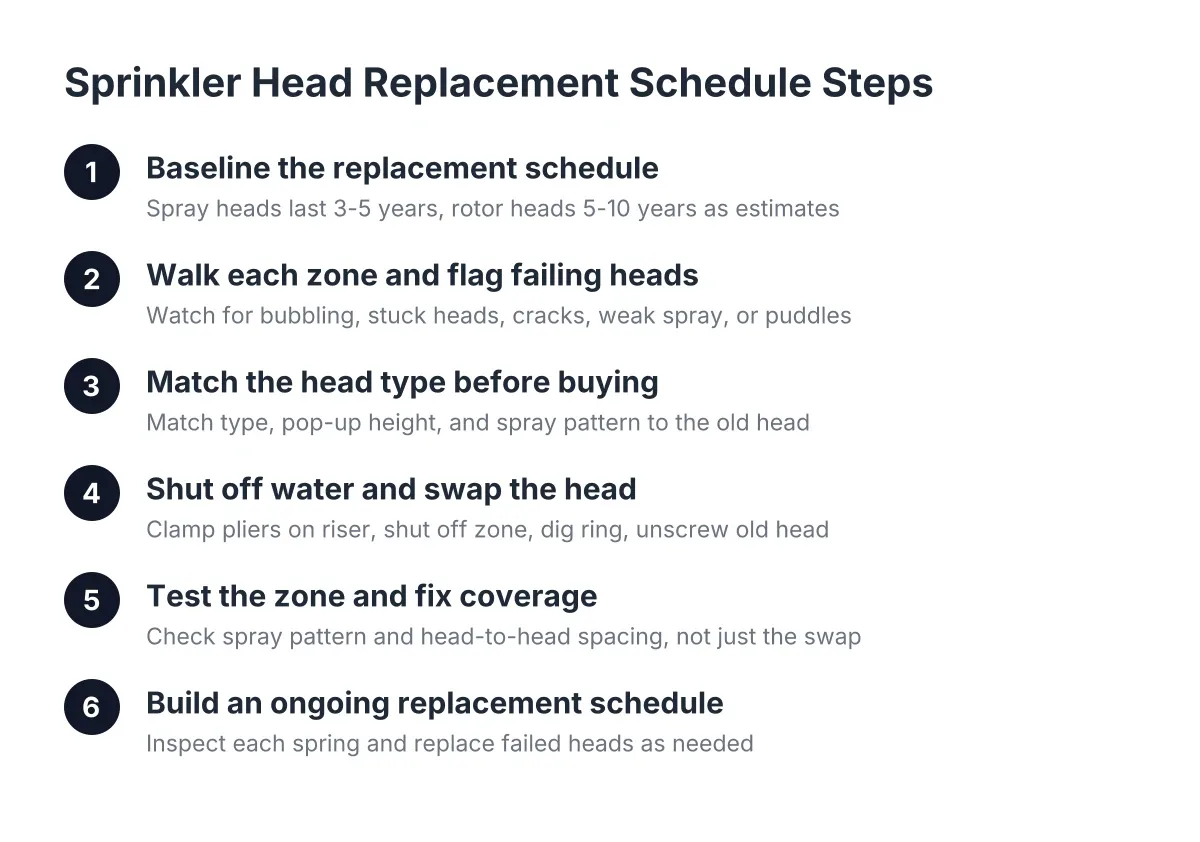
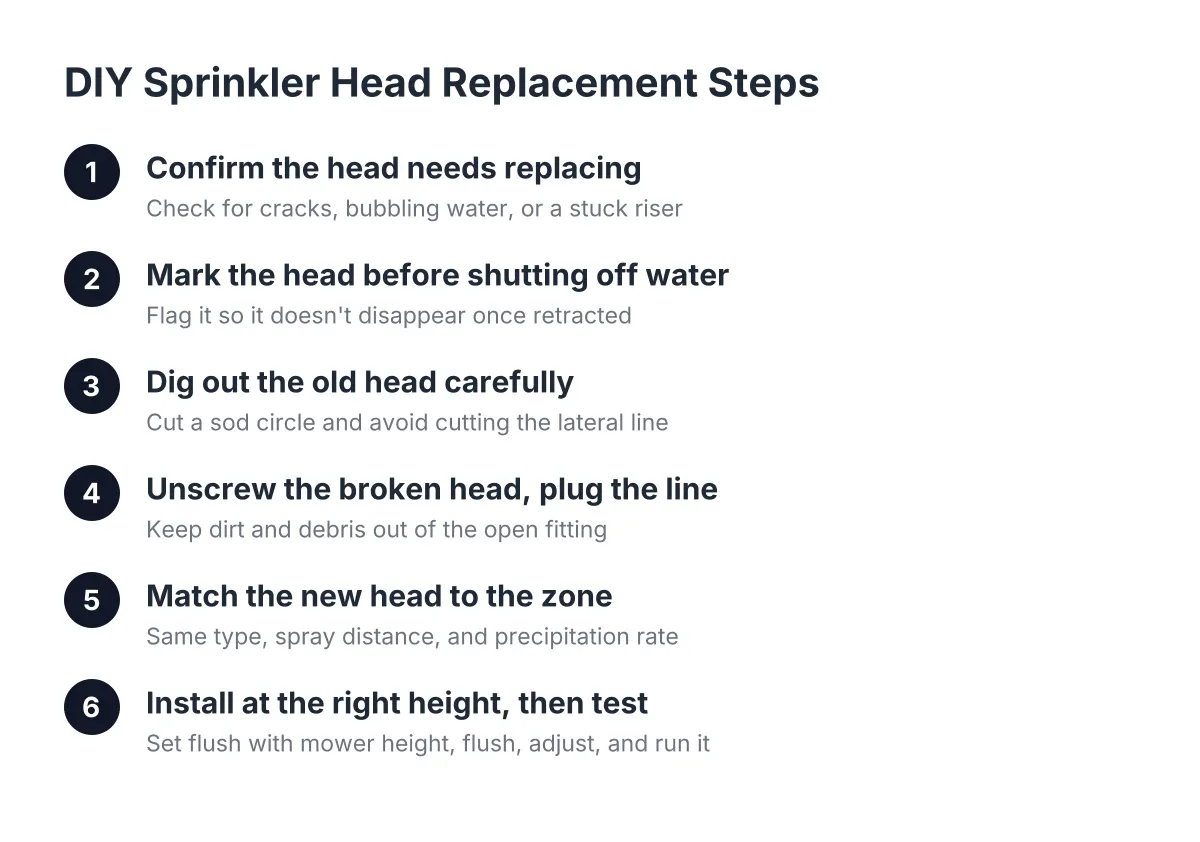
A sprinkler head is the above-ground part of an irrigation system that sprays water onto your lawn. It is the piece most likely to get hit by a mower, clipped by an edger, or cracked when North Texas clay soil shifts in the heat. Most heads cost little as parts; labor and how many need work drive the bill. If a tech says a head is "broken at the body," that usually means replacement, not a simple fix. The cost factors are covered in more depth in this guide to sprinkler head replacement cost.
Pop-Up Head
A pop-up head is a sprinkler head that rises out of the ground when the water turns on and sinks back flush when it shuts off. The pop-up design keeps heads below mower blades and foot traffic. When one stops popping up all the way, grass and dirt often choke the spray before you ever see a dry spot. A head that stays stuck up is a trip hazard and a mower casualty waiting to happen.
Rotor Head
A rotor head is a sprinkler head that shoots a single rotating stream of water across a large area. Rotors cover big open lawns and run longer per watering than small spray heads. If a rotor stops rotating, it soaks one strip of grass and leaves the rest dry. On a quote, rotor heads usually cost more as parts than spray heads, which matters if several need swapping.
Spray Head
A spray head is a sprinkler head that puts out a fixed fan of fine mist over a short distance. Spray heads suit flower beds, narrow strips, and small lawn sections. They apply water fast, so they run shorter cycles than rotors. Mixing sprays and rotors in the same zone is a common cause of wet and dry patches, and a good tech will flag it.
Nozzle
A nozzle is the small tip on a sprinkler head that shapes the spray pattern and controls how far the water throws. Many watering problems trace back to a clogged or worn nozzle, not the whole head. Replacing just the nozzle is cheaper than replacing the head, so ask which one your quote covers. A provider who talks about nozzle sizes is matching the spray to your yard, which is a good sign.
Riser
A riser is the short pipe stub that connects a sprinkler head to the water line below it. When a mower snaps a head off, the break often happens at the riser. A cracked riser leaks underground, which shows up as a soggy spot or low pressure in that zone. Digging to reach and replace a riser adds labor, which is why some head swaps cost more than others.
Backflow Preventer
A backflow preventer is a safety device that stops sprinkler water from flowing backward into your home's drinking water. It usually sits above ground near where the system connects to your water supply, which makes it the part most exposed to North Texas freeze events. A cracked backflow preventer after a hard freeze is one of the most common winter repairs here. If a quote mentions backflow work, that is a plumbing-safety item, not an upsell.
The System Behind the Heads
A head is only one link in the chain. This part of the sprinkler head replacement glossary covers the components that decide whether the right head gets water at the right time.
Zone
A zone is a group of sprinkler heads that all turn on and off together, controlled by one valve. Most home systems have several zones so the water supply is not spread too thin. When "zone 3 won't come on," the problem may be the valve, the wiring, or the controller rather than the heads. Knowing your zone count helps you follow a quote and your watering schedule.
Valve
A valve is the underground switch that opens to send water to one zone of sprinkler heads. A valve that sticks open leaves a zone running nonstop; one that sticks closed leaves a zone dead. Valves hide in buried boxes, so finding and testing them is part of the diagnostic work you pay for. If a head swap does not fix a zone, sprinkler valve replacement is often the next step.
Controller
A controller is the timer box, usually in the garage, that tells each zone when to run and for how long. It is the brain of the irrigation system and the first thing a tech checks when nothing runs at all. Knowing where it is also tells you how to turn off a sprinkler system fast when a head breaks. Programming the controller to match Plano's watering-restriction schedule is a normal part of a tune-up.
Lateral Line
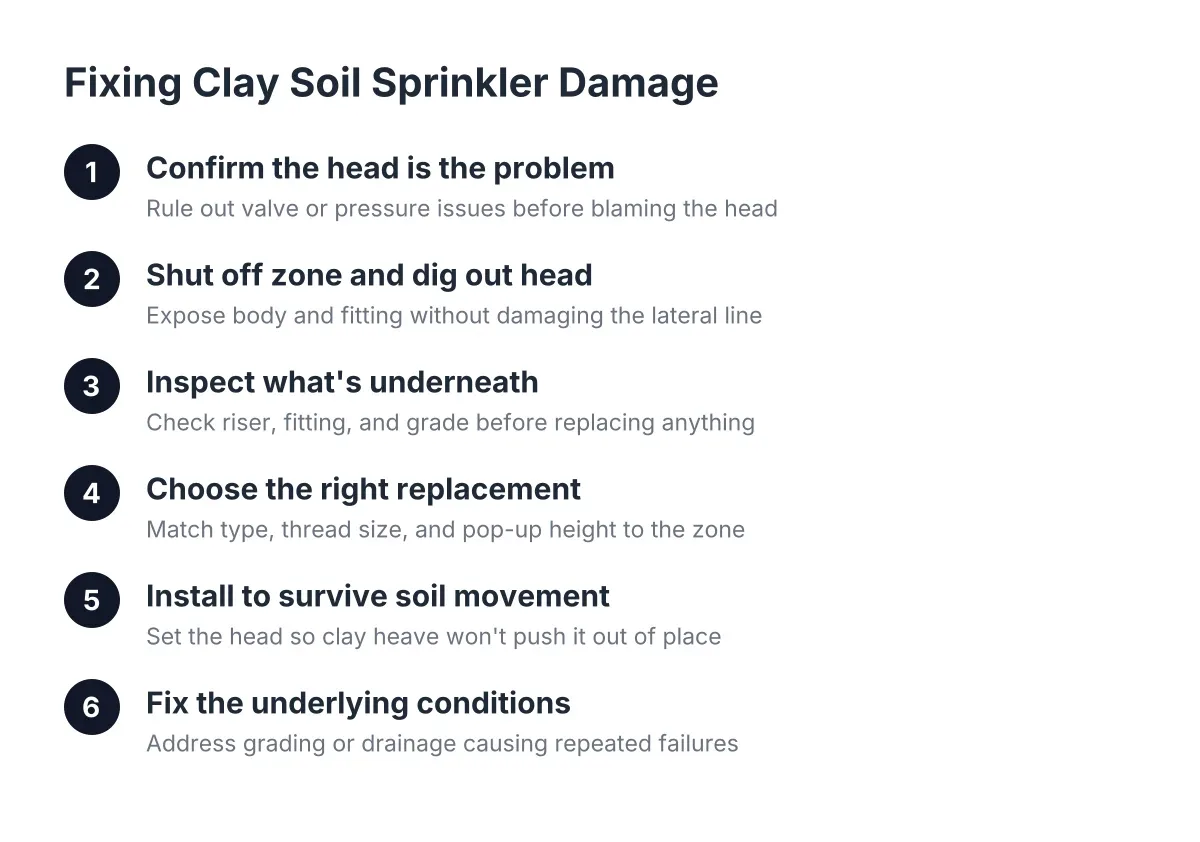
A lateral line is the smaller buried pipe that carries water from a zone valve out to the sprinkler heads. Heavy clay soil that shifts and cracks in long hot summers is hard on these lines. A leak in a lateral line can look like a bad head: low pressure, weak spray, or a wet patch that never dries. Repairing one means digging, so it adds labor to a job that started as a simple head fix.
Process, Tuning, and Timing
Head Adjustment and Glossary Terms for Sprinkler Replacement
A sprinkler head adjustment means aiming, leveling, or fine-tuning an existing head instead of replacing it. Adjustment fixes problems like spraying the sidewalk, watering the fence, or missing a corner of the lawn. It costs less than replacement because there is no new part and little digging. A fair quote should tell you which heads need adjustment and which need sprinkler head replacement in Plano, because sprinkler head replacement is only worth paying for when the head itself is damaged or worn out.
Matched Precipitation
Matched precipitation means every head in a zone puts down water at the same rate, so the whole area gets even coverage. Mixing head types or nozzle sizes in one zone breaks this, leaving brown patches next to soggy ones. When replacing a head, the new one should match the rest of the zone, not just fit the hole. A tech who mentions matched precipitation is thinking about your whole lawn, not just the one broken part.
Head-to-Head Coverage
Head-to-head coverage means each sprinkler head sprays far enough to reach the next head over. This overlap is how designers avoid dry rings around each head, since the spray is weakest at its far edge. If your lawn has crescent-shaped brown spots, poor overlap is a likely cause. Fixing it may mean a different nozzle, moving a head, or adding one, each with a different labor cost.
Winterization
Winterization means preparing a sprinkler system for freezing weather so trapped water does not crack pipes, valves, or the backflow preventer. In North Texas, hard freezes are short but damaging, and the above-ground backflow preventer is the most common casualty. Skipping winterization is how a cheap fall task turns into a spring repair bill. If a provider mentions it in October, they are trying to save you money, not spend it.
Watering Schedule
A watering schedule is the plan for which days each zone runs and for how long. In Plano, local watering restrictions set the days, and summer heat and clay soil shape the run times. A schedule that runs too long wastes water and can hide leaks; one that runs too short stresses the lawn. After any repair, ask the tech to confirm the schedule still fits your yard and the local rules.
Using These Terms
This sprinkler head replacement glossary gives you a working vocabulary: you can now read a quote line by line and know whether you are paying for a nozzle, a head, a valve, or digging to a lateral line. When a tech explains a fix, you can ask whether adjustment would do instead of replacement, and whether the new head matches the zone. That is usually the difference between a fair estimate and a confusing one.
If you need sprinkler head replacement, North Dallas Sprinkler Repair can help.
Prefer to talk it through? Call (469) 639-1022 — a quick call is usually the fastest way to get a straight answer for your situation.