Freeze Damage to Sprinkler Heads in Plano: Step-by-Step Winter Repair Guide
A hard freeze in Plano can crack sprinkler heads, split risers, and leave your yard a mess the first time the system runs in spring. If you just bought a home with an irrigation system nobody explained to you, freeze damage to sprinkler heads is one of the most common surprises you will find. This guide walks you through finding the damage, fixing the heads you can handle, and knowing when a sprinkler system contractor should take over.
North Texas winters are strange. We get weeks of mild weather, then a sudden overnight freeze. Water trapped in sprinkler heads expands as it freezes, and plastic bodies, caps, and risers crack. The damage often hides until the next watering cycle, when a cracked head shoots a geyser instead of a gentle spray.
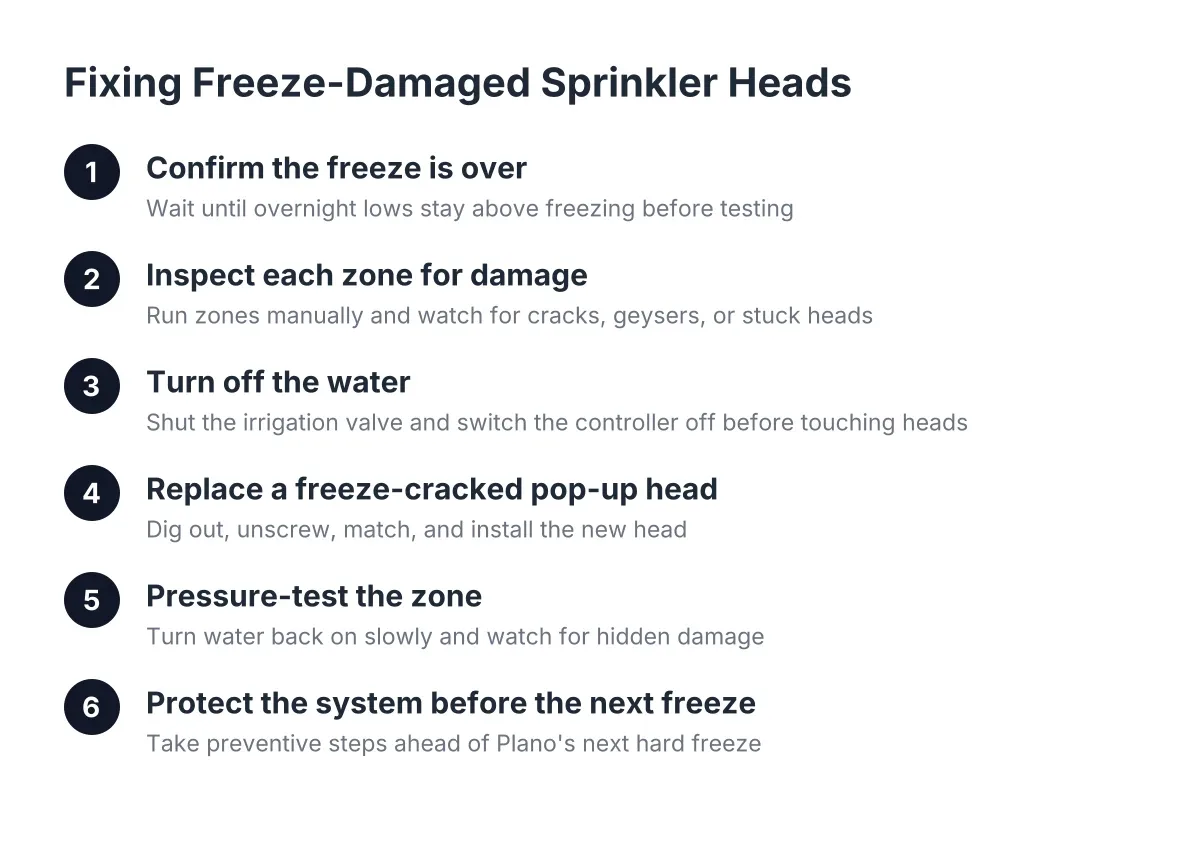
Step 1: Confirm the Freeze Is Over Before You Test Anything
Do not run the system while temperatures are still dropping below freezing at night. Running water through cracked pipes or heads in freezing weather makes the damage worse and can send water onto sidewalks where it turns to ice.
Wait for a stretch of days where overnight lows stay above freezing. In Plano, that usually means late February or March, though a warm January week works too. While you wait, walk the yard and flag anything that looks wrong: heads sitting above grade, cracked caps, or soggy spots that never dry out.
If you inherited the system with your home purchase and have no idea whether the previous owner protected it before winter, assume nothing. Builder-installed systems in Plano are often 8 to 25 years old by now, and plastic gets brittle with age. An older head that survived three freezes may fail on the fourth.
Step 2: Inspect Each Zone for Freeze Damage to Sprinkler Heads
Freeze damage at sprinkler heads shows up in a few predictable ways. Check for cracked caps on pop-up spray heads, split riser stems, heads that gush water instead of spraying a pattern, and heads stuck up or stuck down after the zone shuts off. A head that will not retract after a freeze often has a cracked body letting dirt into the riser seal.
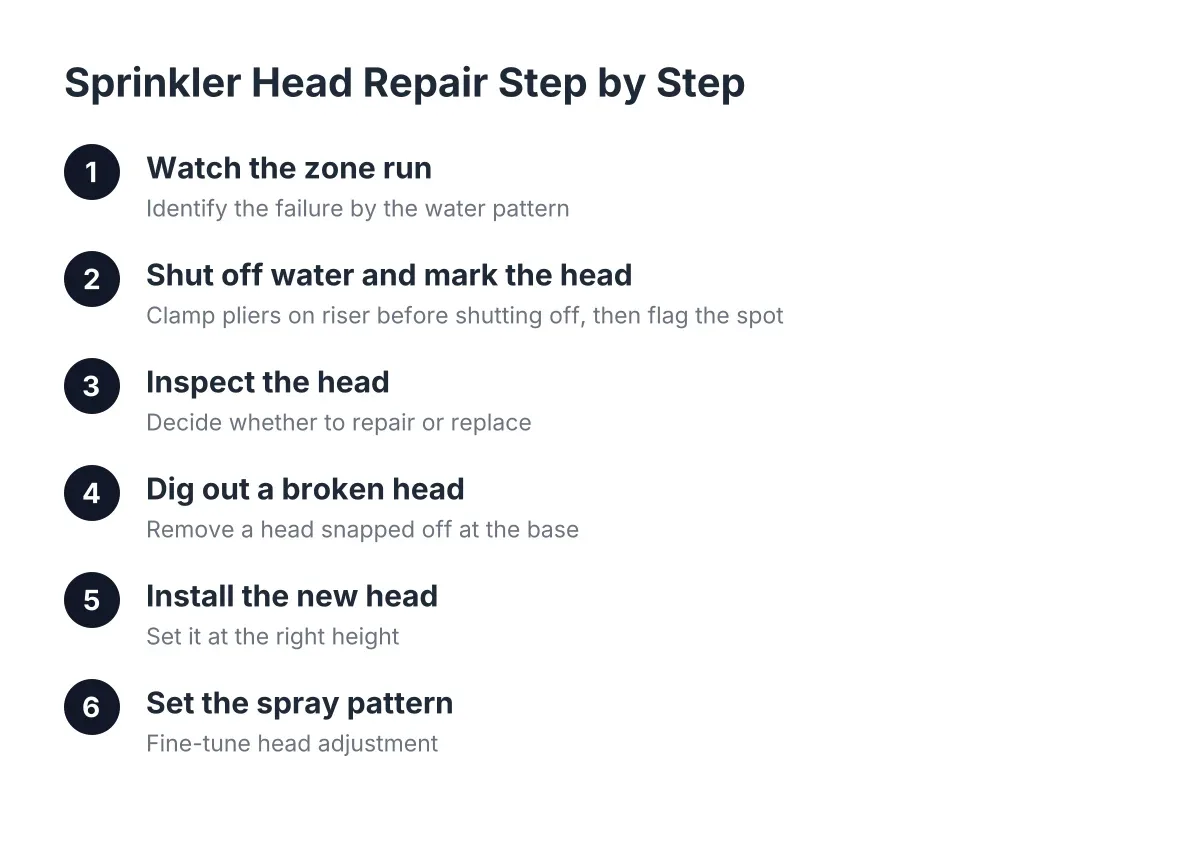
Run each zone manually from the controller for two or three minutes. If the controller confuses you because it came with the house and no manual, look for a dial position labeled "manual" or "test all zones." Watch each zone while it runs and note what you see:
- A geyser or bubbling fountain usually means the head broke off at the base or the cap split.
- Weak, sputtering spray across the whole zone points to a cracked lateral line underground, not just a head.
- One head misting while others spray normally suggests a cracked nozzle or body on that head.
- Water pooling around a head that is off can mean a freeze-damaged zone valve, not the head itself.
Count your zones while you are at it. Many new owners do not know how many zones their inherited system has, and this walkthrough answers that question for free. Write down the zone number and location of every damaged head.
As a side note, the walkthrough often turns up problems that have nothing to do with freezing. Nozzles turned the wrong way are one of the most common issues found during a spring startup, and they take seconds to fix once you spot them.
Step 3: Turn Off the Water Before You Touch Anything
Shut off the water supply to the irrigation system before you unscrew any head or open any valve. Most Plano homes have a separate irrigation shutoff valve near the backflow preventer, usually in a rectangular box in the ground near the front of the house or close to the water meter. Turn it clockwise until it stops.
If you cannot find a dedicated irrigation shutoff, the main house shutoff works, though you lose water to the whole home while you work. In addition, switch the controller to "off" so a scheduled cycle does not start while your hands are in the ground.
Check the backflow preventer itself while you are there. Backflow devices sit above ground and freeze before anything else. A cracked backflow body leaks constantly and should be handled by a pro, since it protects your drinking water from contamination.
Step 4: Replace a Freeze-Cracked Pop-Up Head
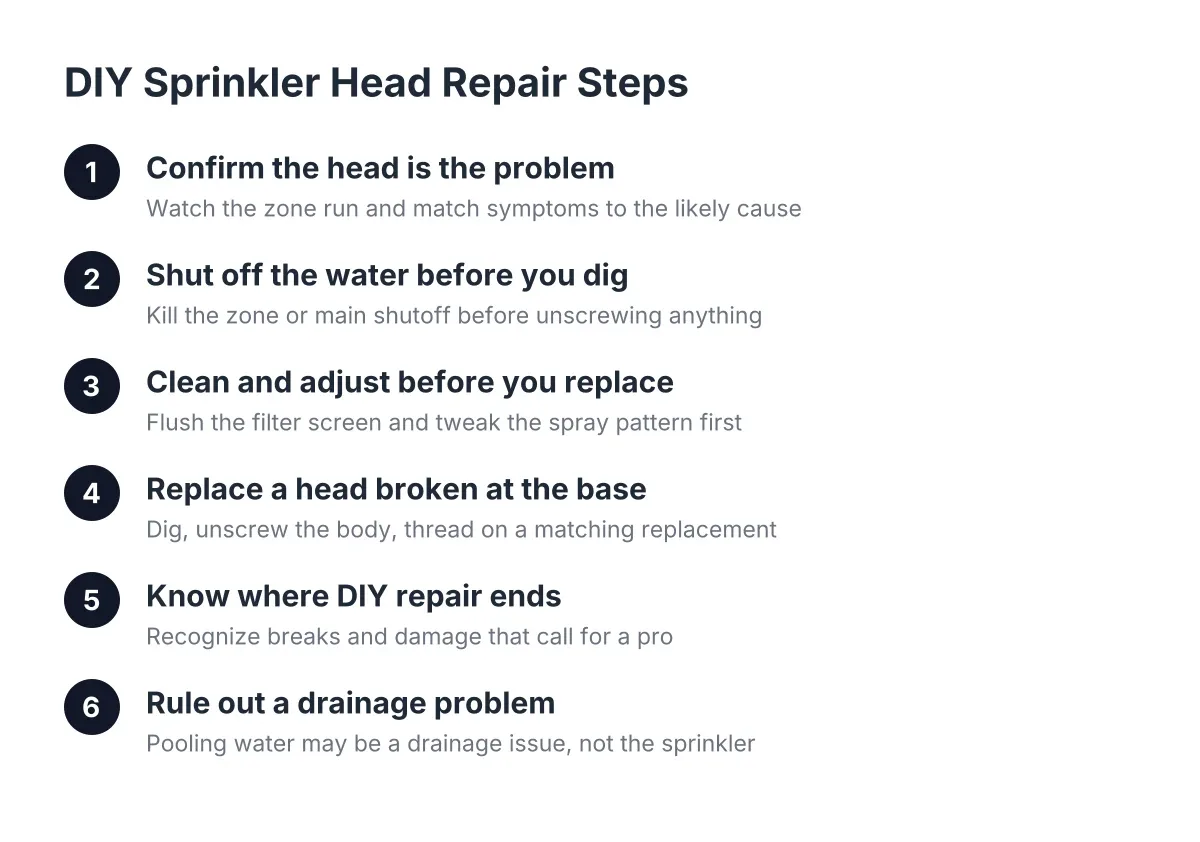
A cracked spray head body needs full replacement; glue and tape do not hold under pressure. The good news is that replacing one head is a manageable job. Here is the sequence:
- Dig a small circle around the damaged head, about six inches out, and set the sod aside so you can replace it cleanly.
- Unscrew the old head counterclockwise from the fitting below it. If it broke off at the base, grip the remaining threads with needle-nose pliers and back them out slowly so no plastic falls into the pipe.
- Keep the hole clean. Debris and small rocks falling into an open fitting is a recurring problem, and grit inside a new head will clog it or jam the riser.
- Match the new head to the old one: same type (spray or rotor), same pop-up height, and a similar spray pattern. If the body cracked but the inside survived, the internal riser and nozzle assembly can sometimes be unscrewed from the old body and reused in the new one.
- Thread the new head on hand-tight, flush the line briefly with the nozzle removed if possible, then set the spray direction and pattern.
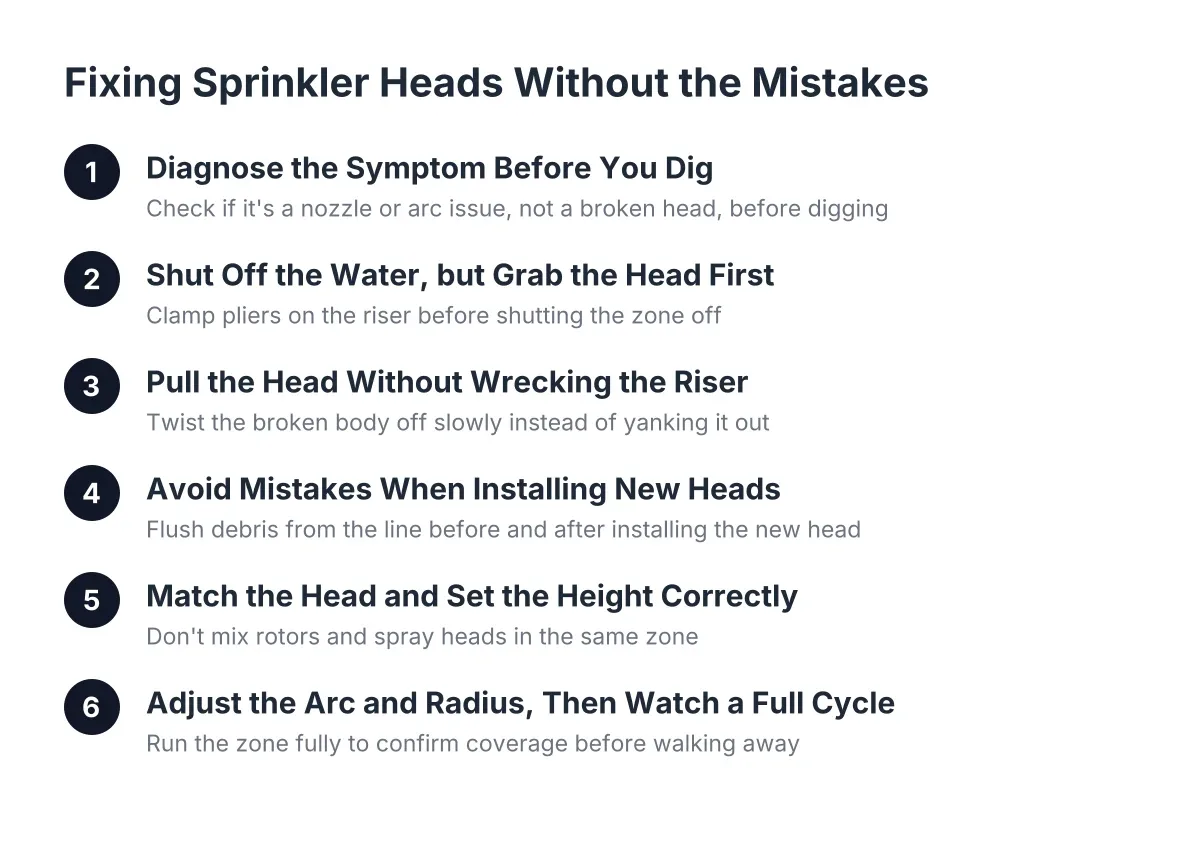
One practical trick: when a zone shuts off, pop-up heads retract into the ground and become hard to grab. Lightly clamping pliers around the stem while the zone still runs keeps the head from dropping before you shut the water off.
For rotor heads, a rotor is built as a buried body, a riser, a rotating turret, and a nozzle on top, according to Hunter Industries. Pull-up slots on rotor turrets are a universal design, so any brand's rotor tool can lift the turret for inspection, according to Rain Bird. If a rotor feels loose in the ground, be careful adjusting its arc; a loose body can rotate in your hand instead of the internal stop moving.
Step 5: Pressure-Test the Zone and Watch for Hidden Freeze Damage to Sprinkler Heads
Turn the water back on slowly and run the repaired zone. Watch the new head pop up fully, spray its pattern, and retract when the zone ends. Then watch the rest of the zone for five minutes. Freeze damage to sprinkler heads rarely travels alone; the same ice that split one head may have cracked a fitting two heads down the line.
Signs the problem goes deeper than the heads:
- Pressure in the zone is still weak after the repair, which suggests a cracked underground line.
- A zone will not shut off or weeps water constantly, which points to a freeze-damaged valve that may need sprinkler valve replacement.
- Water surfaces between heads where no head exists.
For example, suppose a homeowner in a 15-year-old Plano house replaces two cracked heads in the front yard zone, but the zone still runs weak and a wet patch forms near the driveway. In that scenario, the freeze likely split a lateral line under the clay soil, and digging it up is a job for an irrigation repair crew with line-locating experience. Clay soil in Plano shifts as it wets and dries, which stresses already-cracked pipe even further.
This matters for your water bill too. A household with an automatic irrigation system that is not properly maintained can waste up to 25,000 gallons of water annually, according to U.S. Environmental Protection Agency (EPA WaterSense). One hidden leak from freeze damage can quietly run for months.
Step 6: Protect the System Before the Next Plano Freeze
Repair is half the job; prevention keeps you from repeating it every winter. Plano systems do not need the full blow-out winterization common up north, but they do need basic protection before a hard freeze:
- Wrap the backflow preventer with insulation or a faucet cover, since it is the most exposed part of the system.
- Shut off the irrigation supply valve and open the backflow test cocks slightly to relieve trapped water.
- Set the controller to "off" for the winter instead of letting it run a schedule into a freeze.
- Adjust your watering schedule in fall so the system is not soaking the yard the night before a cold front.
A tune-up pays off beyond freeze protection. If a household's irrigation system is well managed, irrigation water use can drop by 15 percent, or nearly 7,600 gallons annually, according to U.S. Environmental Protection Agency (EPA WaterSense).
When to Call a Pro Instead of Replacing Heads Yourself
Call an irrigation repair pro when the damage goes past the heads. Cracked backflow preventers, zone valves that will not shut off, broken underground lines, and wiring or controller faults all need diagnostic tools and experience most homeowners do not have. Sprinkler head repair on a single cracked pop-up is a fair weekend project; a system-wide freeze event is not.
The cost of a repair visit depends on how many heads failed, whether valves or the backflow took damage, and how deep crews have to dig in Plano's clay. However, a full inspection after your first winter in a new-to-you home is worth considering even without visible damage. It tells you how many zones you have, what each one covers, what is broken versus just set wrong, and which repairs can wait. That is a cheaper path than guessing, and it turns a mystery system into one you actually understand.
If you need sprinkler repair in Plano, TX, North Dallas Sprinkler Repair can help.
Prefer to talk it through? Call (469) 639-1022 — a quick call is usually the fastest way to get a straight answer for your situation.