Sprinkler Head Not Retracting? How to Tell a Stuck Pop-Up From a Bad Valve
A sprinkler head not retracting after the zone shuts off is one of the most common calls we take in Plano. The head sits up out of the ground, waiting for a mower blade or a kid's foot to snap it off. The good news: the cause is almost always one of two things. Either the pop-up itself is stuck because of dirt, debris, or a worn seal, or the zone valve never actually closed and water pressure is still holding the head up. This guide walks you through telling the two apart, then fixing the stuck head step by step.
That distinction matters even more if you already fight standing water in the yard. A head that never goes down because a valve keeps weeping will also keep soaking the same low spot, turning your flower beds to mud and pushing water toward the foundation. Sorting out which problem you have is the first step toward fixing both the head and the puddle.
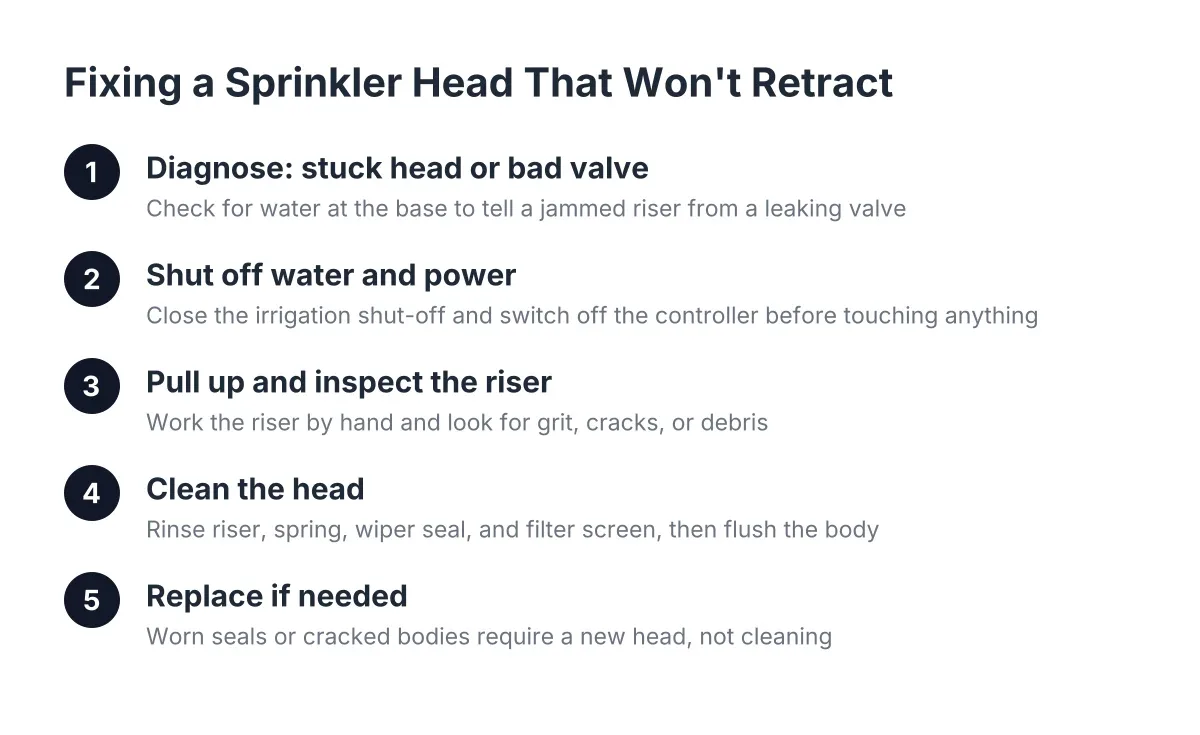
Step 1: Figure Out Whether the Head Is Stuck or the Valve Is Leaking
Before you touch the head, answer one question: is water still moving? Walk to the raised head and look closely at the base and the top.
- Head up, no water anywhere, ground dry. The pop-up is mechanically stuck. Dirt in the riser or a worn wiper seal is holding it up. Skip to Step 3.
- Head up, water seeping or bubbling around it, or a spot in the yard that stays wet for days. The zone valve likely did not close all the way. Water pressure is holding the head up. Go to Step 2.
- Head up and still spraying with the controller off. The valve has failed open. That points to sprinkler valve replacement, not a head fix.
A zone that keeps running water even after the timer is switched off is a valve problem, not a controller problem. Pressing buttons at the box will not fix it. In North Texas clay, a weeping valve also feeds exactly the kind of recurring puddle that worries homeowners about their foundation. The fix for the puddle starts at the valve, and sometimes finishes with grading or French drain installation if the low spot predates the leak.
Step 2: Shut Off the Water and Power Before Any Repair
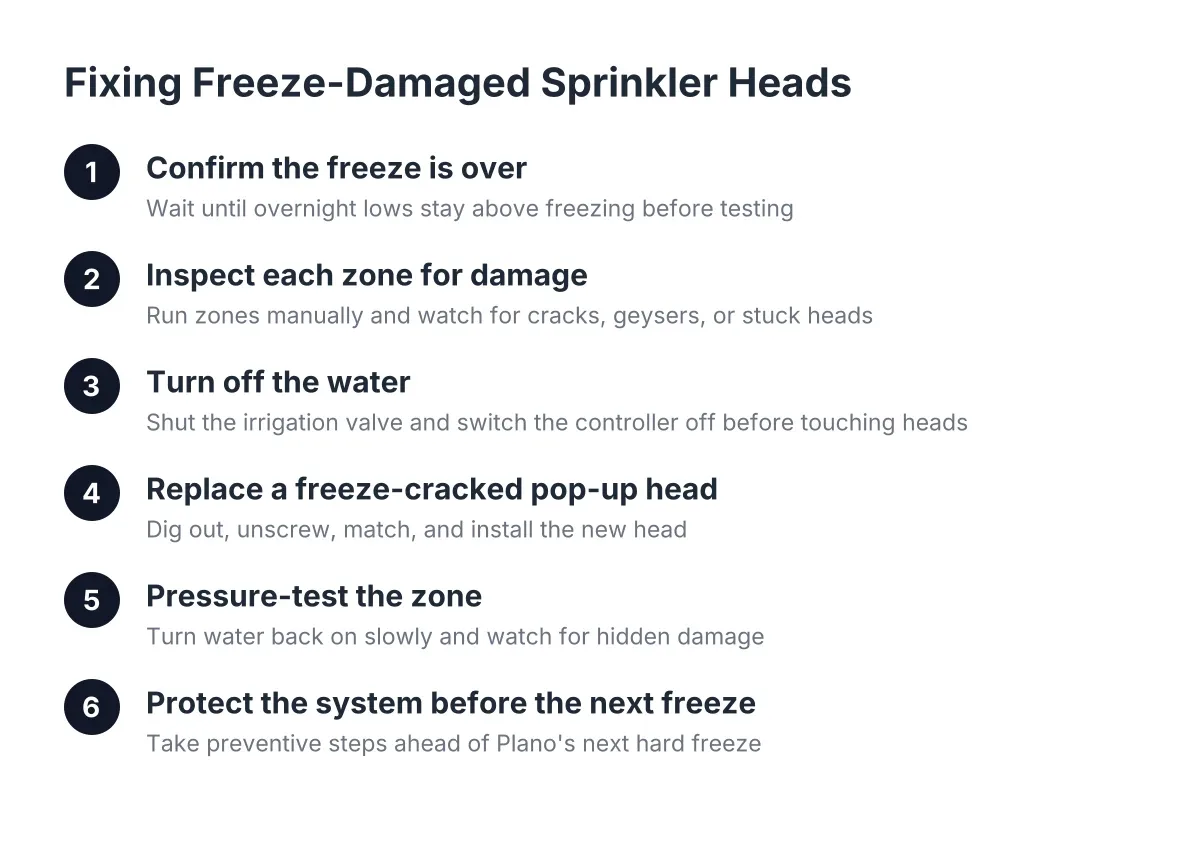
If you suspect the valve, or you plan to open anything up, shut the system down first. Knowing how to turn off a sprinkler system is a ten-minute skill every Plano homeowner should have.
- Find the irrigation shut-off valve. In most Plano yards it sits in a ground box near the water meter, or at the backflow preventer near the house. Turn it a quarter turn so the handle sits crosswise to the pipe.
- Switch the controller to "off" so no zone tries to start while you work.
- If you will touch a valve solenoid, unplug the controller too. That removes any chance of a zone firing or a small electrical surprise while your hands are in the valve box.
- Open a zone manually for a few seconds to bleed off pressure, then close it.
Skipping this step is how people get sprayed in the face when they unscrew a valve bonnet. Always kill the water before disassembly.
Step 3: Pull Up the Stuck Riser and Inspect It
Now work on the head itself. With the water off, a pop-up that is jammed up will stay up, which actually helps you.
Grip the riser, the stem that rises out of the buried body, and work it up and down by hand a few times. On a rotor head, the pull-up slots on top are a universal design, so any brand's rotor tool will grab the turret, according to Rain Bird. Channel-lock pliers work on spray heads if you grip gently.
As you move the riser, look for these failure signs:
- Grit on the riser shaft. Clay soil and sand are the usual culprits. North Texas clay shifts and cracks as it dries, and fine soil washes into heads constantly.
- The riser moves but will not seat down flush. Debris is trapped under the cap or inside the body.
- Water gushing from the base instead of spraying from the top. Rocks or debris lodged inside the riser body often cause this, more often than a bad wiper seal.
- Cracks in the cap or body. Mower strikes and freeze damage both crack housings. A cracked body means replacement, not cleaning.
If the head simply pops up and sprays nothing, that is a different fault. A clogged or missing filter screen under the nozzle is usually the reason one sprinkler head is not working while the rest of the zone runs fine.
Step 4: Clean the Head So It Retracts Freely
Most heads that will not go down just need a cleaning. Here is the sequence:
- Unscrew the cap at the top of the body while holding the riser up. The riser and spring assembly will lift out.
- Rinse the riser, spring, and wiper seal in a bucket of clean water. Wipe the shaft until it slides without grit.
- Pull the filter screen from under the nozzle and rinse it. Replace it if it is torn or missing.
- Flush the buried body. Scoop out any rocks, roots, or mud that fell in.
- Reassemble, turn the water back on, and run the zone. Watch the head pop up, spray, and drop fully flush when the zone ends.
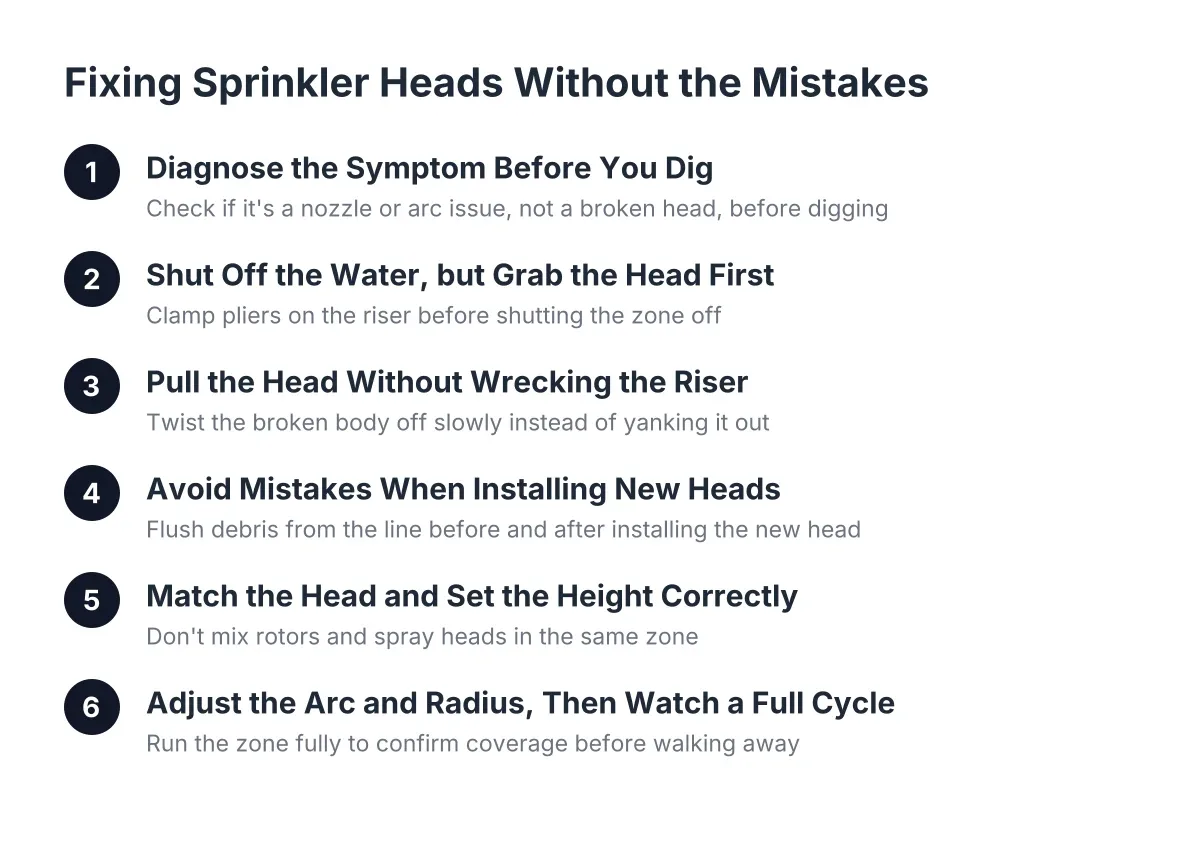
One practical trick for later: when a zone shuts off, working heads retract into the ground and become hard to grab. If you plan to swap a head, lightly clamp pliers around the riser before the water shuts off so it cannot drop out of reach.
Step 5: When a Sprinkler Head Not Retracting Requires Replacement
Cleaning fails when the wiper seal is worn out or the body is cracked. A sprinkler head broke off at base, usually from a mower or car tire at the curb, always means replacement. Suppose a homeowner near Legacy and Coit mows on Saturday and clips a head that was sitting up since Thursday's cycle; in that scenario, the body is split and no amount of cleaning brings it back.
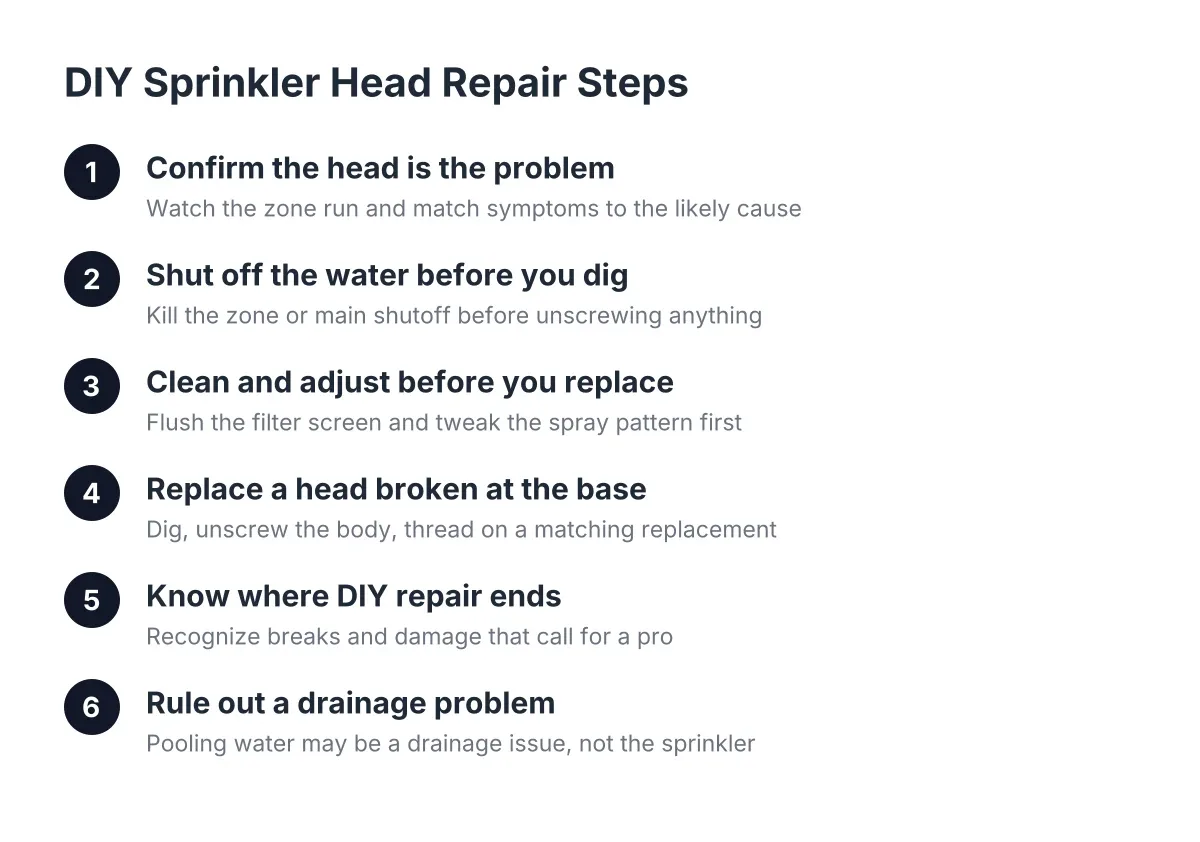
Replacement is straightforward. Dig a small ring around the head, unscrew the old body from the fitting below, and thread on a matching new one. Match the pop-up height and type, spray versus rotor, to the rest of the zone. If the body survived but the internals wore out, you can sometimes unscrew the nozzle and riser assembly and move it into a new body, which saves a few dollars.
While you are there, set the new head correctly. A head installed too low or knocked off plumb is how you end up searching how to fix a sprinkler head that shoots straight up; straighten the body, set the top flush with the soil, and adjust the spray arc. Sprinkler head adjustment at install time prevents the misting, overspray, and runoff that feed soggy spots. On some rotors this is simple; the Rain Bird 5000 Plus, for example, has an on and off adjustment at the head so a technician can service one rotor while the zone keeps running, according to Rain Bird.
When a Sprinkler Head Not Retracting Points to a Bigger Problem
Sometimes the head is only the symptom. Watch for these patterns:
- Several heads on one zone stay up or weep. That points back to the valve. Sprinkler valve replacement fixes the whole zone instead of chasing heads one at a time.
- The same spot floods every cycle even after the head works. You may have a cracked lateral line underground, common in Plano's shifting clay, or a grading and drainage issue that irrigation repair alone will not solve. A French drain may be the right companion fix.
- Heads stick every few weeks. Dirty water, low head height, or heavy soil intrusion will keep clogging things. A tune-up of the full irrigation system catches it once instead of monthly.
There is a real cost to letting it slide. According to the U.S. Environmental Protection Agency (EPA WaterSense), a household with an automatic irrigation system that is not properly maintained can waste up to 25,000 gallons of water annually. With Plano's watering schedule restrictions and long summers, that waste shows up on your bill and in your lawn.
Fix It Yourself or Call a Sprinkler Repair Pro?
Cleaning a stuck pop-up is a fair weekend job for most homeowners. You need pliers, a small shovel, and patience. However, some situations justify a call for professional sprinkler head repair or a broader system check:
- A valve that will not shut off, since diagnosing it means confirming water flow, checking the solenoid, and tracing whether the fault is at the controller, the wiring, or the valve itself
- A head that broke off below grade, where the fitting threads are buried and easy to strip
- Recurring wet spots that suggest a cracked line or drainage problem under the surface
- Any freeze damage at the backflow preventer, which affects the whole system
The trade-off is simple. DIY costs an hour and a few parts; a pro visit costs more up front but catches the valve leak, the misadjusted heads, and the drainage pattern a homeowner usually misses. As of 2026, Plano's watering restrictions reward a system that runs clean in fewer, better cycles, so a one-time tune-up by a sprinkler system contractor often pays for itself in water saved and heads that stop sticking.
Either way, start with Step 1. Once you know whether you have a sprinkler head not retracting on its own or a valve quietly holding it up, the rest of the repair is a known path instead of guesswork.
Prefer to talk it through? Call (469) 639-1022 — a quick call is usually the fastest way to get a straight answer for your situation.