Backflow Preventer Valve Failure in Plano: Freeze Damage and Replacement FAQ
If you just bought a home in Plano and found a strange brass device sticking up near the water meter, you have met your backflow preventer. Backflow preventer valve failure is one of the most common sprinkler problems we see in North Texas, and a hard freeze is the usual cause. Backflow preventer freeze damage can affect both the device and nearby pipes when temperatures drop. This FAQ answers the questions new homeowners ask most when they inherit a sprinkler system with no manual, no labels, and no idea whether that dripping valve is normal or a problem.
What Is a Backflow Preventer, and Is It a Valve?
A backflow preventer is a one-way safety valve that keeps sprinkler water from flowing backward into your home's drinking water. Yes, it is a valve, usually a brass assembly mounted above ground near your water meter or along a side wall. When it works, water only moves one direction: out to your irrigation system.
Inside, spring-loaded check valves open when the sprinklers run and snap shut when they stop. If fertilizer, pet waste, or soil bacteria sit in your sprinkler lines, the backflow preventer stops that water from being pulled back into the pipes you drink from. That is why Plano and most North Texas cities require one on every irrigation system.
What Causes Backflow Preventer Freeze Damage in Plano?
Freeze damage causes most backflow preventer valve failure in Plano. The device sits above ground, full of water, with thin brass walls. When a cold snap drops temperatures into the 20s overnight, trapped water freezes, expands, and cracks the body or the internal check valves. One hard night can split a valve that worked fine for years.
Beyond freezing, a few other things wear these valves out:
- Debris in the line. North Texas clay soil shifts and cracks irrigation pipes. Grit and PVC shards travel through the system and lodge in the check valve seats, so they no longer seal.
- Worn seals and springs. Rubber parts dry out in long, hot summers. A seal that no longer seats lets water weep past.
- Water hammer. Pressure spikes when zones snap on and off can fatigue the internal parts over time.
- Age. Builder-grade valves on new-construction homes are often the cheapest model that passed inspection, and they fail sooner.
What Happens When a Backflow Preventer Fails?
When a backflow preventer fails, you usually see water where it should not be: dripping or spraying from the brass assembly, a soggy spot around its base, or water running even when the controller is off. The bigger risk is invisible; a failed valve can let contaminated irrigation water siphon back toward your drinking water supply.
A steady leak at the backflow device also wastes a surprising amount of water. According to U.S. Environmental Protection Agency (EPA WaterSense), household leaks nationwide can waste nearly 900 billion gallons of water annually. If your first water bill in the new house looks high and the yard near the meter stays wet, this valve is the first place to check.
How Do I Know if My Backflow Preventer Froze and Cracked?
A frozen backflow preventer usually shows itself the first time you run the system in spring: water sprays from a visible crack in the brass, gushes from the relief port, or seeps steadily from the body. Hairline cracks are sneakier. The valve may only weep under pressure, leaving a damp ring at its base.
For a new-build owner inheriting a mystery system, do a quick walk-around before your first full test. Look at the brass assembly for green corrosion streaks, split fittings, or a bell-shaped cover that has popped loose. If you see any of these after a freeze, shut the system off and have it inspected before running zones.
Is a Dripping Backflow Preventer Always a Failure?
A slow drip from the relief port is not always a failed valve. Pressure-type backflow preventers discharge small amounts of water by design when supply pressure fluctuates, which happens in Plano neighborhoods during peak watering hours. A brief drip that stops on its own is often normal operation.
However, a drip that never stops means something inside is not sealing. Usually a grain of debris is caught in a check valve seat, or a rubber seal has worn out. Sometimes a technician can clean and rebuild the valve with new internal parts. If the body itself is cracked from freeze damage, replacement is the only fix.
Should I Repair or Replace a Failed Backflow Valve?
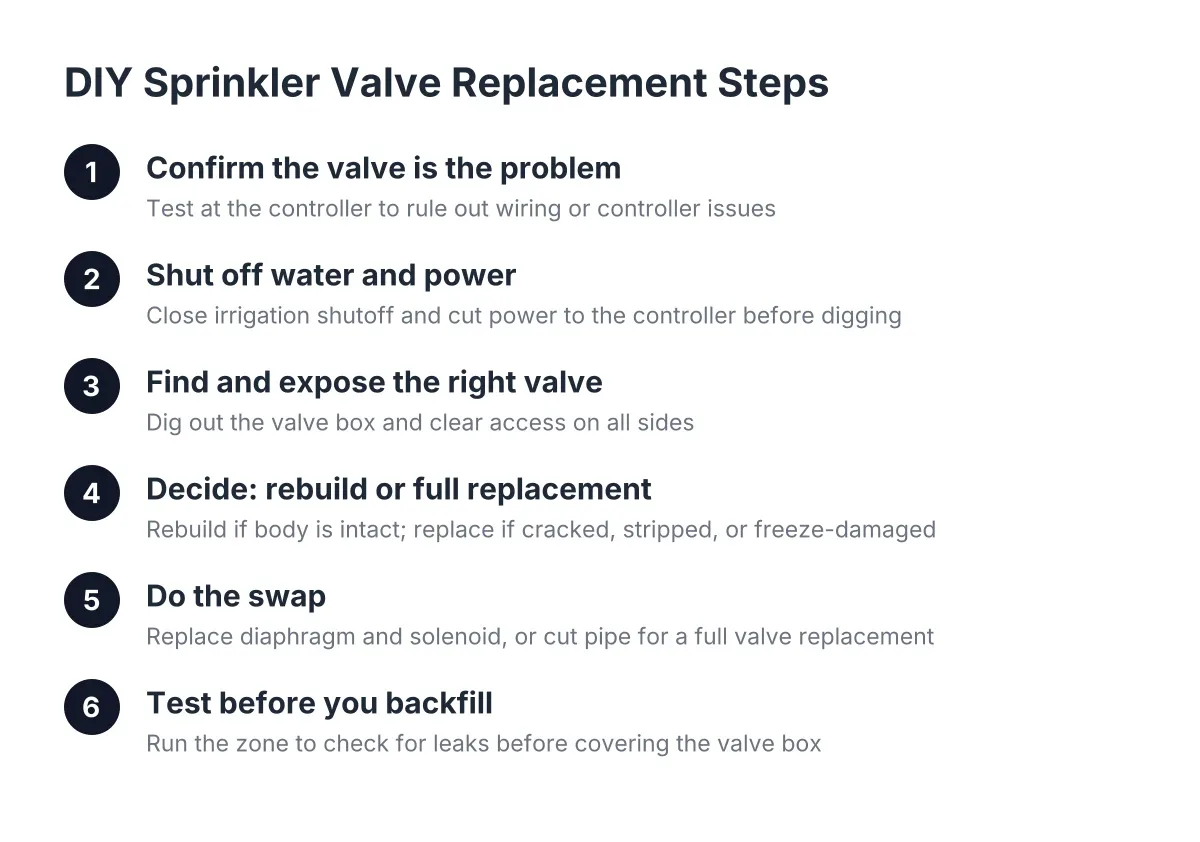
Replace the backflow preventer when the brass body is cracked; repair it when the body is sound but the internals leak. Freeze cracks cannot be patched reliably, so a split body means a new valve. If the housing is intact, a rebuild kit with new check valves and seals often restores it.
Since the valve has to come apart either way to diagnose the problem, rebuilding the internals at the same time is usually practical. The same logic applies to the zone valves buried in boxes around your yard. A full sprinkler valve replacement makes sense when a zone sticks on or will not shut off even with the controller powered down, because that points to the valve itself, not the controller.
What Does Backflow Preventer Replacement Involve and Cost?
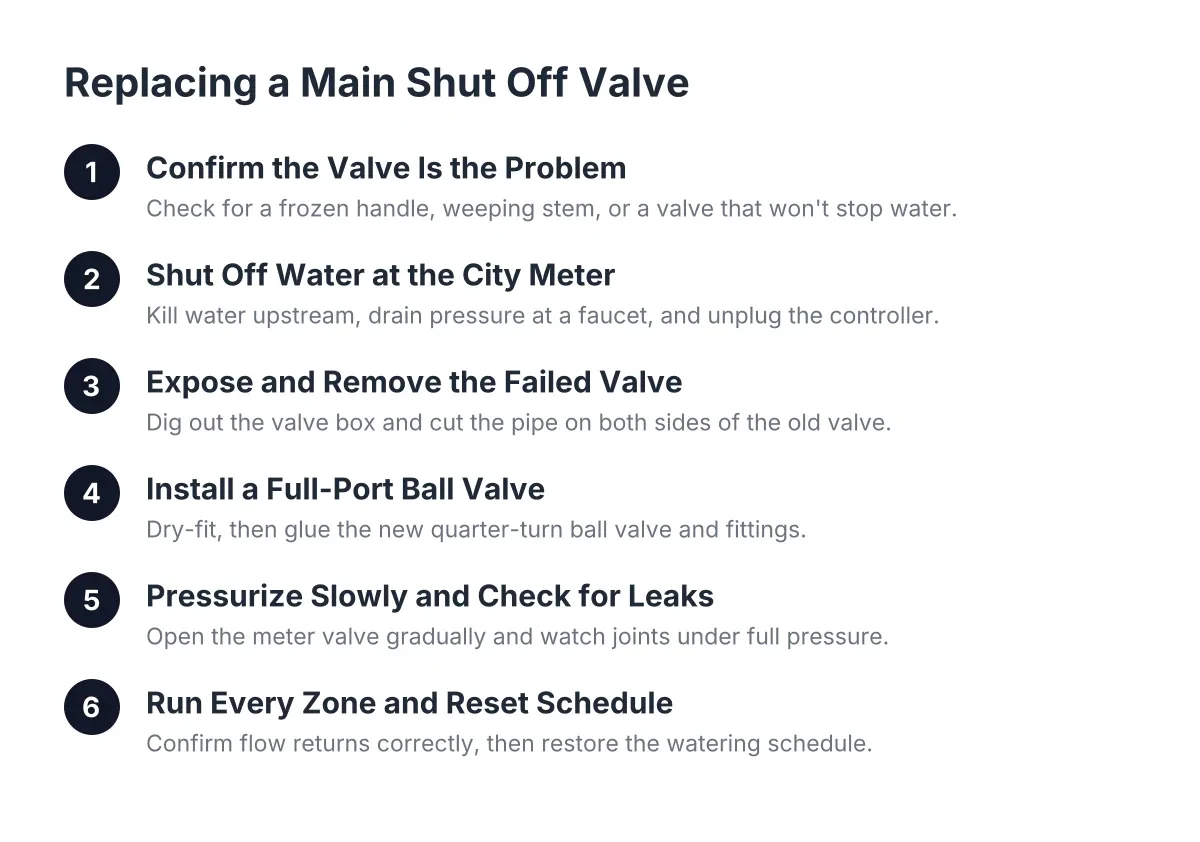
Replacing a backflow preventer involves shutting off the water supply to the irrigation system, cutting out the damaged assembly, and installing a new valve of the correct type and size. In Plano, the work must meet local code for device type and placement, and some situations require a test after installation. Most residential swaps take a few hours.
We avoid quoting dollar figures here because the real backflow preventer valve price depends on several factors:
- Valve size and type. A one-inch pressure vacuum breaker costs less than a larger reduced-pressure assembly.
- Accessibility. A valve buried behind shrubs or set in cramped piping takes longer to cut out.
- Related damage. Freeze events that crack the backflow often crack nearby pipes and zone valves too.
- Testing and code requirements. Local rules in 2026 govern device type, height, and testing, which affects the total.
If you are searching for sprinkler valve replacement near me after a freeze, ask whoever you call to check the zone valves and exposed piping at the same visit. Finding all the freeze damage in one trip beats three separate service calls.
Can I Prevent Backflow Preventer Freeze Damage Before the Next Cold Season?
You can prevent most freeze-related backflow failures by draining and insulating the device before cold weather arrives. The valve sits above ground and freezes first, so it needs protection every winter, even in North Texas where hard freezes are short.
Before the next cold snap:
- Learn how to turn off a sprinkler system at the irrigation shutoff, usually in a box near the meter.
- Open the small test cocks on the backflow device a quarter turn to let trapped water escape.
- Wrap the assembly with an insulated cover or faucet-grade insulation.
- Set the controller to off so a scheduled cycle does not refill the valve overnight.
For example, suppose a homeowner closes on a Plano new build in November and never gets a walkthrough of the sprinkler system. The first January freeze hits, nobody drained the backflow, and in March the first test run sends water spraying across the flower bed. In that scenario, a single insulated cover and five minutes with the test cocks would have saved the whole repair.
Is a Full Inspection Worth It for an Inherited Sprinkler System?
A full inspection is worth it when you inherit a system with no documentation, because it tells you what is broken versus what is only set wrong. A technician maps your zones, tests each valve, checks the backflow device, and reviews the controller schedule. You get a priority list instead of guessing which brown patch means a real problem.
There is a trade-off. If the system runs and the yard looks fine, you can reasonably wait and watch for obvious trouble first. The risk is water waste you cannot see; according to U.S. Environmental Protection Agency (EPA WaterSense), an automatic irrigation system that is not properly maintained can waste up to 25,000 gallons of water annually. One caution applies either way: backflow work ties into your drinking water supply, so diagnosis and replacement belong with a qualified irrigation professional, not a weekend project.
If you need sprinkler valve replacement, North Dallas Sprinkler Repair can help.
Prefer to talk it through? Call (469) 639-1022 — a quick call is usually the fastest way to get a straight answer for your situation.