How North Texas Freeze Damage Breaks Sprinkler Systems (and Runs Up Your Bill)
If your water bill jumped this spring and you cannot find a drip anywhere in the house, look outside. North Texas freeze damage is one of the most common hidden causes of a spiking water bill in Plano, and it often goes unnoticed for weeks. A hard freeze cracks pipes, splits backflow preventers, and warps valve parts underground or inside a box you never open. Then the weather warms up, the system starts running again, and water leaks out of places you cannot see. When freeze damage affects your sprinkler system, the first clue is often a bill that doubled for no obvious reason.
This guide explains exactly how freezing weather breaks a lawn sprinkler system, which parts fail first, how to tell a sprinkler leak from a house plumbing leak, and what your options look like when you are comparing repair paths or sprinkler companies. The goal is simple: help you find the real cause, understand the fix, and get next month's bill back to normal.
Why Freezes Hit Sprinkler Systems So Hard in North Texas
Sprinkler systems in Plano get hit harder by freezes than you might expect for two reasons: shallow pipes and sudden temperature swings. Irrigation lines here sit in the top several inches of soil, far shallower than house plumbing. When a cold snap drops temperatures into the teens overnight, those lines and the parts above ground have little protection.
Water expands when it freezes. That expansion has to go somewhere, so it pushes against whatever contains it. PVC pipe cracks. Brass fittings split at the seams. Plastic valve bodies develop hairline fractures that do not leak at first but fail under pressure weeks later.
North Texas weather makes this worse because our freezes arrive fast and leave fast. A system that was running on a 70 degree Tuesday can face 15 degrees by Friday night. Homeowners who have not winterized yet, or who assumed one mild winter meant they could skip it, end up with water sitting in the most vulnerable parts of the system when the cold hits.
Our clay soil adds its own twist. Heavy North Texas clay shifts as it absorbs and loses moisture. A freeze-and-thaw cycle moves that soil, and the movement can stress buried lines and fittings that were already weakened by ice. That is why some freeze-related leaks do not show up until March or April, long after the storm everyone remembers.
What Freeze Damage Does to Water Bills and System Parts
Freeze damage is not one problem. It is a family of failures, and each one shows up differently. Knowing which part failed tells you a lot about what the repair involves and what drives the cost.
The Backflow Preventer: The First Thing to Break
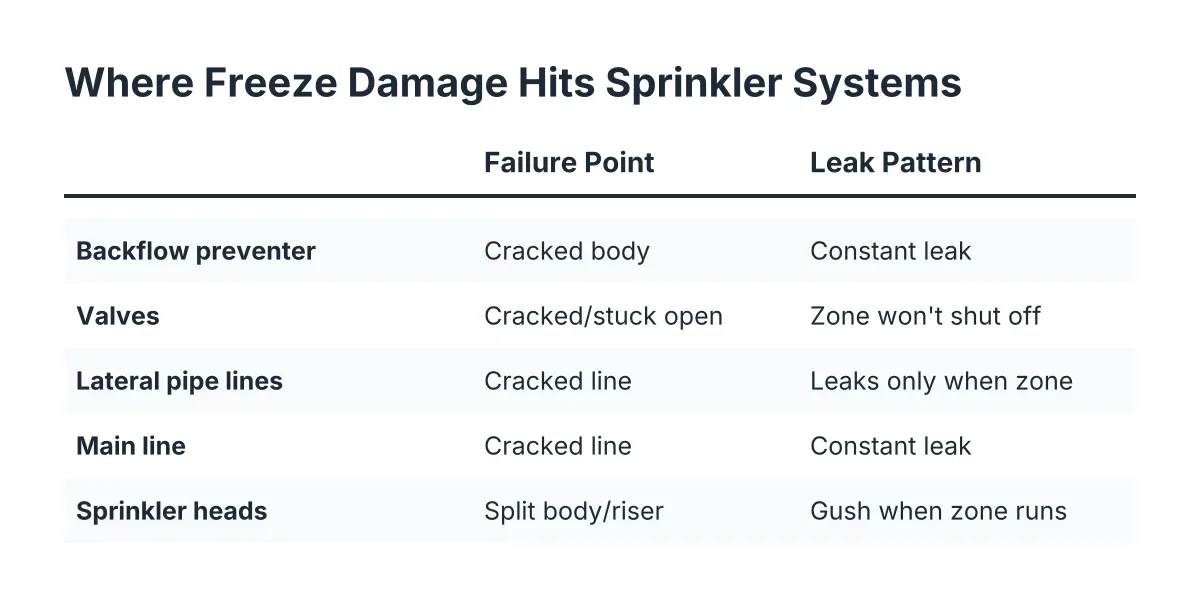
The backflow preventer is the most freeze-vulnerable part of any irrigation system, because it sits above ground and holds water year-round. This brass or bronze assembly keeps irrigation water from flowing back into your home's drinking water supply. When trapped water inside it freezes, the expanding ice cracks the body or splits the internal check assemblies.
A cracked backflow preventer often announces itself clearly. When the system pressurizes in spring, water sprays or steadily streams from the assembly. However, some cracks only weep slowly, soaking the ground around the unit. If you have a soggy patch near a brass device sticking up out of the ground by your house or along a side yard, start there.
This matters for your water bill because the backflow sits on the supply side of the system. A leak there can run continuously, not just when a zone is watering. When freeze damage includes a cracked backflow, a slow and constant leak that nobody sees is exactly the kind of thing that turns a normal bill into a shocking one.
Valves: Cracked Bodies and Stuck Diaphragms
Sprinkler valves are the switches that turn each zone on and off, and they usually sit in green plastic boxes at ground level. Freeze damage affects them two ways. First, ice can crack the valve body itself, which leaks whenever the system has pressure. Second, freezing can damage the rubber diaphragm inside, which can leave a valve stuck partly open.
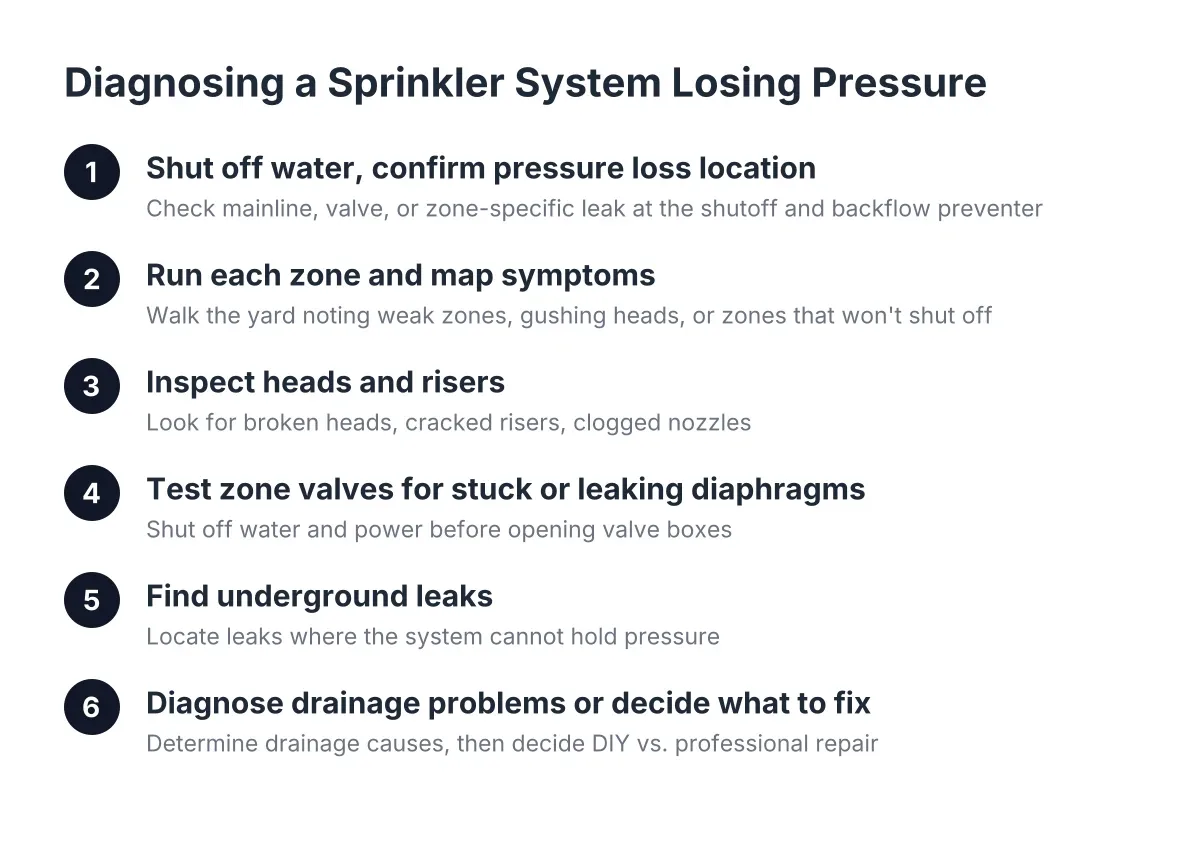
A stuck valve is the classic cause behind two of the searches that bring Plano homeowners to this topic: "sprinkler valve stuck open" and "sprinkler system won't shut off." If a zone keeps running after the controller says it should stop, or if one area of the lawn stays wet around the clock, a freeze-damaged valve is a prime suspect. Sprinkler valve replacement is a routine fix, but finding the right valve among several boxes takes some diagnostic work.
A neighbor mentioning a faint running-water sound at night is another common tipoff. A valve that never fully closes pushes water through heads or seeps underground even when the controller shows the system is off.
Pipes and Fittings: The Leaks You Cannot See
Buried PVC lines crack when water freezes inside them, and these are the hardest freeze failures to spot. A cracked lateral line only leaks while its zone runs, so the waste happens in short bursts at 4 a.m. while you sleep. A cracked main line, the pipe between your water source and the valves, can leak constantly.
Signs of a buried freeze crack include:
- A soggy or spongy patch in the yard with no recent rain
- Grass that is greener and grows faster in one streak or spot
- Low pressure in one zone, with heads that barely pop up
- Bubbling or pooling water when a specific zone runs
- A water meter that keeps moving when everything in the house is off
The meter test is the single most useful check a homeowner can run, and it is covered step by step below.
Sprinkler Heads: Split Bodies and Broken Risers
Pop-up sprinkler heads hold a small amount of water in their bodies, and a hard freeze can split them. A split head leaks whenever its zone runs, often as a gush or geyser rather than a spray pattern. According to Hunter Industries, a rotor sprinkler is made up of a body buried in the ground, a riser that rises from it, a moving turret, and a nozzle at the top that sprays the water. Ice can damage any of those parts, though the body and riser seals fail most often.
Sprinkler head replacement is the simplest freeze repair on the list. The complication after a big freeze is quantity. One split head is a quick fix; fourteen split heads across six zones is a longer visit, and the cost scales with the count.
Is It Freeze Damage or Something Else? How to Tell
A freeze-damaged sprinkler system raises your bill, but so does a leaking toilet flapper or a slab leak. Before you call anyone, you can narrow it down yourself in about 20 minutes. This matters because the biggest worry most homeowners have is paying a diagnostic fee for a guess. Walking in with this information makes any technician's job faster and your answer more certain.
Here is the process:
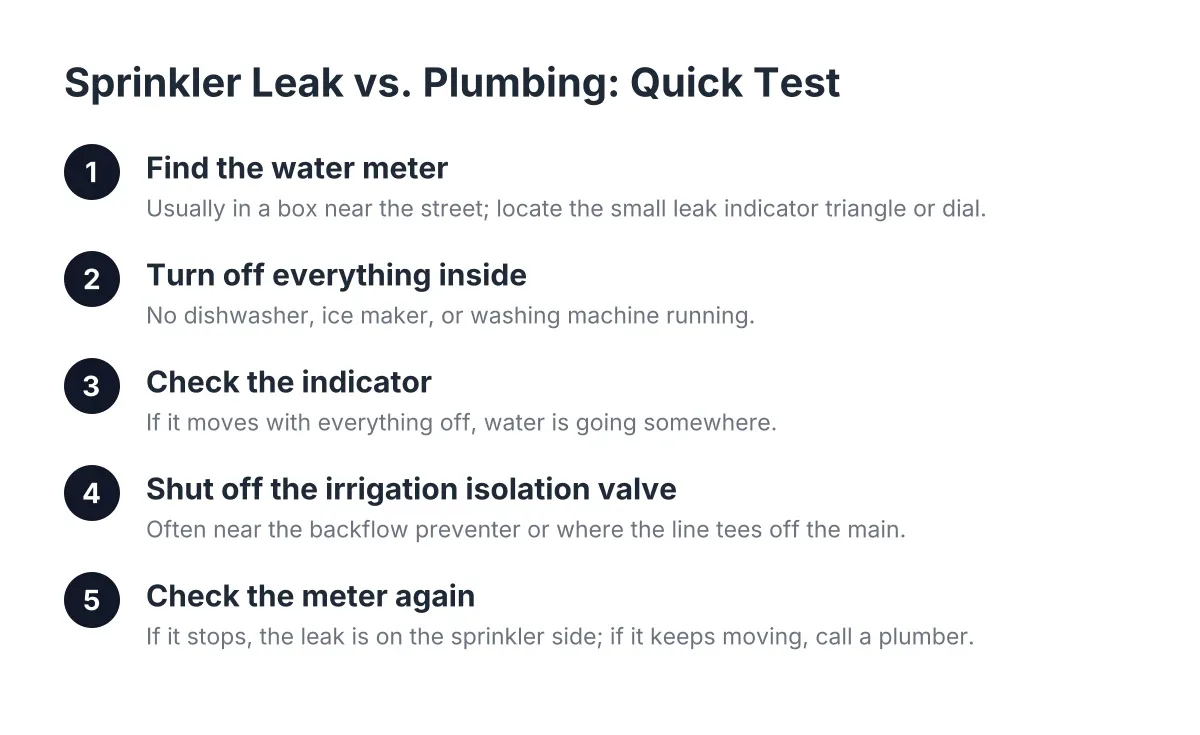
- Turn off everything inside the house that uses water. No laundry, no dishwasher, no running faucets or ice makers.
- Find your water meter, usually in a box near the street, and watch the leak indicator, the small dial or triangle that spins with any flow.
- If the indicator moves with the house quiet, you have a leak somewhere. Now isolate the sprinkler system.
- Shut off the sprinkler system at its isolation valve, often near the backflow preventer, or close the valve feeding the irrigation line. If you are unsure how to turn off a sprinkler system at your house, the shutoff is usually a ball valve or a stop-and-waste valve on the line that feeds the backflow.
- Watch the meter again. If the movement stops when the sprinkler supply is off, the leak lives in your irrigation system. If the meter keeps moving, the problem is on the house side, and you need a plumber instead.
This simple split answers the question most Spiking Water Bill Detectives are asking: is it the sprinklers or the house? After a freeze event, the sprinkler side is the more common culprit in Plano, because house plumbing sits inside conditioned walls while irrigation parts sit in the yard.
In addition, check your controller history if it has one. Some controllers log run times. A zone showing hours of unexpected runtime points to a stuck valve or a controller fault rather than a cracked pipe.
What a Freeze-Damage Repair Visit Actually Involves
Suppose a homeowner near Legacy and Coit opens a February bill that is two and a half times normal. The house checks clean on the meter test, but the meter spins with the irrigation line open. In that scenario, a typical repair visit works through the system in a logical order rather than digging at random.
First, the technician inspects the backflow preventer, since it is above ground, holds constant pressure, and fails most often in a freeze. Next come the valve boxes, checking each valve body for cracks and each zone for a valve that will not close fully. Then each zone runs one at a time while the tech watches pressure, head behavior, and the ground for surfacing water. A zone with weak heads and a wet streak usually has a cracked lateral line along that streak.
Good diagnosis also rules out the quiet contributors. Debris and small rocks work their way into risers and nozzles over time, which can mimic pressure problems. Heads knocked askew by mowers or frost heave waste water by spraying the fence or driveway instead of grass. These are cheap fixes, but they add up; according to U.S. Environmental Protection Agency (EPA WaterSense), as much as 50 percent of outdoor water use is lost to wind, evaporation, and runoff caused by inefficient irrigation.
The repairs themselves range from fast to involved:
- Backflow preventer repair or replacement: above ground, usually a same-visit fix
- Sprinkler valve replacement: digging out the valve box, cutting out the cracked valve, and plumbing in a new one
- Lateral line repair: locating the crack, excavating a small section, and splicing in new pipe
- Main line repair: similar work but under constant pressure, so it is more urgent
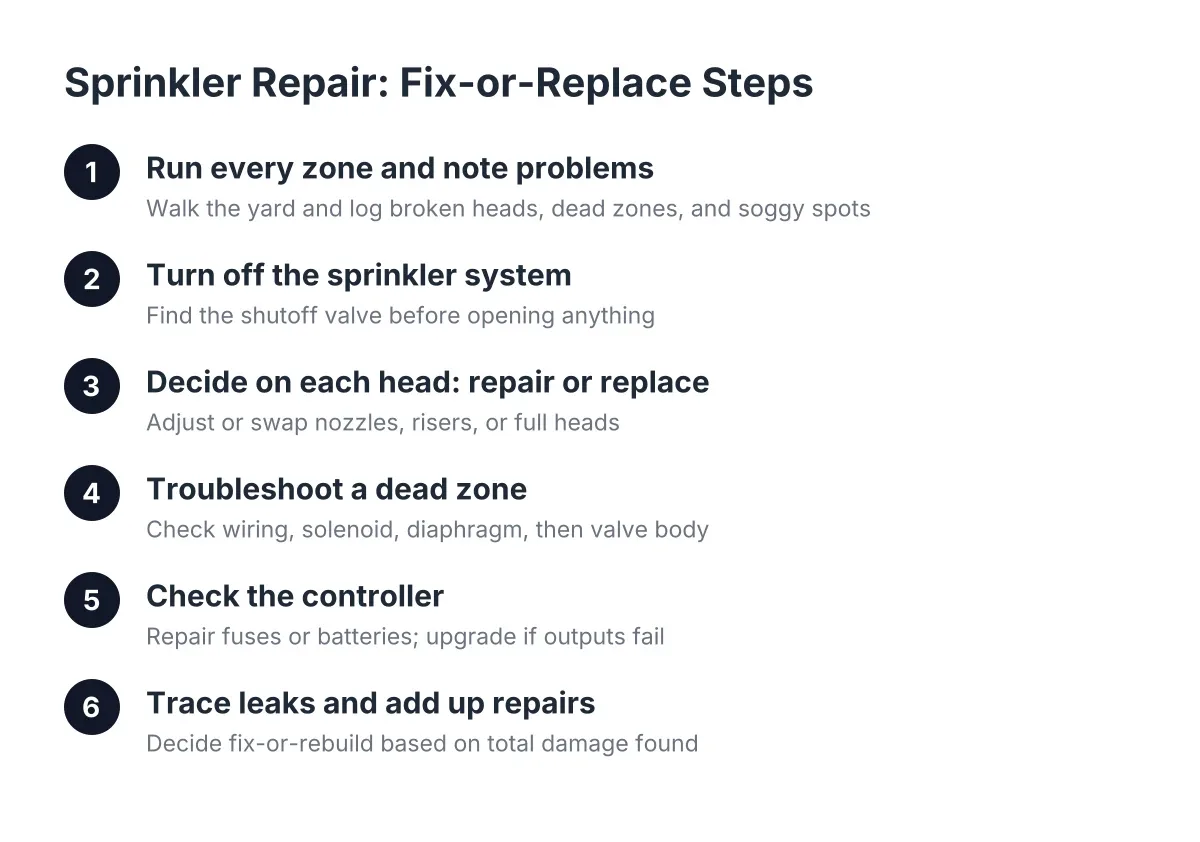
- Head and nozzle work: sprinkler head replacement for split bodies, plus sprinkler head adjustment for anything spraying off target
Cost follows the part and the labor to reach it. An above-ground backflow repair involves no digging. A main line break under a mature tree root involves careful excavation. The number of damaged parts matters more than any single part, which is why post-freeze bills vary so much from one yard to the next. For a deeper breakdown of what drives irrigation repair cost, the factors are the part, the access, and the count.
One honest trade-off: if a system is decades old and the freeze cracked multiple valves, several lines, and the backflow, repair-by-the-piece can approach the cost of rebuilding the worst zones. A straightforward sprinkler system contractor will tell you when patching stops making sense, and when a partial sprinkler system installation is the smarter path.
Comparing Your Options After a Freeze
Most Plano homeowners weighing a post-freeze repair are choosing between three paths: fix it themselves, call a plumber, or call an irrigation specialist. Each has a real use case.
DIY works for the simple stuff. Replacing a split pop-up head or straightening a tilted one is manageable for a handy homeowner. One practical tip: pop-up heads retract into the ground when the water shuts off, which makes them hard to grab; the trick is securing the head before killing the zone. However, valve work means shutting off the water supply first and, for anything electrical, cutting power to the controller before touching a solenoid. If that sentence already sounds like more than you want to take on, it probably is.
A plumber is the right call when the meter test points inside the house, or when the leak is on the supply line before the irrigation system starts. Plumbers handle house-side pipe; many do not carry sprinkler parts or trace zone wiring.
An irrigation specialist makes sense when the leak is anywhere past the backflow preventer. Lawn sprinkler repair is diagnostic work as much as it is parts work. Finding which of six zones hides a cracked lateral, or which of four valves will not seat, takes zone-by-zone testing and familiarity with how these systems are plumbed in North Texas yards. When you search for a lawn sprinkler company near me after a freeze, ask how they diagnose before they dig. A clear answer to that question separates a methodical outfit from a guess-and-charge one.
There is also a middle option worth naming: fix the leak now, and put the system on a seasonal schedule so the next freeze does not repeat the damage. More on that below.
Preventing Repeat Freeze Damage to Your Water Bill and System
Preventing freeze damage to a North Texas sprinkler system comes down to three habits: insulate what sits above ground, drain or shut off before hard freezes, and have the system checked at startup each spring. None of these are expensive, and together they protect the parts that fail first.
Before the next hard freeze:
- Wrap the backflow preventer with an insulated cover or insulation tape. It is the most exposed and most expensive common casualty.
- Shut off the irrigation supply at the isolation valve when a multi-day freeze is forecast, and open a drain or test cock to relieve trapped water if your setup allows it.
- Turn the controller to off or rain mode so zones do not run during freezing weather and glaze your sidewalk with ice.
- Know where your shutoff is before you need it. Hunting for a buried valve box at 10 p.m. during a cold snap is nobody's plan.
Spring startup matters just as much, because freeze cracks often stay silent until the system pressurizes. A methodical startup runs every zone, checks the backflow under pressure, confirms each valve opens and closes fully, and catches the misdirected nozzles that crept in over winter. Nozzles pointed the wrong way are among the most common startup finds, and they are usually a two-minute fix that stops water from soaking the street.
The payoff shows up on the bill. According to U.S. Environmental Protection Agency (EPA WaterSense), a household with an automatic irrigation system that is not properly maintained can waste up to 25,000 gallons of water annually. The same source reports that a well-managed irrigation system can cut irrigation water use by 15 percent, or nearly 7,600 gallons annually. For a Plano homeowner on 2026 watering-restriction schedules, a twice-a-year service rhythm, shutdown before the first freeze and startup in spring, is the cheapest insurance an irrigation system gets.
Updating an old clock-style controller helps too. According to U.S. Environmental Protection Agency (EPA WaterSense), replacing a clock-based controller with a WaterSense labeled controller can cut an average home's irrigation water use by up to 30 percent and save up to 15,000 gallons annually. That will not fix a cracked valve, but it keeps a healthy system from overwatering between freezes.
The Bottom Line for Plano Homeowners
A spiked water bill after a cold winter is rarely a mystery once you know where to look. North Texas freeze damage follows a pattern: the backflow preventer cracks first, valves stick open next, and buried lines and heads leak quietly behind them. The meter test tells you in 20 minutes whether the problem is the irrigation system or the house. From there, the fix is usually a specific part, not a whole-system teardown.
If the damage spans multiple zones, or the leak will not isolate to one spot, bring in a professional rather than digging on a hunch; wiring faults and pressurized main lines are easy to make worse. Choose someone who tests zone by zone, explains what broke and why, and gives you the cost factors before the shovel comes out. Then put the system on a seasonal schedule, insulate the backflow before the next cold snap, and let next month's bill confirm the problem is solved.
If you need sprinkler repair, North Dallas Sprinkler Repair can help.
Prefer to talk it through? Call (469) 639-1022 — a quick call is usually the fastest way to get a straight answer for your situation.