Sprinkler System Not Holding Pressure? Causes and Fixes, Step by Step
If your sprinkler system is not holding pressure, the water pushing through your pipes is escaping somewhere before it reaches the heads. You see the symptoms every time a zone runs: weak spray, heads that barely pop up, a soggy spot that never dries, or water pooling near the foundation long after the cycle ends. In Plano, the usual suspects are a leak in a lateral line, a valve that will not close all the way, a cracked fitting from a winter freeze, or a sprinkler head sheared off by a mower.
This guide walks you through finding the cause in order, from the cheapest fix to the most involved. Work the steps in sequence. Most pressure problems get solved in the first four. And if you are the homeowner watching water pool in the same spot after every cycle, pay special attention to Steps 3 and 7, because a system that cannot hold pressure is one of the most common hidden causes of standing water in a North Texas yard.
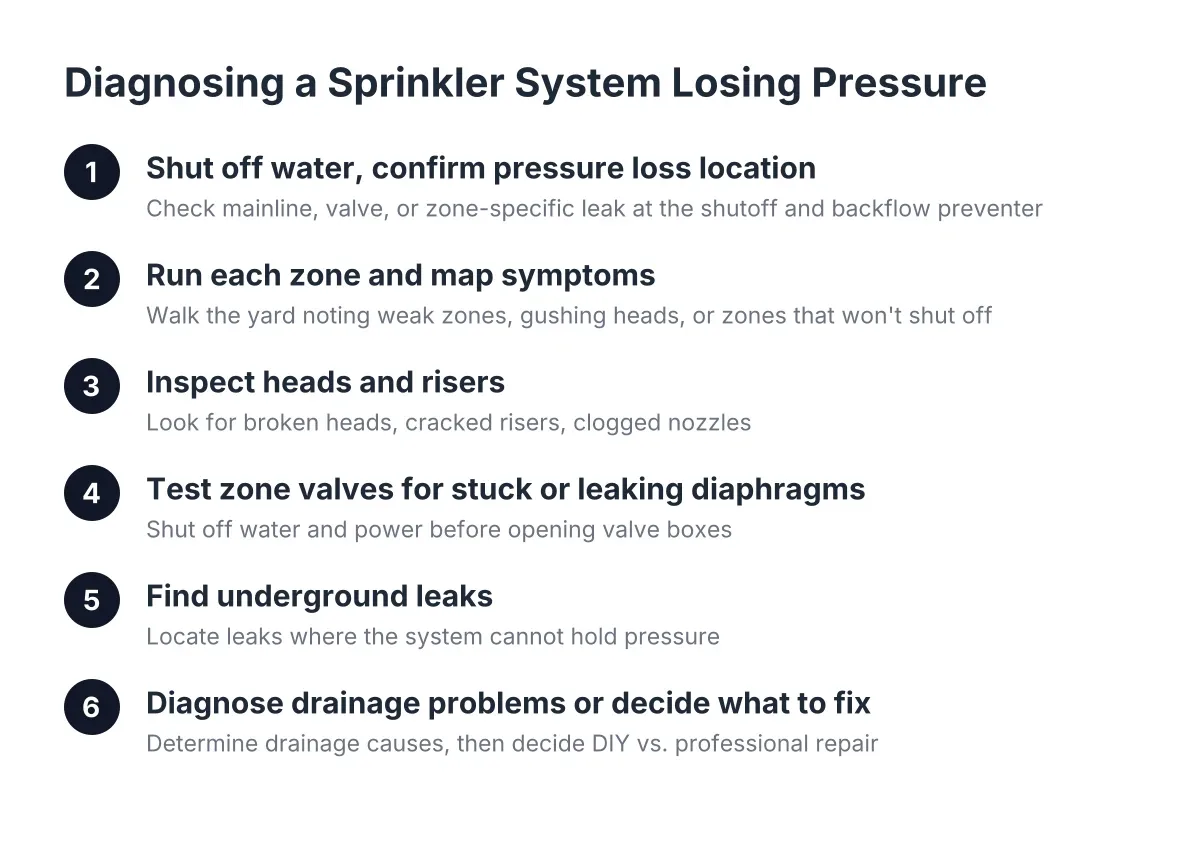
Step 1: Shut Off the Water and Confirm Where the Pressure Loss Happens
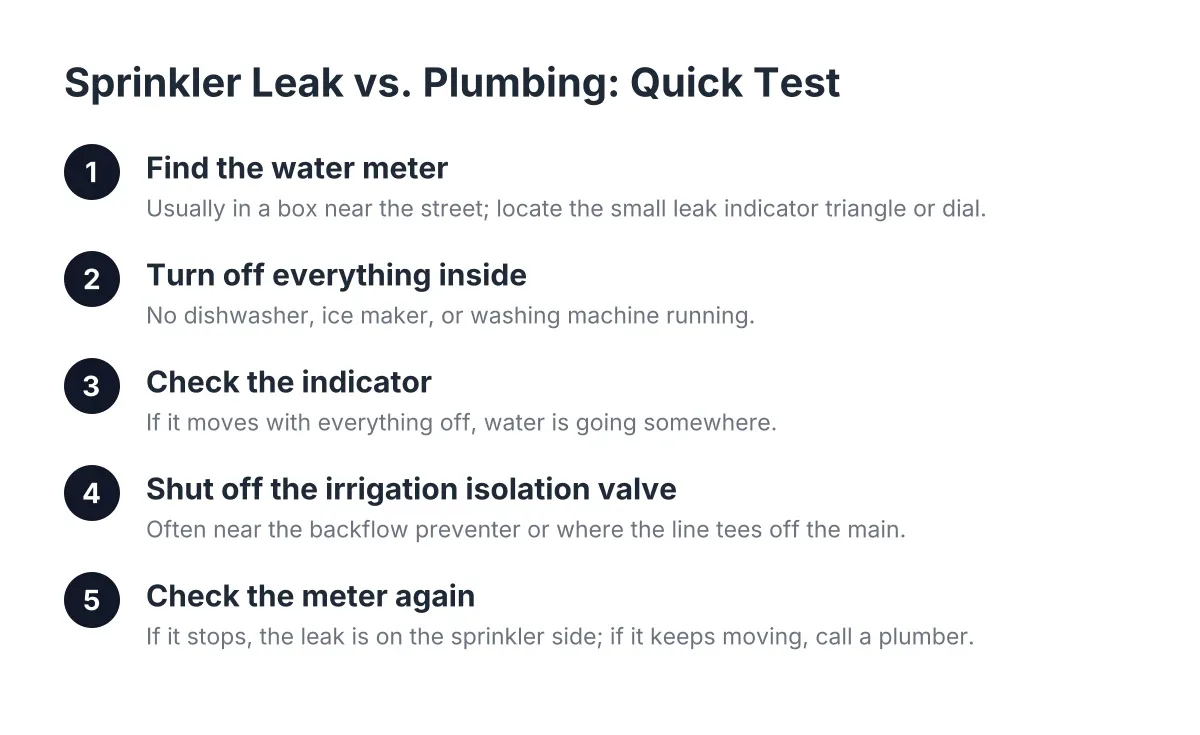
First, learn how to turn off a sprinkler system at the source. Most Plano homes have a shutoff valve on the irrigation line near the backflow preventer, usually in a rectangular box close to the water meter. Turn it off, wait ten minutes, then turn it back on and listen.
If you hear water moving through the pipe with every zone off and the controller idle, the system is losing water constantly. That points to a mainline leak or a valve stuck open. If the system is quiet until a zone runs, the leak lives inside a specific zone, which narrows your search considerably. When your sprinkler system is losing pressure from a stuck valve or cracked fitting, isolating which zone carries the problem saves hours of troubleshooting.
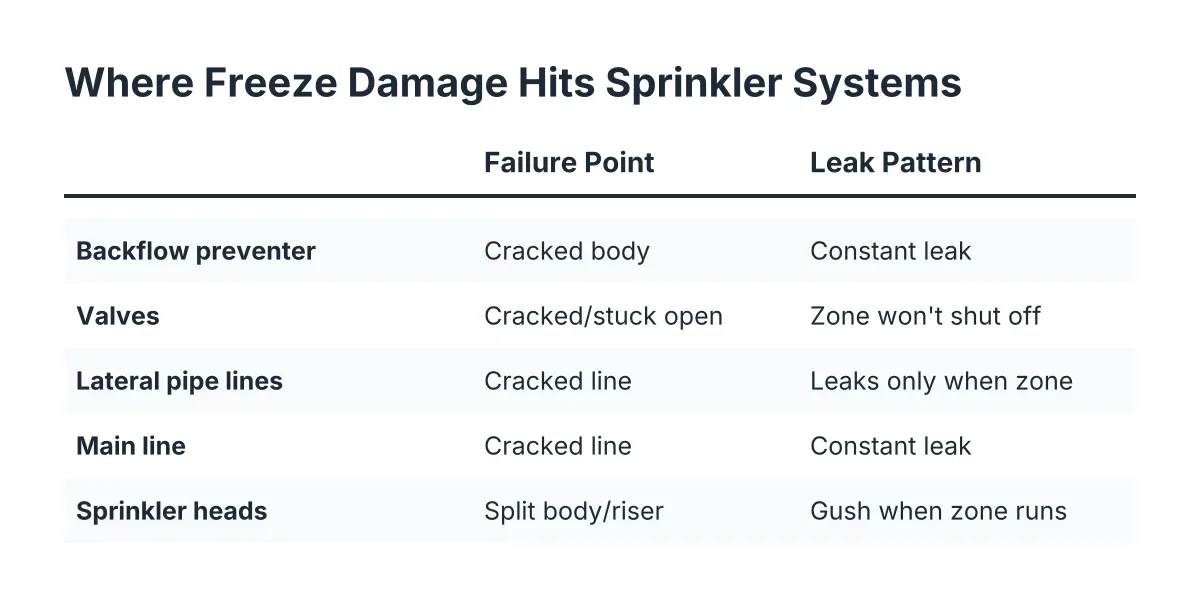
While you are at the backflow preventer, look it over. North Texas freeze events crack backflow bodies and internal parts, and a damaged backflow leaks pressure before water ever reaches a zone. A backflow that hisses, drips, or sprays when the system charges needs attention before anything downstream.
Step 2: Run Each Zone and Map the Symptoms
Next, run every zone from the controller for two to three minutes each and walk the yard with a notepad. You are building a map of where pressure holds and where it does not. Note these patterns:
- One zone is weak, the rest are fine: the problem is inside that zone, likely a lateral line leak, a stuck valve, or too many broken heads.
- Every zone is weak: look upstream at the shutoff valve, the backflow, or a mainline leak.
- One head gushes while its neighbors barely mist: that head or its riser is broken and dumping the zone's pressure at a single point.
- A zone stays wet even when it is off: a valve is not sealing, or a line is leaking under constant mainline pressure.
In addition, check whether any zone refuses to shut off. A zone that keeps running after the controller says stop almost always means a failed valve, not a controller fault. Debris wedged inside the valve diaphragm holds it open, and the zone bleeds pressure around the clock. That same stuck-open valve is often the answer when homeowners ask why sprinklers won't shut off, or why the sprinkler system stays on all the time.
Step 3: Inspect Heads and Risers for Obvious Sprinkler System Pressure Leaks
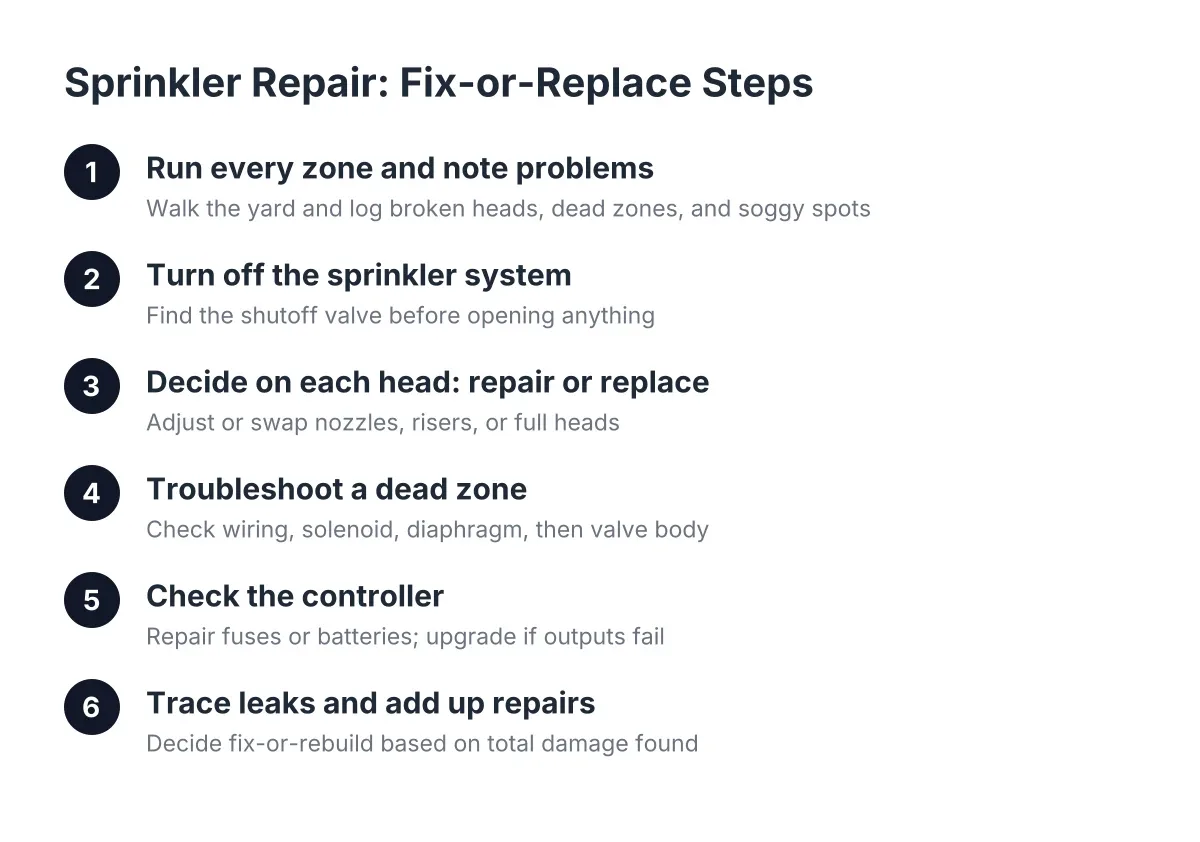
A sprinkler system not holding pressure often comes down to something you can see from standing height. Broken heads and cracked risers are the most common pressure thieves, and they are also the cheapest sprinkler repair on the list. Walk the weak zone while it runs and look for:
- Heads snapped off at the base, often from a mower or an edger
- Water bubbling up around a head instead of spraying from it, which signals a cracked riser or fitting below grade
- Heads that will not pop up fully, a sign the zone lacks the pressure to lift them
- Nozzles spinning the wrong direction or spraying the driveway, which wastes pressure and water on the wrong target
A rotor head is a simple stack: a buried body, a riser that lifts, a rotating turret, and a nozzle on top that sprays, according to Hunter Industries. Any crack in that stack leaks. On rotor nozzles, the small radius adjustment screw also holds the nozzle in place, according to Toro, so a missing or backed-out screw can let a nozzle blow off entirely and turn a head into an open pipe.
One practical trick during sprinkler head replacement: pop-up heads retract into the ground once the water shuts off, which makes them hard to grip. Lightly clamp pliers around the head while the zone still runs, then shut the water off. The head stays up and you can unscrew it without digging.
Clogged nozzles matter here too. Dirt and small rocks work into risers and nozzles constantly, especially in clay soil that sheds grit into open lines during repairs. A clogged nozzle can mimic low pressure on part of a zone even when the line itself is sound.
Step 4: Test the Zone Valves for Stuck or Leaking Diaphragms
If the heads check out, move to the valves. Each zone has a control valve, usually grouped in one or two ground boxes. Before you open one, shut off the water supply and cut power to the controller; an open valve under pressure will spray you, and live solenoid wiring complicates the job.
Inside the valve, the rubber diaphragm does the sealing work. A grain of sand or a torn diaphragm keeps the valve from closing fully, so water seeps into the zone around the clock and the system never holds pressure. Signs of a bad valve include a zone that weeps water when off, a valve box full of water, or a zone that runs weakly no matter what the controller does.
Sprinkler valve replacement is a routine job for a sprinkler system contractor, and irrigation control valve repair parts such as diaphragms and solenoids are standard irrigation system repair parts. However, if several valves in one box fail at once, or the manifold piping is cracked, the fix grows from a part swap into a rebuild, and that changes the labor involved.
While you are at the controller, confirm it has power and the valve wiring is intact. A sprinkler system not getting power will not open any valves at all, which is a different failure than a pressure loss, but the two get confused when zones behave erratically. If other zones run normally, water and power are reaching the system, and you can rule out the controller as the pressure problem.
Step 5: Find Underground Leaks Where the System Cannot Hold Pressure
When heads and valves pass inspection but the system still loses pressure, the leak is underground. Plano sits on heavy clay soil that swells when wet and shrinks hard in long dry summers. That movement snaps glue joints, cracks PVC lateral lines, and pulls fittings apart a few inches below the surface. Look for:
- A patch of grass greener and taller than everything around it
- A spot that stays muddy or spongy days after the last watering
- Water surfacing between heads while a zone runs
- A water bill that climbed without a change in your watering schedule
The waste adds up fast. A household with an automatic irrigation system that is not properly maintained can waste up to 25,000 gallons of water annually, according to U.S. Environmental Protection Agency (EPA WaterSense). Under Plano's watering restrictions, a leaking line also steals pressure from the one or two days a week your lawn is allowed to drink.
One more place to check: buried add-ons. Homeowners sometimes tap drip lines into an existing spray or rotor zone for flower beds, then bury them. A split drip line leaks unseen for months and drains zone pressure the whole time. Walk the beds and feel for soft, saturated mulch.
Step 6: Diagnose When a Sprinkler System Losing Pressure Stems From a Drainage Problem
Here is the question that keeps the standing-water worrier up at night: is this pooling a sprinkler problem, a grading problem, or a drainage problem? The honest answer is that it is often both, and the order of operations matters. Fix the leak first, then judge the drainage.
Suppose a homeowner in west Plano sees water pooling by the flower beds after every cycle, with the mud creeping toward the foundation. In that scenario, step one is pressure-testing the nearest zone. If a cracked lateral line is dumping water there, repairing the line may end the pooling entirely. If the line is sound and water still collects after normal watering or rain, the yard has a low spot or a grading issue that irrigation repair alone will not fix.
That second case is where French drain installation earns its place. A French drain is a gravel-filled trench with a perforated pipe that collects water from the low spot and carries it away from the foundation. Because the trenching for a drain often crosses irrigation lines, it makes sense to have one crew handle both the drain and any sprinkler line rerouting; separate contractors digging in the same yard is how new leaks get created. Standing water against a slab foundation in expansive clay is a foundation risk worth taking seriously, so do not let a chronic wet spot ride for another season.
Step 7: Decide What to Fix Yourself and What to Hand Off
Some of these fixes are honest weekend work. A sprinkler head adjustment, a nozzle cleaning, or a straightforward head swap takes basic tools and an hour. Pull-up slots on rotor heads follow a universal design, so any brand's rotor tool lifts the turret, not just the matching manufacturer's tool, according to Rain Bird.
Other jobs justify a professional. Call in lawn sprinkler repair help when:
- The backflow preventer leaks or shows freeze cracks, since backflow work protects your drinking water and must be done right.
- A mainline leak keeps the system from holding pressure with everything off, because mainline repairs run under constant pressure and sit deeper than lateral lines.
- Valve problems repeat across multiple zones, which suggests debris or a manifold issue rather than one bad diaphragm.
- Pooling continues after the leak is fixed, which points to grading or drainage and may call for a French drain.
- You cannot locate the leak at all, since a technician with line-locating experience finds in one visit what trial digging takes weeks to expose.
Irrigation repair cost at this stage depends on what the diagnosis uncovers: how deep the line sits, how many parts failed, whether the valve box or backflow needs rebuilding, and whether drainage work gets bundled in. A head swap sits at the low end; a mainline repair or a French drain sits higher. There is also real money in getting the system efficient again. If a household's irrigation system is well managed, irrigation water use can drop by 15 percent, or nearly 7,600 gallons annually, according to U.S. Environmental Protection Agency (EPA WaterSense).
A Quick Recap for Plano Yards in 2026
A sprinkler system not holding pressure is almost always one of five things: a damaged backflow, a broken head or riser, a stuck valve, a cracked lateral line, or a buried add-on leaking out of sight. Work the steps in order; shut off and listen, map the zones, check the heads, test the valves, then hunt underground. Fix the leak before you judge the drainage, and treat recurring pooling near the foundation as a separate problem that may need a French drain.
The same checklist applies across the area, whether you are troubleshooting in Plano, lining up sprinkler repair in McKinney, or comparing Frisco sprinkler repair options; the clay soil, summer heat, and watering schedules do not change at the city line. What changes is how fast you catch the leak. A system that holds pressure waters evenly, stays inside the restriction schedule, and keeps water off your foundation, which is the whole point.
If you need sprinkler repair, North Dallas Sprinkler Repair can help.
Prefer to talk it through? Call (469) 639-1022 — a quick call is usually the fastest way to get a straight answer for your situation.