Sprinkler Repair vs. Replacement: When to Fix a Head, Valve, or Zone and When to Rebuild
Every spring in Plano, homeowners turn their systems back on and find the same question waiting: is this a quick sprinkler repair, or has the system reached the point where parts of it should be rebuilt? The answer is rarely all or nothing. Most systems need a handful of fixes, not a full replacement. This guide walks through the decision step by step, so you can diagnose what you have, fix what makes sense, and only replace what has truly worn out.
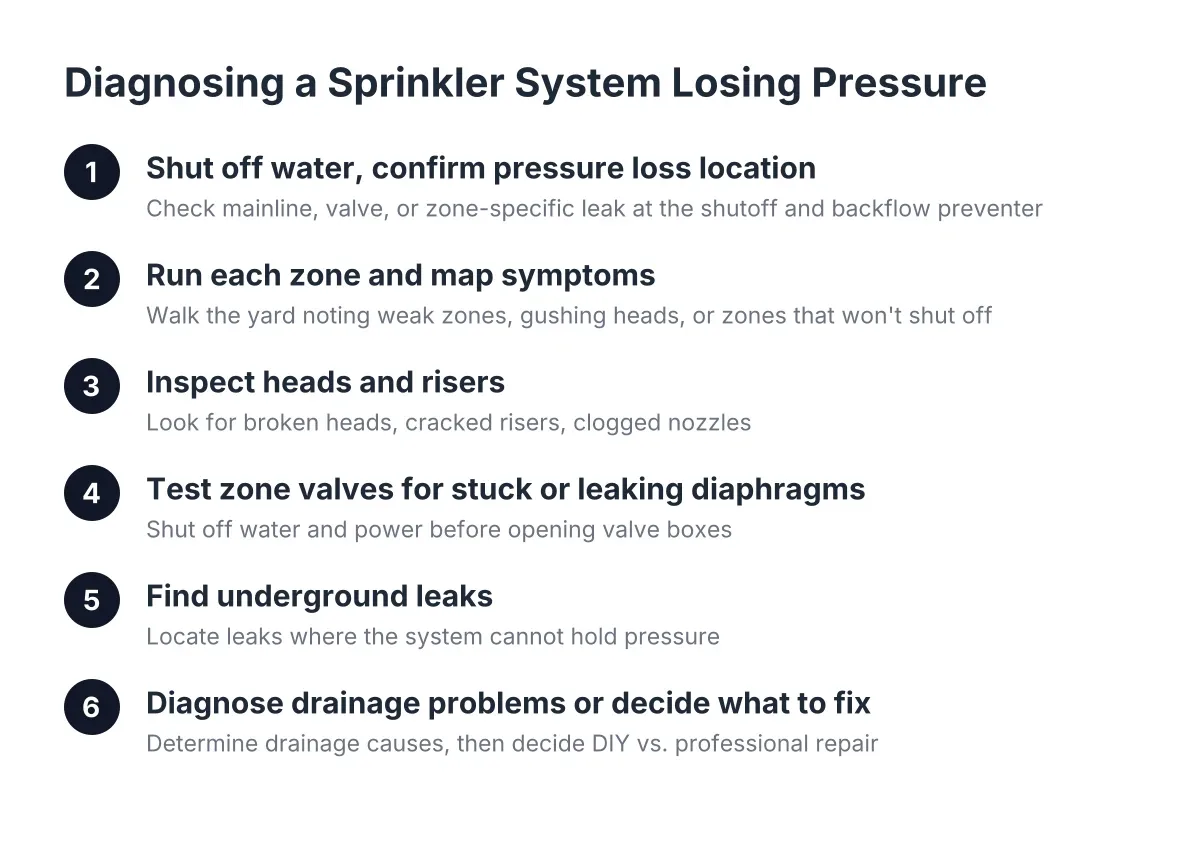
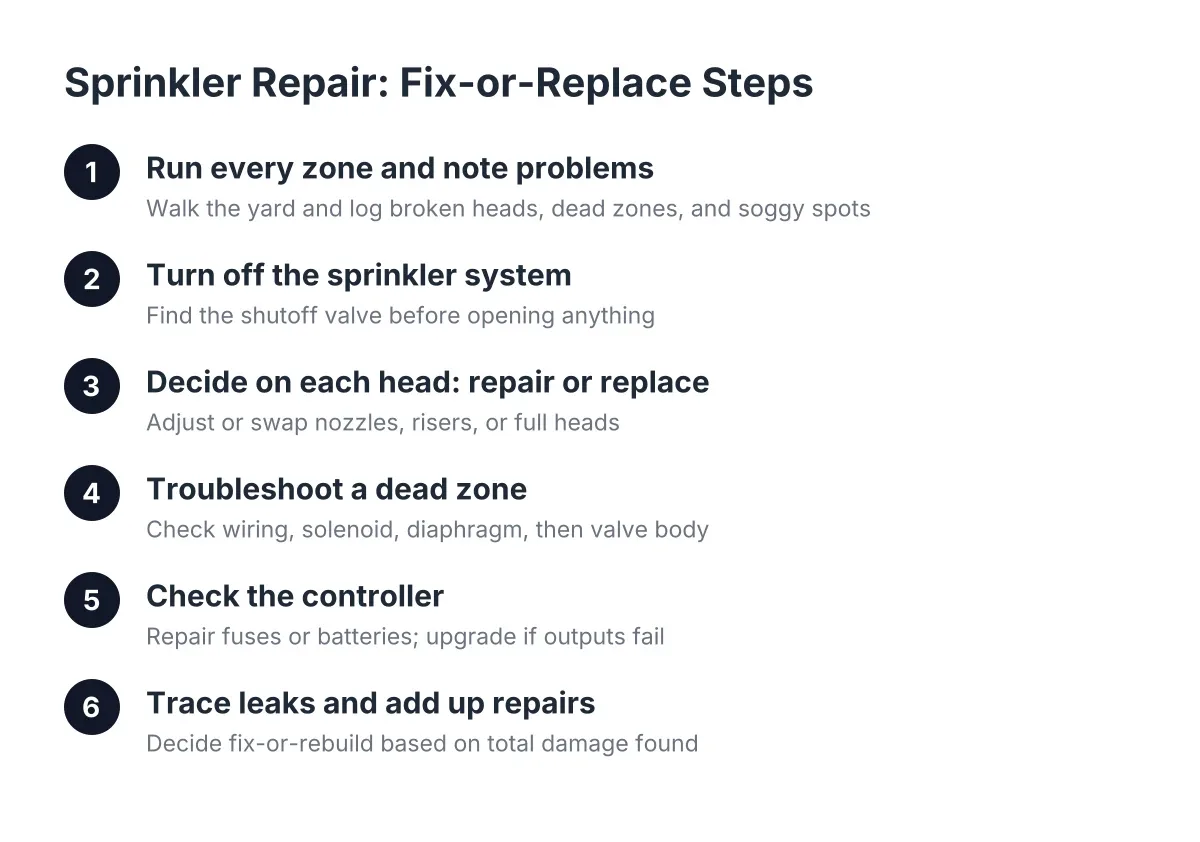
Work through the steps in order. Each one narrows down the problem and tells you whether repair or replacement is the smarter call for that part of the system.
Step 1: Run Every Zone and Write Down What You See
Before you touch anything, run the whole system manually from the controller and watch each zone. You cannot make a repair-or-replace decision without knowing how many problems you actually have. One broken head is a repair. Twelve broken heads across five zones is a different conversation.
Walk the yard while each zone runs. Note heads that do not pop up, heads that spray sideways or gurgle, dry patches, and soggy spots. Nozzles facing the wrong direction are one of the most common issues found at spring startup, and they are usually a quick fix, not a sign of a failing system.
Here is a simple scorecard to fill out as you walk:
- Heads that are tilted, sunken, or clearly broken
- Zones that do not come on at all
- Zones that come on but run weak
- Wet or soggy areas that stay wet after the system shuts off
- Controller problems, like a blank display or zones that will not respond
Suppose a homeowner in west Plano runs this check in March and finds two mower-struck heads, one nozzle spun the wrong way, and one zone that will not fire. That system does not need replacement. It needs a morning of targeted lawn sprinkler repair.
Step 2: Learn How to Turn Off a Sprinkler System Before You Open Anything
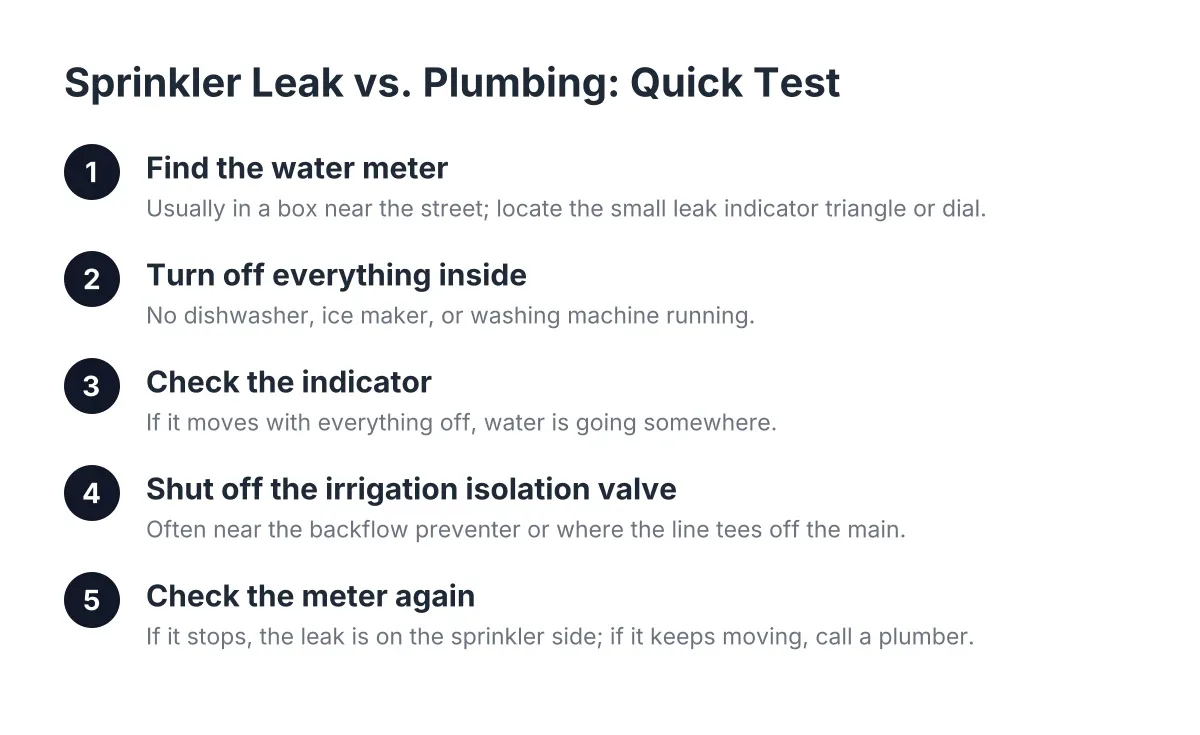
Knowing how to turn off a sprinkler system means finding the irrigation shutoff valve, usually near the backflow preventer or in a dedicated box, and closing it before any repair. Shut off the water supply to the irrigation system before you open a valve or dig up a line. If you skip this, water sprays everywhere the moment you disassemble anything.
Most Plano homes have a shutoff valve near the backflow preventer, often in a box near the front of the house or close to the water meter. Find it now, even if you plan to hire the work out. In a hard freeze, closing this valve fast is the difference between a cheap fix and a burst backflow preventer.
One practical note for head replacement: when you shut a zone off, pop-up heads retract into the ground, which makes them hard to grab. Lightly clamping pliers around the head while the water still runs keeps it from fully retracting.
Step 3: Decide on Each Sprinkler Head, Repair or Replace
A sprinkler head decision comes down to what broke. If the plastic body is cracked, usually from a mower strike, the body needs full replacement; there is no reliable patch for a split case. However, the internal nozzle and riser can sometimes be unscrewed and reused in the new body, which keeps the cost of the fix down.
If the head is intact but spraying wrong, you likely need a sprinkler head adjustment, not sprinkler head replacement. According to Hunter Industries, a rotor sprinkler is made up of a buried body, a riser that rises from it, a turret that moves during operation, and a nozzle at the top. Problems at any of those points show up differently:
- Clogged or misaligned nozzle: clean it or turn it. Debris and rocks working into risers and nozzles is a common, recurring problem.
- Short spray that leaves brown patches at the far edge of a zone: the radius may be set too short. Turning the radius screw counterclockwise increases it.
- Sunken or tilted head: dig it up, reset it level with the soil, and backfill. North Texas clay shifts as it swells and shrinks, so this happens even with nothing broken.
Make radius and arc adjustments while the zone runs, so you can see the effect of each turn. According to Toro, the radius adjustment screw on a rotor nozzle also holds the nozzle in place, so do not back it out completely. Pull-up slots on rotor heads are a universal design, so any brand's rotor tool will lift the turret, according to Rain Bird; you do not need the matching manufacturer's tool.
When does replacement win? If a head is more than one problem deep, cracked body plus worn gears plus a stripped adjustment screw, swap the whole head. New rotors are inexpensive compared to repeat service calls on a dying one.
Step 4: Troubleshoot a Dead Zone Before Blaming the Valve
A dead zone does not automatically mean a bad valve. First, confirm the basics: do other zones still run normally? If they do, the water supply and the controller's power are fine, and the problem sits with that one zone's valve or wiring.
From there, the usual suspects line up in order of cost:
- A loose or corroded wire connection at the valve or controller
- A failed solenoid, the small electric part on top of the valve
- A worn diaphragm inside the valve
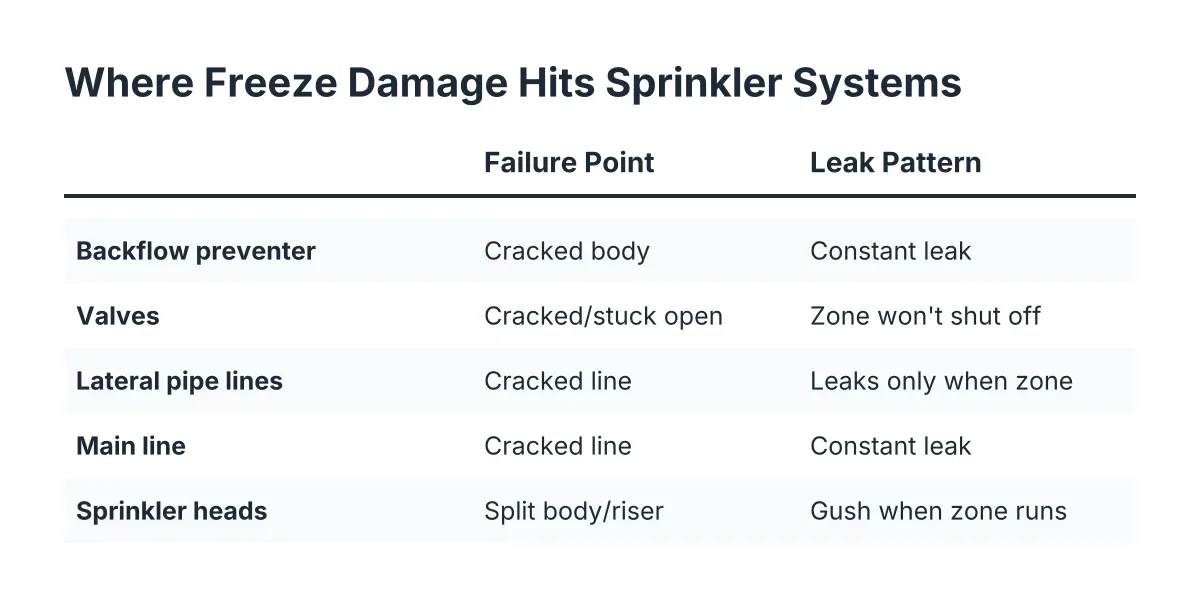
- A valve body that is cracked, often from a past freeze
A solenoid swap is a true repair, and the process is essentially the same across valve brands. A worn diaphragm can also be rebuilt in place. In contrast, a cracked valve body means sprinkler valve replacement; freeze-split plastic cannot be sealed reliably. After the February freeze events North Texas has seen, cracked valves and damaged backflow preventers are the most common spring surprises, and both fall on the replace side of the line.
Step 5: Check the Controller, Repair It or Upgrade It
Irrigation controller repair makes sense when the problem is a blown fuse, a dead backup battery, or a single bad zone terminal. If the controller is older, drifts off schedule, or has failed outputs on several zones, replacement is usually the better spend, and it can pay for itself in water.
According to the U.S. Environmental Protection Agency (EPA WaterSense), replacing a clock-based irrigation controller with a WaterSense labeled controller can cut an average home's irrigation water use by up to 30 percent, saving up to 15,000 gallons annually. In Plano, where summer watering restrictions limit which days you can run, a smart controller also makes it easier to stay inside the schedule without babysitting the box.
Step 6: Trace Leaks and Soggy Spots Before Assuming the Worst
A wet spot in the yard has three common causes: a leaking lateral line, a valve that will not close fully, or a drainage problem that has nothing to do with the irrigation system. Sorting these out matters, because the fixes are different.
After ruling out electrical causes, walk the entire property looking for leaks. Previous owners sometimes tapped drip lines into an existing spray or rotor zone, and those buried additions can leak for years undetected. Clay soil makes this worse; it shifts and cracks lines, then holds the leaked water at the surface instead of letting it drain.
If the soggy patch stays wet even when the system has been off for days, you are likely looking at a drainage issue, not a leak. In that scenario, the repair conversation shifts from pipe work to grading or French drain installation, which moves standing water away from the lawn and the foundation. A leak repair will not fix a yard that cannot drain.
Step 7: Add Up the Repairs and Make the Fix-or-Rebuild Call
Now total what you found in Steps 1 through 6. A useful rule of thumb: if your list is mostly heads, nozzles, one valve, and adjustments, repair wins. Those are routine fixes with long remaining life in the rest of the system. If you found cracked lines in multiple zones, several failed valves, chronic low pressure, and a controller at the end of its life, price a partial rebuild or new sprinkler system installation against the repair list.
The stakes are bigger than the parts. According to the U.S. Environmental Protection Agency (EPA WaterSense), a household with an automatic irrigation system that is not properly maintained can waste up to 25,000 gallons of water annually, and as much as 50 percent of outdoor water use is lost to wind, evaporation, and runoff from inefficient systems. A limping system costs you every month it runs.
What Does Professional Sprinkler Repair Include?
A professional sprinkler repair visit typically includes a full system check of every zone, diagnosis of the failed parts, and the fix itself: head replacement, sprinkler head adjustment, valve or solenoid work, wire tracing, and controller troubleshooting. Line repairs that need digging, backflow replacement, and drainage work are usually scoped and priced separately.
Costs vary with what is broken and how deep the problem sits. A nozzle swap is at the low end; valve replacement under a mature tree's roots is not. Most sprinkler repair companies price by the visit plus parts or by the hour, so sprinkler system repair cost depends on how many issues the walkthrough in Step 1 turned up. Good upkeep also pays off: according to the U.S. Environmental Protection Agency (EPA WaterSense), a well-managed irrigation system can reduce a household's irrigation water use by 15 percent, or nearly 7,600 gallons annually.
When to Handle Sprinkler Repair Yourself and When to Call a Pro
Handle the simple sprinkler repair tasks yourself: cleaning clogged nozzles, straightening a tilted head, adjusting spray direction, and replacing a cracked head body on an exposed riser. Call a professional for valve replacement, wiring problems, suspected underground leaks, backflow damage after a freeze, and anything touching the main line.
Two warning signs mean call now rather than wait: water surfacing when the system is off, which points to a valve or main line leak, and any visible crack or drip at the backflow preventer. Both waste water around the clock and can get expensive fast.
If you are getting quotes in 2026, ask any sprinkler system contractor three things: will they walk every zone before quoting, do they separate repair costs from recommended upgrades, and can they explain why each part needs replacement rather than repair. A fair quote itemizes parts and labor and does not bundle a rebuild into what started as a two-head fix. For bigger calls, like replacing a whole zone's piping or adding drainage, a second opinion is reasonable given the cost.
Get the Fix-or-Replace Answer for Your System
Most Plano systems do not need replacing. They need an honest walkthrough, a short repair list, and a watering schedule matched to local restrictions and the heat. If your spring startup turned up dead zones, soggy patches, or heads you cannot adjust back into line, North Dallas Sprinkler Repair can run the diagnosis, explain what is broken in plain terms, and tell you which parts are worth fixing and which are not. Reach out to schedule a visit before the summer heat puts your lawn on the clock.
If you need sprinkler head repair, North Dallas Sprinkler Repair can help.
Prefer to talk it through? Call (469) 639-1022 — a quick call is usually the fastest way to get a straight answer for your situation.