Emergency Sprinkler Repair Before Watering Restrictions Hit: A Plano Guide
Your water bill just doubled, and nothing inside the house changed. No new pool, no extra laundry, no leaky toilet you can hear. If you live in Plano, there is a good chance the answer is buried in your yard, and the clock matters more than you think. Getting an emergency sprinkler repair before watering restrictions tighten for the season is not just about saving water, especially when there's a sprinkler leak draining your system. It is about finding the leak while you can still legally run the system long enough to see it, and stopping the waste before another billing cycle lands.
This guide walks through why sprinkler leaks spike water bills, how to tell a sprinkler problem from a house plumbing problem, what to do tonight to stop the bleeding, and what a real repair involves. No guesswork, no scare tactics. Just how a local tech would think through it.
Why a Hidden Sprinkler Leak Shows Up on Your Bill First
A sprinkler leak rarely announces itself. The lines run underground, the valves sit in buried boxes, and the system often runs between 2 a.m. and 6 a.m. when nobody is watching. You can lose water for weeks and never see a drop.
The scale of the waste surprises most homeowners. According to the U.S. Environmental Protection Agency (EPA WaterSense), a household with an automatic landscape irrigation system that is not properly maintained can waste up to 25,000 gallons of water annually. That is not a rounding error on a bill. That is the difference between a normal month and the one that made you sit down.
Here in Plano, the ground itself works against your pipes. North Texas clay soil swells when it rains and shrinks hard when it dries. That constant movement cracks irrigation lines, snaps fittings, and shifts sprinkler heads out of position. A system that ran fine in March can be leaking by July without anyone touching it.
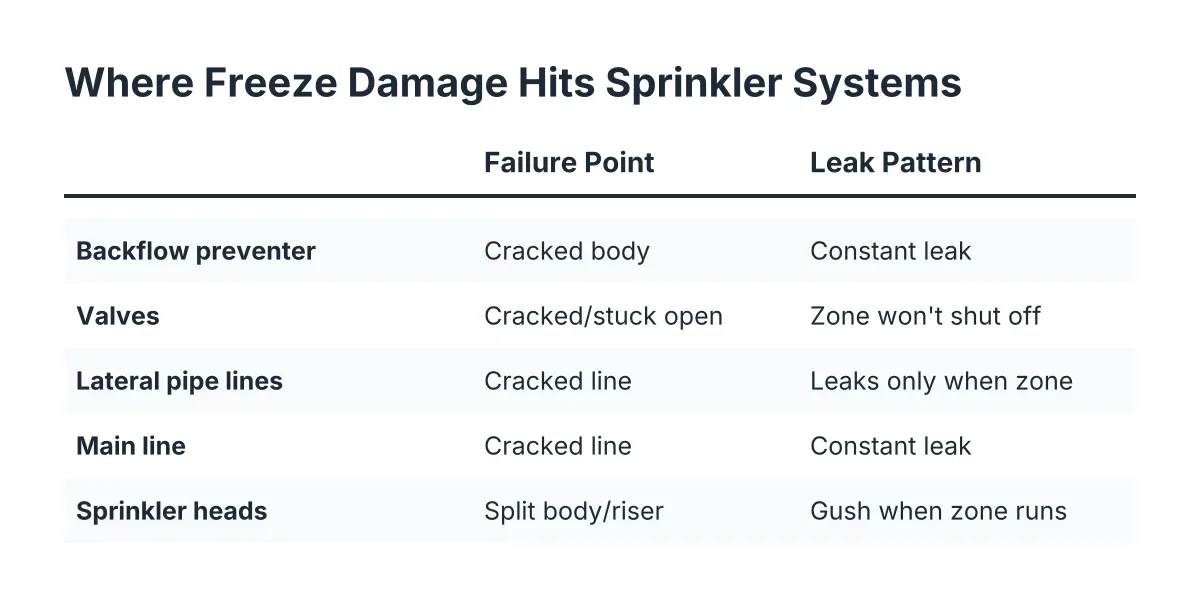
There is one more local wrinkle. Freeze events damage backflow preventers and valves, and the damage often stays hidden until the system runs hard in warm weather. A valve that cracked in January may not show up on your bill until May.
Sprinkler Leak or House Plumbing Problem? How to Tell in 20 Minutes
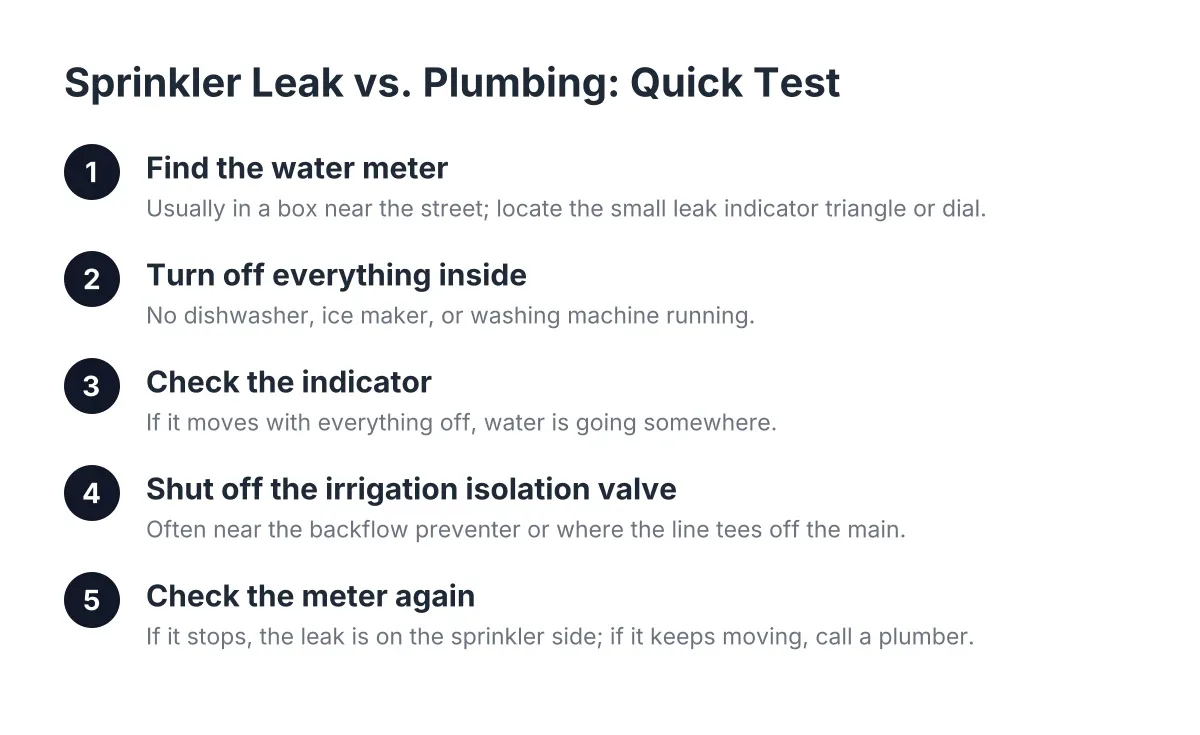
You can usually separate a sprinkler leak from a house plumbing leak at home, with no tools beyond your eyes and your water meter. The key is the isolation valve for your irrigation system, which lets you test each side of your plumbing separately.
Here is the sequence:
- Find your water meter, usually in a box near the street. Look for the small leak indicator, a little triangle or dial that spins when any water flows.
- Make sure nothing is running inside: no dishwasher, no ice maker filling, no washing machine.
- Check the indicator. If it is moving with everything off, water is going somewhere.
- Now shut off the irrigation system at its isolation valve, often in a box near the backflow preventer or where the sprinkler line tees off the main.
- Check the meter again. If the indicator stops, your leak is on the sprinkler side. If it keeps moving, the problem is likely house plumbing, and you need a plumber instead.
That last step matters, because it answers the fear most homeowners have: paying a diagnostic fee for someone to guess. If the meter test points to the irrigation system, you are calling the right trade. If it points to the house, no sprinkler system contractor should be digging up your yard.
In addition to the meter test, walk the yard. Look for a soggy patch with no rain in the forecast, grass that is greener in one stripe than everywhere else, water seeping over a curb, or a quiet hissing near a valve box. A neighbor mentioning a running-water sound at night is a classic sign of a sprinkler valve stuck open.
The Signs That Mean You Need Emergency Sprinkler Repair Before the Next Bill
Some sprinkler problems can wait for a convenient Saturday. Others are costing you money every hour and need emergency sprinkler repair before the next billing cycle, not after it. The dividing line is simple: is water flowing when it should not be?
Call for urgent help when you see any of these:
- The system runs when the controller says it should be off. A zone that keeps watering after the timer shuts down points to a failed valve, not a controller problem, and it will not fix itself.
- You cannot shut a zone off at all. Water flowing around the clock is the single fastest way to turn a normal bill into a shocking one.
- A geyser or steady bubbling spot appears in the lawn. That is a broken head or a cracked lateral line pushing water to the surface.
- Water is pooling against your foundation. In Plano clay, saturated soil next to a slab is a foundation risk, not just a lawn problem.
- The backflow preventer is spraying or dripping steadily. Backflow damage, often from a past freeze, can leak under constant pressure whether the system runs or not.
However, a tilted head, a dry spot, or one zone with weak coverage is a schedule-it-this-week problem, not a tonight problem. Knowing the difference saves you stress and keeps the urgent calls for actual emergencies.
How to Address a Sprinkler Leak and Turn Off a Watering System That Will Not Stop
To stop a sprinkler system that will not shut off, close the irrigation isolation valve, which sits on the dedicated line feeding your sprinklers, often in a ground box near the backflow preventer. Turn it clockwise until it stops. If you cannot find it, shut off the main house valve as a last resort until help arrives.
Shutting off the isolation valve kills water to the sprinklers while leaving your house water on. That is why it is worth finding this valve on a calm afternoon, before you need it at 11 p.m. If your home only has a main shutoff, closing it stops everything, which is inconvenient but better than paying for a valve to run all night.
One caution: do not start unscrewing a leaking valve yourself with the water on. Opening a sprinkler valve under pressure sprays water everywhere and can make a small repair into a muddy mess. Shut off the water supply first, and if wiring is involved, cut power to the controller too.
Why Timing Sprinkler Repair and Watering Restrictions Matters
Plano and the surrounding North Dallas communities run on watering schedules, and restrictions tighten as summer heats up. That changes the math on waiting. Fixing a leak during open watering windows is straightforward; chasing one after restrictions limit your runtime is harder for two reasons.
First, diagnosis needs water flowing. A technician finds a cracked line or a stuck valve by running zones and watching what happens. Arc and radius adjustments on rotor heads, for example, are made while the system runs so the tech can see the actual spray pattern change. Tighter watering restrictions and drought-stage rules shrink the room to test, especially for larger systems with many zones.
Second, restrictions raise the stakes of waste. Water you lose to a sprinkler leak is water you cannot legally put back on the lawn later. A system leaking through a stuck valve during a restriction period is draining your budget and your allowed watering at the same time. Handling the emergency sprinkler repair before restrictions take full effect means your system enters the hot season tight, tuned, and running only when the schedule says it should.
There is a quieter benefit too. A well-managed irrigation system reduces irrigation water use by 15 percent, or nearly 7,600 gallons annually, according to the U.S. Environmental Protection Agency (EPA WaterSense). A spring repair and tune-up is not just damage control. It resets your bill trajectory for the whole summer.
What a Real Sprinkler Leak Repair Visit Looks Like, Step by Step
A good lawn sprinkler repair visit follows a logical order, and knowing it helps you judge whether a provider is diagnosing or guessing. Suppose a homeowner in west Plano calls about a bill that jumped from a normal month to nearly triple, with a soggy strip along the side yard. Here is how that visit typically unfolds.
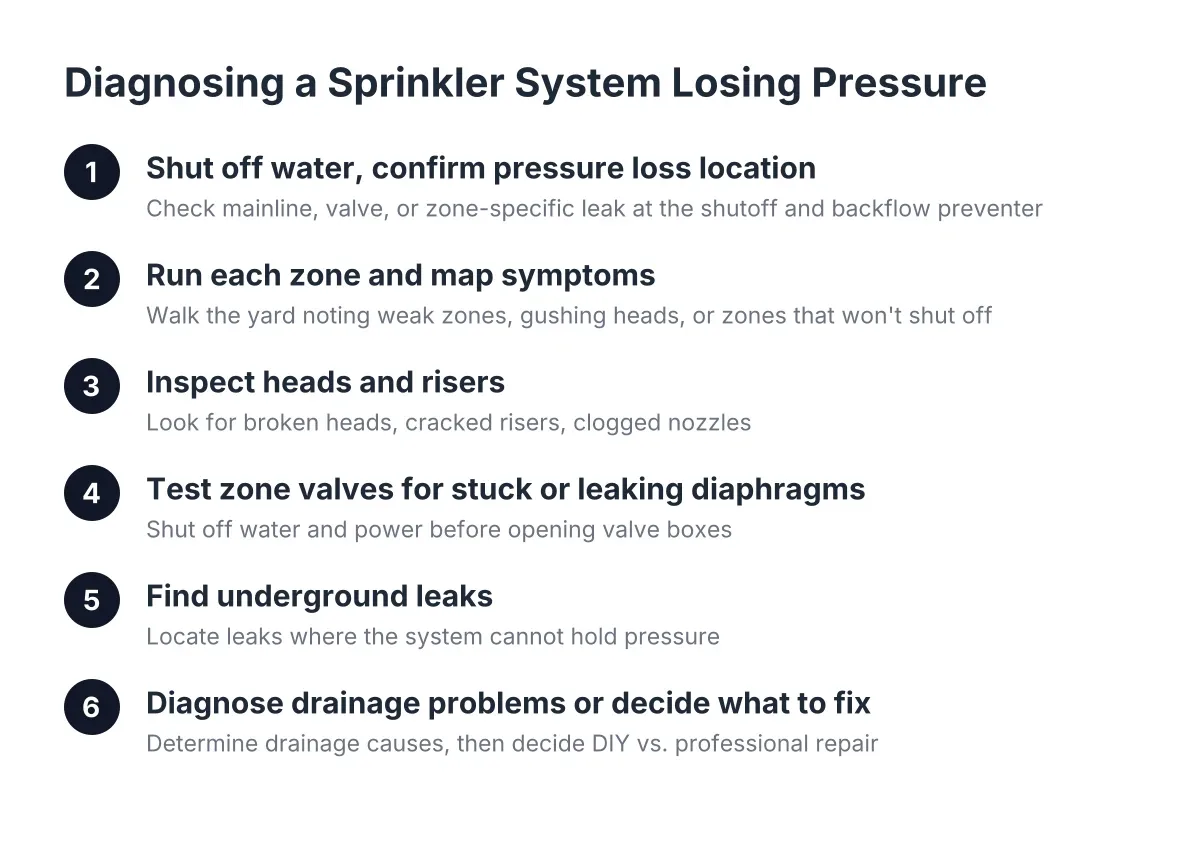
First, the tech confirms the basics: does the system have water supply and power, and do other zones run normally? If every zone is dead, the problem is upstream, maybe the controller, the master valve, or the backflow. If one zone misbehaves, the hunt narrows fast.
Next comes zone-by-zone testing. The tech runs each zone and watches for heads that do not pop up, pressure that seems low, water surfacing where it should not, and spray patterns aimed at the driveway instead of the grass. Nozzles facing the wrong direction are one of the most common finds during summer checks, and they are usually a quick sprinkler head adjustment, not a dig.
Then the tech isolates the leak. In our hypothetical side-yard case, zone three shows weak pressure and the soggy strip sits right along its lateral line. A little digging exposes a lateral cracked by shifting clay. The fix is cutting out the damaged section and coupling in new pipe.
Finally, the tech checks for the leaks homeowners forget they created. Buried drip lines tapped into an existing spray or rotor zone are a frequent hidden culprit. They were added for a flower bed years ago, the bed changed, and the line kept leaking underground. A thorough visit inspects the whole property, not just the spot you pointed at.
Diagnosing and Fixing Watering Restrictions and Sprinkler Leak Issues
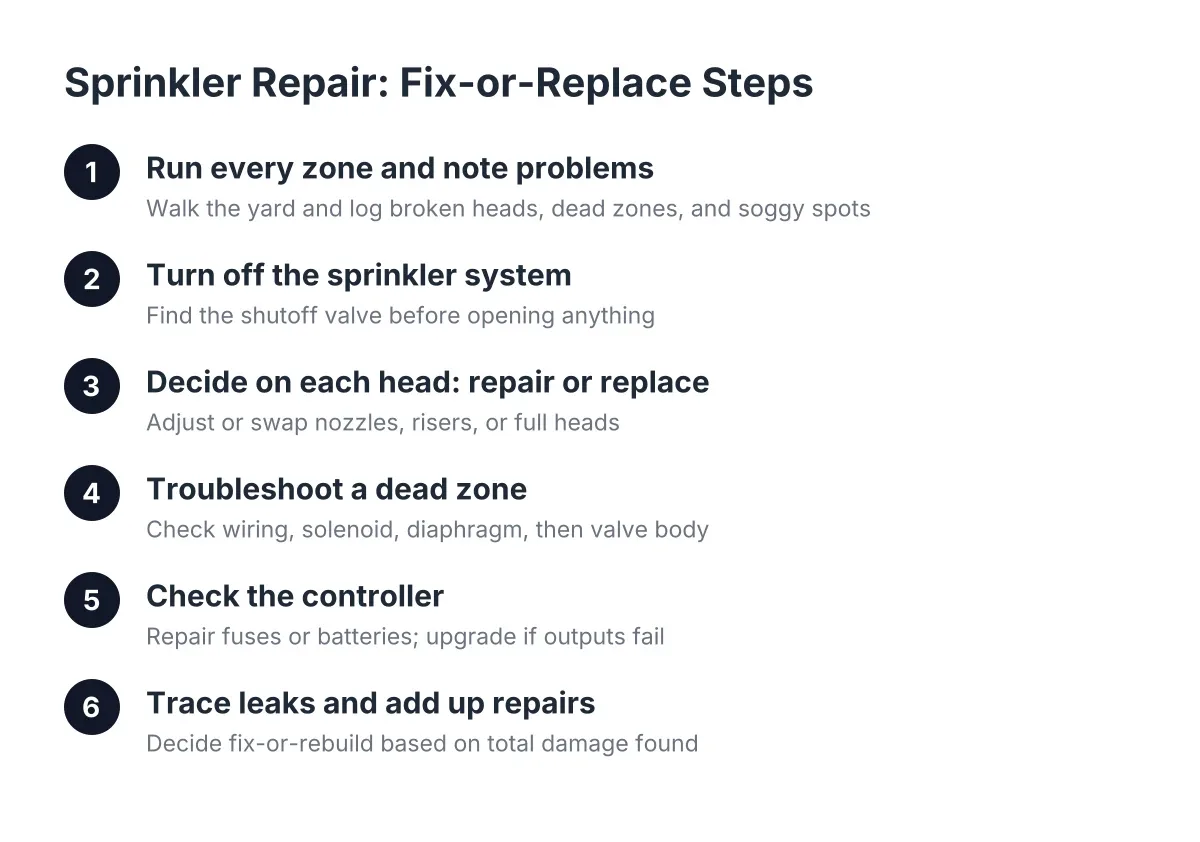
A standard sprinkler repair visit includes diagnosis, zone testing, and the specific fix: sprinkler head replacement, sprinkler valve replacement, a line repair, or controller troubleshooting. Most providers price the diagnostic separately from parts and labor, and larger jobs like rewiring or trenching new line are quoted before work starts.
Typically included in a repair call:
- Running and inspecting every zone, not just the broken one
- Sprinkler head adjustment and realigning spray patterns
- Replacing broken heads or clogged nozzles
- Replacing a failed valve or solenoid
- Checking the controller program against your local watering schedule
Usually quoted as additional work:
- Locating and repairing wire breaks across long runs
- Backflow preventer replacement after freeze damage
- Rerouting or replacing long sections of cracked line
- French drain installation when the real problem is drainage, not just the leak
That last item matters for Plano yards. Sometimes the soggy patch that triggered your detective work is only partly a sprinkler leak. Clay soil holds water, and a low spot can stay saturated even after the irrigation repair is done. In that case, a French drain gives the water somewhere to go so the fix actually sticks.
What Drives the Cost of an Urgent Irrigation Repair
Repair cost depends on what broke, how deep it sits, and how hard it is to reach. Nobody can quote a buried leak honestly over the phone, but the cost factors are predictable, and a fair provider will walk you through them before digging.
The main drivers of sprinkler system repair cost:
- Type of failure. A head swap sits at the low end. Valve replacement costs more. Mainline breaks and backflow damage sit at the top because of pressure, depth, and parts.
- Depth and access. A lateral line under open turf is one job. The same line under a root ball, a fence line, or a walkway is another.
- Number of problems found. Systems fail in clusters. The freeze that cracked one valve often stressed others.
- Wiring versus water. Electrical faults take time to trace across a yard, and time is the biggest cost input in this trade.
- Age and brand of equipment. Older or discontinued parts sometimes force upgrading a whole valve or head rather than one component.
Timeline follows the same logic. A stuck valve or a broken head is commonly handled in a single visit once the tech is on site. A mainline break or a freeze-damaged backflow preventer can take longer, especially if parts need to be matched. The honest answer on both cost and time is a range that narrows once someone has eyes on the system, and you should be wary of any firm number quoted before that.
One trade-off worth naming: an emergency visit prioritizes stopping the water loss, and that is the right call when a valve is stuck open. However, a full tune-up on the same visit may not always fit, so plan for a follow-up if the system needs broader attention.
What You Can Safely DIY, and When to Call a Pro
A homeowner can handle the small stuff on a sprinkler system: cleaning a clogged nozzle, straightening a tilted head, and turning the shutoff valve in an emergency. The line between DIY and pro work is pressure, wiring, and anything upstream of the valves.
Reasonable DIY territory:
- Shutting the system off at the isolation valve when something fails
- Running the meter test described earlier to confirm which side the leak is on
- Rinsing debris out of a clogged nozzle or filter screen
- Straightening a leaning head and clearing grass that blocks its spray
- Adjusting your controller to match the current watering schedule
Call a pro for valve replacement, wire tracing, backflow work, and line breaks. Valve work means cutting into pressurized plumbing and handling low-voltage wiring, and sloppy splices underground fail when they get wet. Backflow preventers protect your drinking water from irrigation water, so that work needs to be done correctly, not just quickly. If you are ever unsure which side of the line a job falls on, a short conversation with a technician costs nothing and prevents a flooded valve box.
Maintenance is where professional help quietly pays for itself. The leak you fix today matters; the tune-up habit keeps the next one from surprising you.
How to Choose a Sprinkler System Contractor When the Meter Is Spinning
Choosing well under pressure comes down to three questions. You do not need a long vetting process; you need signals that the person on the phone diagnoses before quoting.
Ask these before booking:
- "How do you diagnose before you quote?" The right answer describes zone testing and meter checks, not a flat guess over the phone. Anyone searching irrigation system repair near me will find plenty of options; this question separates the diagnosers from the guessers.
- "What happens if the problem turns out to be bigger or smaller than expected?" A fair provider explains how the quote adjusts in both directions and tells you before expanding the work.
- "Do you work with Plano's watering schedule and local soil conditions?" A tech who works these neighborhoods knows what clay movement and freeze damage look like here, which shortens the hunt.
A fair quote itemizes the diagnostic, the parts, and the labor, and it flags anything that cannot be known until the ground is open. Vague lump sums and pressure to approve extras on the spot are the warning signs, whatever the company name on the truck.
Getting Ahead of the Next Spike
The bill that shocked you is a symptom. The system that produced it is still out there, running on a timer in the dark, in soil that shifts a little more every season. Landscape irrigation accounts for nearly one-third of all residential water use nationwide, about 9 billion gallons per day, according to the U.S. Environmental Protection Agency (EPA WaterSense). Your yard is a meaningful share of your water story, and it deserves the same attention as the plumbing inside your walls.
As of 2026, Plano's watering schedules still shape when systems can run, so the smart move is simple: run the meter test, find your shutoff valve, and handle any emergency sprinkler repair before restrictions and summer heat raise the cost of waiting. If the test points to your irrigation system and you want someone local who explains the problem, the fix, and the cost factors in plain terms, North Dallas Sprinkler Repair works on these exact failures across Plano and the nearby North Dallas communities. Reach out to book a visit or request an estimate, and get your next water bill back to boring.
If you need sprinkler repair, North Dallas Sprinkler Repair can help.
Prefer to talk it through? Call (469) 639-1022 — a quick call is usually the fastest way to get a straight answer for your situation.