How Much Does Sprinkler Head Repair Cost?
How much does sprinkler head repair cost? The honest answer depends on three things: how many heads are damaged, what type of heads your system uses, and what caused the damage in the first place. A single pop-up head that got clipped by a mower is a different job than a row of heads knocked out of line by shifting clay soil. Anyone who quotes you a flat number before looking at your yard is guessing. By the end of this guide, you will know exactly what drives the price and how to get a real estimate for your own system.
What Drives the Cost of Sprinkler Head Repair
Sprinkler head repair costs come down to a handful of factors. Here are the ones that matter most, and how to tell which side of each one you are on.
How Many Sprinkler Heads Need Repair Work
This is the biggest factor. One broken head is a small job. Six broken heads across three zones is a bigger one, even though each head is cheap on its own. Walk your yard while the system runs and count the heads that spray wrong, sit crooked, or do not pop up at all. More heads means more parts and more labor time, which raises the price. If you only see one problem spot, you are likely on the low end.
Sprinkler Head Repair versus Replacement Costs
Some heads just need an adjustment. A sprinkler head adjustment, where a tech straightens the head, cleans a clogged filter, or re-aims the spray, is the least expensive fix. Sprinkler head replacement costs more because it involves a new part plus digging out the old one. If your head still pops up and sprays, just not in the right direction, you may only need an adjustment. If the head is cracked, stuck down, or shearing water sideways, plan on replacement.
The type of head your system uses
Not all heads cost the same. Simple fixed spray heads are the cheapest to replace. Rotor heads, which sweep a stream back and forth across larger areas, cost more per part. Specialty heads and drip zone fittings sit in between. Look at your heads while they run. If the water fans out in a fixed pattern, you likely have spray heads. If a single stream rotates across the lawn, those are rotors, and the parts will cost more.
What caused the damage
The cause matters because it decides how deep the job goes. A mower strike usually breaks the head itself, which is a quick swap. But in Plano, North Texas clay soil shifts as it swells and dries through our long hot summers. That movement can crack the riser or the pipe fitting below the head. If the damage runs below ground, the tech has to dig, cut, and rebuild the connection, which adds labor. A head that leans or sits sunken low in the ground often points to soil movement, not just a bad head.
Access and digging conditions
A head sitting in open lawn is easy to reach. A head buried under a tree root, hidden beside a fence post, or set in hard-packed dry clay takes longer to dig out. In August, when Plano clay bakes hard, digging the same hole takes more time than it does in spring. Longer digging time means more labor on the bill. If your broken head sits in soft, open ground, expect the lower end.
Hidden problems found during the repair
Sometimes a broken head is the symptom, not the whole problem. Low pressure at one head can trace back to a leaking lateral line or a failing valve. If the tech finds that your real issue needs sprinkler valve replacement or a line repair, the scope grows. A good sprinkler system contractor will show you the problem before expanding the job, so you decide. If every head in one zone runs weak, suspect a valve or line issue rather than the heads themselves.
Cost Factor Table
| Factor | Pushes the price down when… | Pushes it up when… |
|---|---|---|
| Number of heads | One or two heads need attention | Multiple heads across several zones are damaged |
| Repair vs. replacement | Heads only need adjustment or cleaning | Heads are cracked, stuck, or sheared and need replacement |
| Head type | System uses basic fixed spray heads | System uses rotors or specialty heads |
| Cause of damage | Damage is above ground, like a mower strike | Shifting clay soil cracked the riser or fitting below ground |
| Access and digging | Head sits in soft, open lawn | Head is under roots, near hardscape, or in baked summer clay |
| Hidden problems | The head is the only issue | A valve or lateral line is failing behind the head |
How to Get an Accurate Sprinkler Head Repair Estimate
The fastest path to a real number is a short diagnostic visit. Before you call, gather a few details so the estimate reflects your actual system:
- Run each zone and take notes. Count how many heads spray wrong, leak, or stay down. Note which zones they are in.
- Snap photos. A picture of a broken head, a geyser, or a soggy spot tells a tech a lot before they arrive.
- Know your controller. The brand and zone count help a contractor understand your system's age and layout.
- Mention recent events. A hard freeze, new landscaping, or a fence install can explain damage to heads, valves, or the backflow preventer.
A good quote should list what is broken, what parts will be replaced, and the labor involved. It should separate the head work from any bigger issues found, like valve or line problems, so you can approve each piece. Estimates differ between providers because labor rates, diagnostic habits, and parts quality all vary. One company may quote a cheap head swap; another may catch the cracked fitting underneath that caused it. That is why comparing two or three written quotes, not just prices, tells you more than any number alone. Our sprinkler head repair service page explains how we diagnose and quote this work for Plano homeowners.
Ways to Keep the Cost Down
You cannot control clay soil or Texas summers, but you can control a few things that shape the bill:
- Fix problems early. One leaking head wastes water every cycle and can wash out the soil around nearby fittings. Repairing sprinkler head damage early is almost always lower cost than waiting until a zone fails. A small fix now beats a dig-and-rebuild later.
- Bundle the work. If three heads are acting up, have them fixed in one visit instead of three separate calls. Most of the cost of a small job is getting a tech to your yard.
- Mark your heads before yard work. Flag heads before mowing, edging, aerating, or fence projects. Mower strikes are one of the most common causes of broken heads, and they are fully preventable.
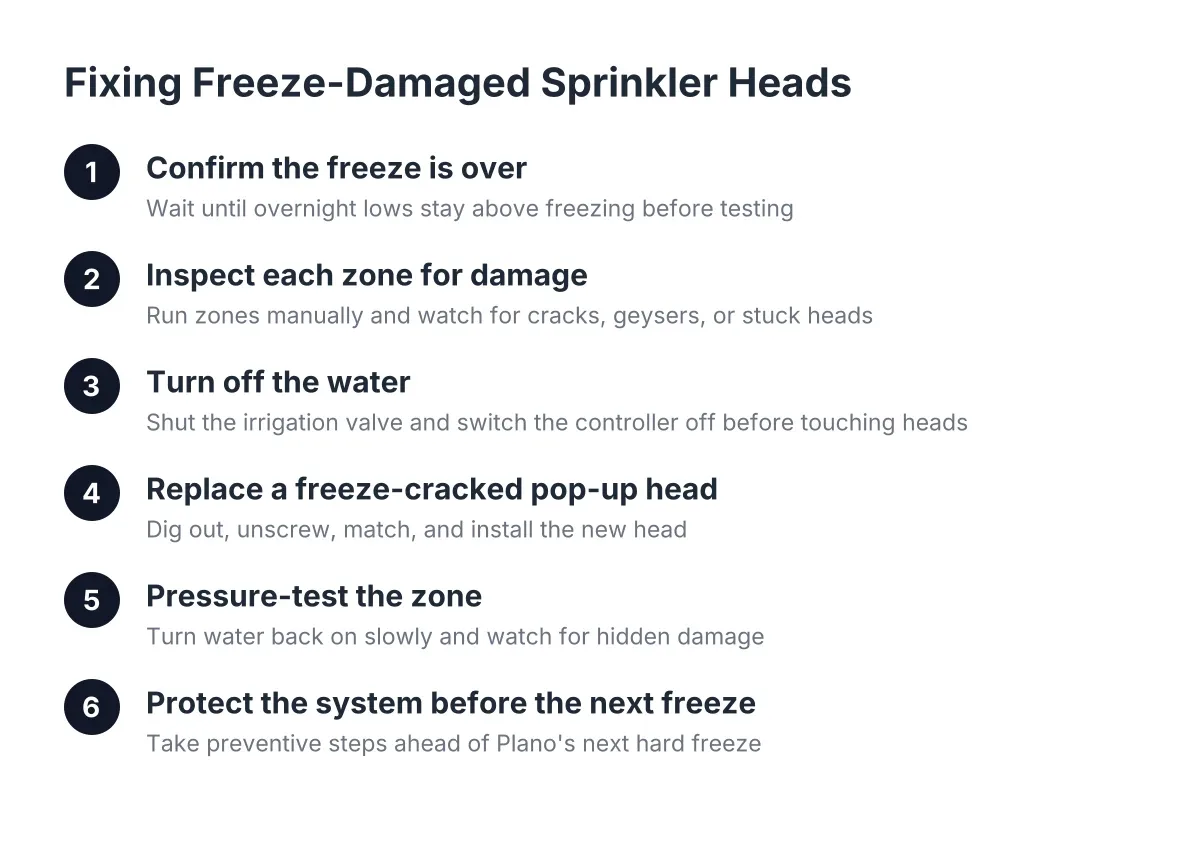
- Learn how to turn off a sprinkler system. If a head shears off and sends up a geyser, shutting the system down fast limits water waste and erosion around the break. That keeps a head repair from turning into a line repair.
- Keep a sane watering schedule. Running zones within Plano's watering-restriction schedule, at the right duration, reduces pressure stress and keeps soil moisture steadier, which is easier on heads and fittings.
Cost Questions People Ask
Is it cheaper to replace a sprinkler head myself?
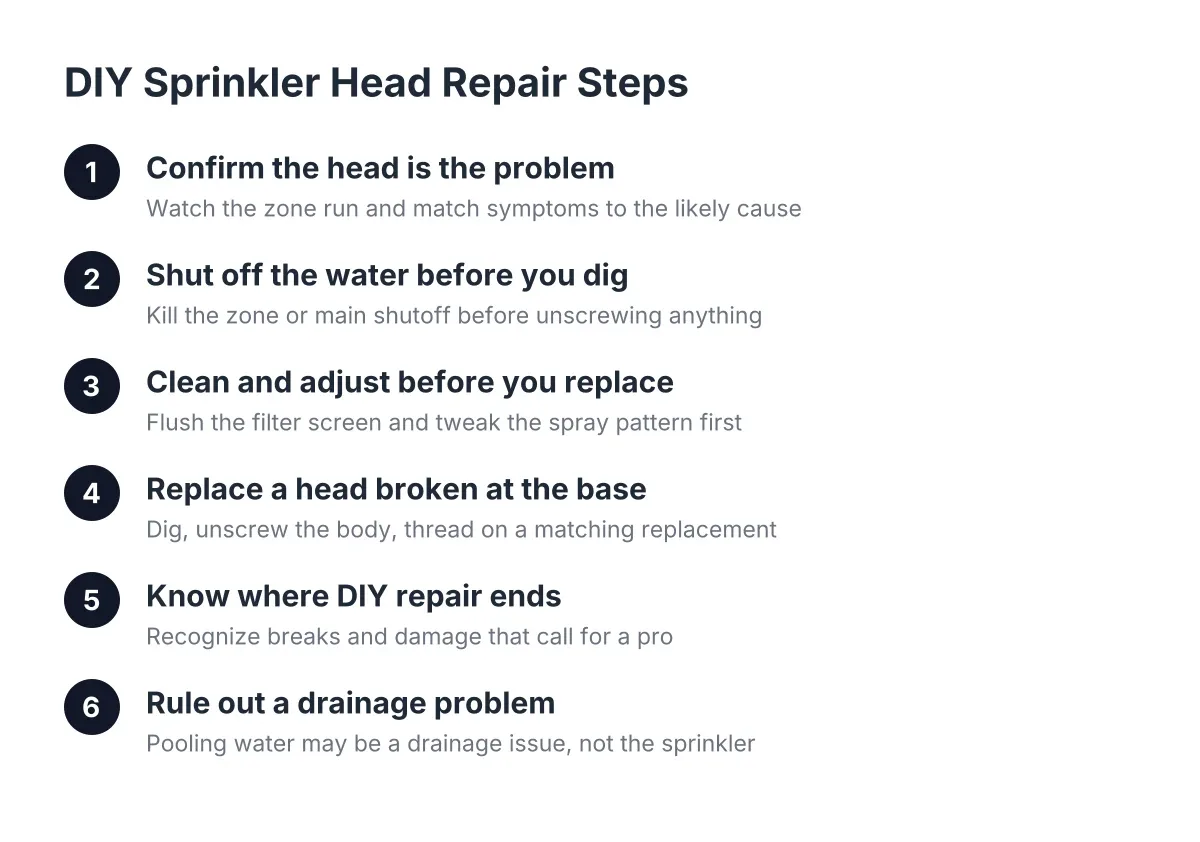
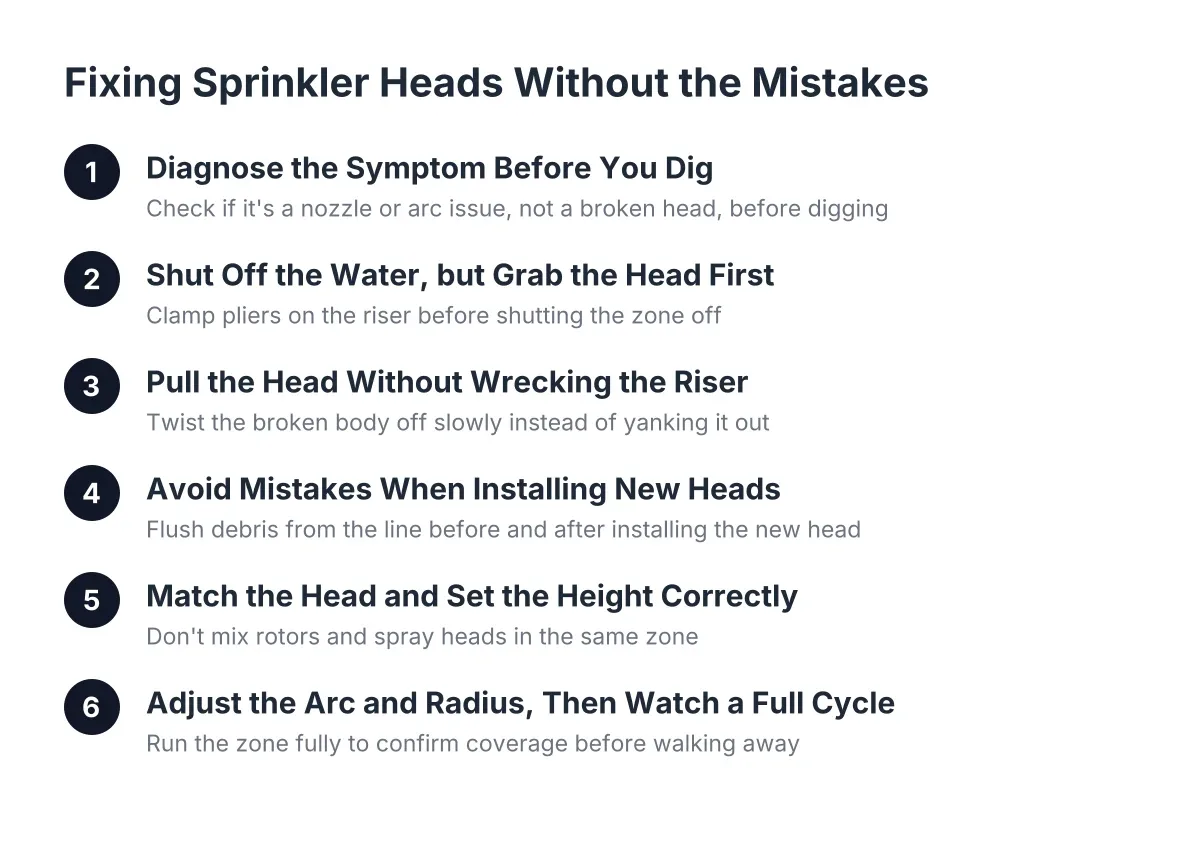
The part itself is inexpensive at a hardware store, and a handy homeowner can swap a simple spray head. The risk is matching the wrong head type, cross-threading the fitting, or missing a cracked riser below ground. If the DIY fix leaks underground, you end up paying for the bigger repair anyway. For one easy head in open lawn, DIY can work. For anything deeper, a pro visit usually costs less than a redo.
Why does one broken head sometimes turn into a bigger bill?
Because the head is often the visible end of a hidden problem. Shifting clay can crack the fitting below the head, a freeze can damage the backflow preventer, and a worn valve can starve a whole zone. A careful diagnosis finds the real cause so you pay to fix the problem once, not the symptom twice.
Does the season change what I pay?
The repair itself costs about the same year-round, but conditions shift the labor. Hard-baked summer clay takes longer to dig than soft spring soil. Spring and fall are also when freeze damage and startup problems surface, so scheduling can be tighter. Fixing known problems before peak summer heat usually means an easier job.
Will my water bill go down after the repair?
A broken or leaking head wastes water every time the zone runs, and a sheared head can dump far more than the lawn needs. Fixing it stops that waste. Pair the repair with a tune-up of your watering schedule and you get the full savings, especially under Plano's summer watering restrictions.
The Bottom Line
Sprinkler head repair cost comes down to how many heads are involved, whether they need adjustment or replacement, and whether the damage stops at the head or runs below ground. No honest number exists until someone looks at your system, so the sensible next step is to run your zones, note what you see, and get two or three written quotes that spell out parts and labor. If you are in Plano or nearby North Dallas communities, we are glad to be one of them.
Prefer to talk it through? Call (469) 639-1022 — a quick call is usually the fastest way to get a straight answer for your situation.