Sprinkler Head Repair Terms Explained: A Plain-English Glossary
If you are reading quotes or searching for why your lawn looks patchy, the jargon piles up fast. This sprinkler head repair glossary breaks down the terms Plano homeowners hit most, in plain English. Use it to understand what a tech writes on an estimate, ask better questions, and spot problems in your own yard before they get expensive. Each definition stands on its own, so you can skim to the one you need.
- Sprinkler Head: the part you see that sprays water
- Pop-Up Spray Head: a fixed spray head that rises from the ground
- Rotor Head: a head that rotates a stream across the lawn
- Nozzle: the small tip that shapes the spray
- Riser: the pipe stub a head screws onto
- Zone: one group of heads that runs together
- Valve: the switch that lets water into a zone
- Controller: the timer box that runs your schedule
- Backflow Preventer: the device that protects your drinking water
- Head-to-Head Coverage: spray from one head reaching the next
- Sprinkler Head Adjustment: tuning where and how far a head sprays
- Sprinkler Head Replacement: swapping a broken head for a new one
- Lateral Line: the pipe that feeds heads in a zone
- Water Hammer: the bang pipes make when water stops fast
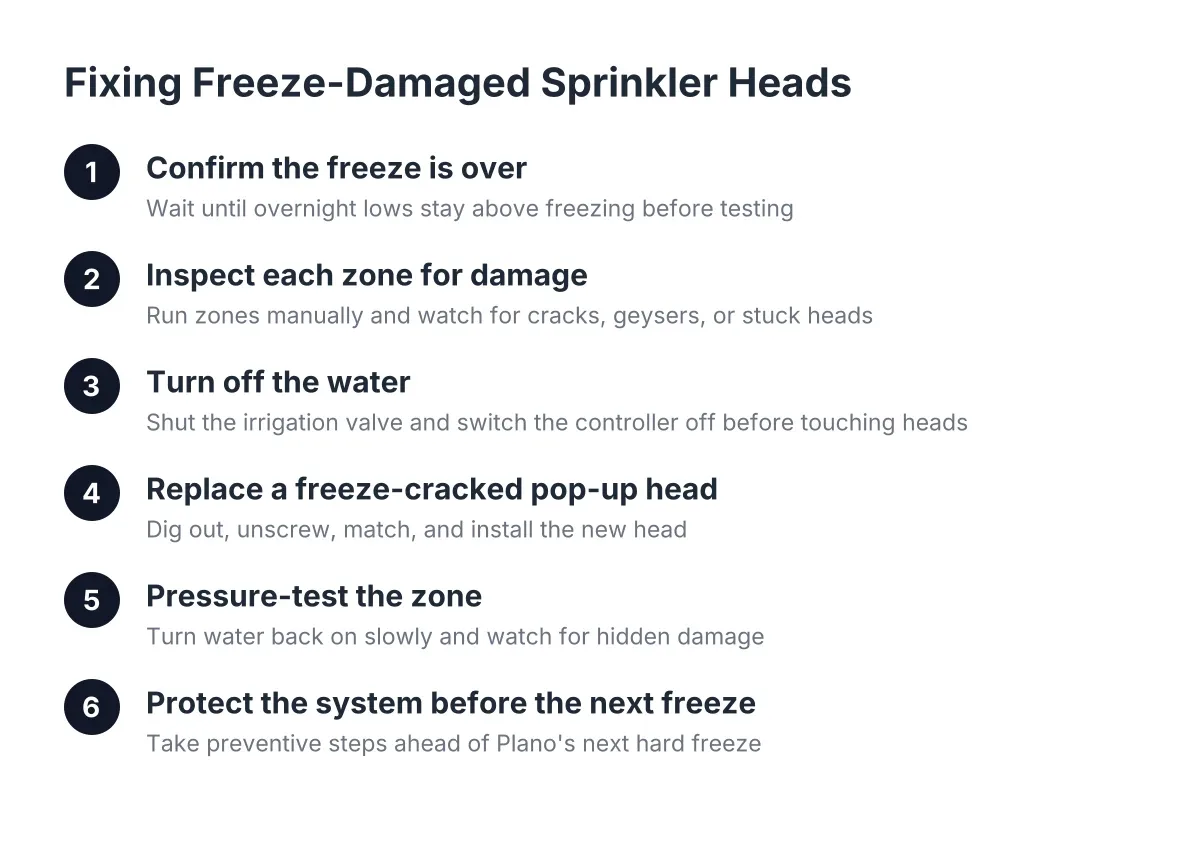
- Winterization: prepping a system for freezing weather
- Diagnostic Fee: what you pay for finding the problem
- Watering Schedule: when and how long each zone runs
Equipment: The Parts You Can See and the Parts You Cannot
Most of the confusion in any glossary of sprinkler head repair terms starts with the hardware, so we begin there. These are the parts a tech will name when explaining what broke.
Sprinkler Head
A sprinkler head is the visible part of an irrigation system that sprays water onto your lawn. Heads take the most abuse of any part: mowers clip them, cars roll over them, and North Texas clay soil shifts them out of position. When a quote mentions sprinkler head repair, the tech usually means fixing, straightening, or swapping these parts. Because heads are the cheapest and most common fix, hearing this term on a quote is usually good news for your wallet.
Pop-Up Spray Head
A pop-up spray head is a sprinkler head that rises out of the ground when water pressure arrives and sinks back down when the zone shuts off. It sprays a fixed fan of water, which makes it the standard choice for small lawn areas and flower beds. If a pop-up stays stuck up after watering, dirt or a worn seal is usually the cause. That is a quick fix, not a dig-up-the-yard job.
Rotor Head
A rotor head is a sprinkler head that sweeps a single stream of water back and forth across a large area. Rotors throw water farther than spray heads, so you see them on bigger front and back lawns. A rotor that stops rotating waters one strip and starves the rest, which shows up as a green stripe next to brown grass. Rotors cost more than spray heads, so replacement runs higher per head.
Nozzle
A nozzle is the small, removable tip on a sprinkler head that controls the spray pattern and distance. A clogged or cracked nozzle can mist, dribble, or shoot water onto the sidewalk instead of the grass. Nozzles are cheap parts, so a tech who says "you just need new nozzles" is telling you the fix is minor. Matching the right nozzle to the area also cuts wasted water, which matters under Plano's watering restrictions.
Riser
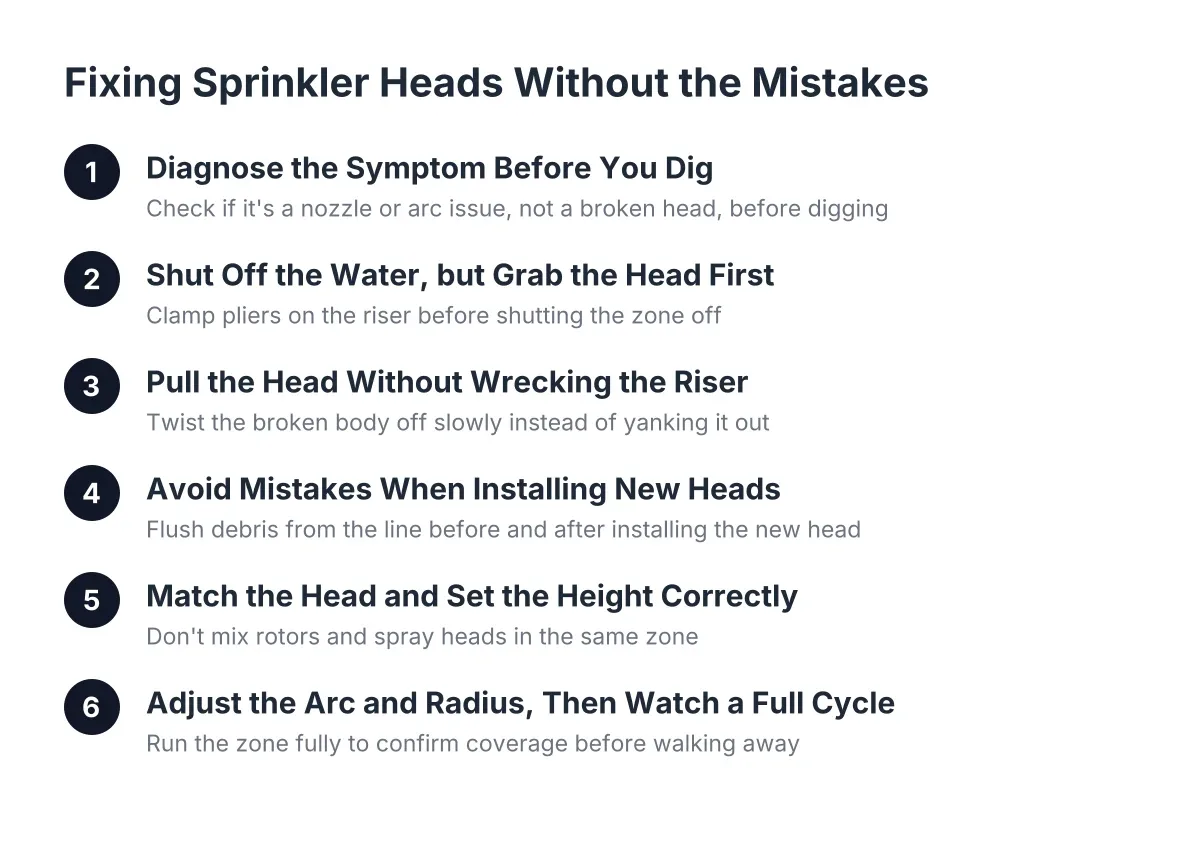
A riser is the short piece of pipe that connects a sprinkler head to the water line below ground. When a mower or car snaps a head off, the riser often breaks with it. A cracked riser leaks underground, which can show up as a soggy spot or a weak zone. Replacing a riser takes a little digging, so it adds labor time compared to a simple head swap.
Valve
A valve is the electrically controlled switch that opens and closes water flow to one zone of your sprinkler system. When the controller signals a valve, it opens and the heads in that zone run. A stuck valve means a zone that never turns on, or worse, never turns off. Freeze events in North Texas crack valves often enough that sprinkler valve replacement is one of the most common repairs after a cold snap.
Controller
A controller is the timer box, usually in your garage, that tells each zone when to run and for how long. If every zone is dead, the controller or its wiring is a prime suspect before anyone digs. Knowing your controller also matters for following local watering-restriction schedules. A tech who mentions reprogramming the controller is talking about settings, not parts, which keeps cost down.
Backflow Preventer
A backflow preventer is a safety device that stops irrigation water from flowing backward into your home's drinking water. Most cities require one on any irrigation system, and it usually sits above ground near where the system connects to your water supply. Because it holds water and sits exposed, a hard freeze can crack it. If a quote lists backflow work, expect it to cost more than head work because the part itself is pricier.
Problems and Fixes: What Sprinkler Head Repair Means
These terms describe the work itself. If sprinkler head repair shows up on your estimate, the lines below explain what that labor usually covers.
Sprinkler Head Adjustment and Glossary of Terms
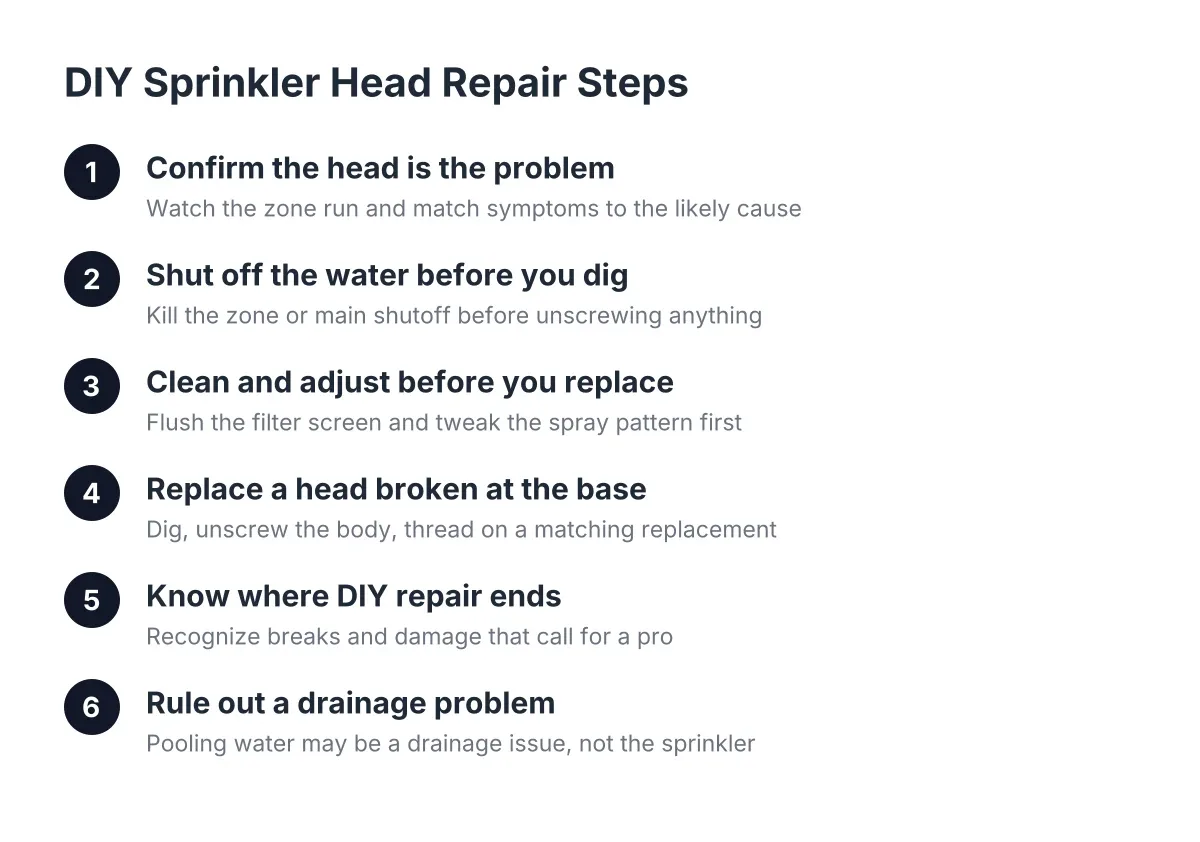
Sprinkler head adjustment means changing a head's direction, spray distance, or arc so water lands on grass instead of fences and driveways. Heads drift out of alignment as clay soil shifts, which happens constantly in Plano yards. An adjustment needs no new parts, so it sits at the low end of the cost scale. If your lawn has dry corners but every head runs, adjustment is often all you need.
Sprinkler Head Replacement
Sprinkler head replacement means removing a broken or worn-out head and installing a new one on the existing riser. It is the fix for heads that are cracked, stuck, leaking at the base, or past their useful life. Cost depends mostly on the head type and how many need swapping, which is why quotes are often priced per head. For a fuller breakdown of what drives the number, see our guide on the cost of sprinkler head repair.
Zone
A zone is one group of sprinkler heads that all turn on and off together, controlled by a single valve. Systems are split into zones because there is not enough water pressure to run every head at once. When a tech says "zone three is weak," they mean one section of your yard, not the whole system. Diagnosing by zone narrows the search, which saves labor time.
Head-to-Head Coverage
Head-to-head coverage means each sprinkler head sprays far enough to reach the next head over. Designers aim for this overlap because the area right next to a head gets the least water from that head. Gaps in coverage show up as brown crescents between green circles. A tech recommending an extra head or a different nozzle is usually fixing a coverage gap, not upselling.
Lateral Line
A lateral line is the underground pipe that carries water from a zone valve out to the sprinkler heads. North Texas clay expands when wet and shrinks when dry, and that movement can crack lateral lines over time. A lateral leak often appears as a wet spot, a sinkhole, or low pressure across one zone. Line repairs involve digging, so they cost more than head-level work.
Water Hammer
Water hammer is the banging or thudding sound pipes make when water flow stops suddenly. It happens when valves close too fast, and over time the shock can loosen fittings and damage heads. If you hear a thump in the walls when the sprinklers shut off, mention it. Fixing the cause now prevents leaks later.
Winterization
Winterization means preparing an irrigation system for freezing weather, usually by shutting off the water and protecting exposed parts like the backflow preventer. North Texas freezes are short but sharp, and they crack backflow devices and valves every winter. Knowing how to turn off a sprinkler system before a hard freeze is one of the cheapest forms of insurance a homeowner has. A tech who brings up winterization is trying to save you a spring repair bill.
Pricing and Scheduling: Reading the Quote
Diagnostic Fee
A diagnostic fee is a charge for finding out what is wrong before any repair happens. It covers the tech's time running zones, checking valves, and tracing problems to their source. Some companies fold this fee into the repair cost if you move forward; ask how yours handles it. A clear diagnosis up front keeps you from paying for parts you did not need.
Watering Schedule
A watering schedule is the plan for which days, times, and run lengths each zone uses. In Plano, local watering restrictions set which days you can run, and long hot summers decide how much your lawn actually needs. A bad schedule can mimic a broken system: too little water looks like failed heads. Ask any tech who visits to check your schedule against current restrictions while they are there.
Sprinkler System Repair Cost
Sprinkler system repair cost means the total price of fixing what is broken, driven by parts, labor, and how hard the problem is to reach. Head-level work sits at the low end, valve and backflow work in the middle, and buried line repairs at the top because of digging. The number of heads or zones involved matters more than any single part price. A good quote lists these pieces separately so you can see where the money goes.
Using These Terms
With this sprinkler head repair glossary in hand, you can read an estimate line by line and know whether you are paying for a nozzle or a dig. You can also describe problems precisely, like "zone two has a stuck rotor," which gets you a faster, more accurate answer. If a term on your quote is not here, ask the provider to explain it in plain words; a good one will.
If you need sprinkler head repair, North Dallas Sprinkler Repair can help.
Prefer to talk it through? Call (469) 639-1022 — a quick call is usually the fastest way to get a straight answer for your situation.