Sprinkler System Installation Cost in Plano: Full Breakdown and Hidden Fees
If you are pricing a new irrigation system for your Plano yard, the quotes can feel all over the map. One contractor says one number, another says double that, and neither explains why. This guide breaks down sprinkler system installation cost and uncovers the sprinkler installation hidden fees that surprise homeowners: what you are actually paying for, which line items drive the total up or down, and the costs that appear only after the contract is signed. By the end, you should be able to read a bid line by line and know exactly what questions to ask before the first trench gets dug.
One note up front. We are not going to quote you made-up dollar figures. Prices shift with material costs, yard size, and the contractor you pick. What does not shift is the list of cost drivers, and that is what this article covers.
What Actually Goes Into Sprinkler System Installation and Hidden Fees
The cost of a sprinkler system installation comes down to five things: the size and layout of your yard, the number of zones, the materials and parts chosen, the labor to trench and assemble it all, and the permits and inspections your city requires. Everything on a quote traces back to one of those five buckets.
Here is how each one works.
Yard size and layout
A bigger yard needs more pipe, more sprinkler heads, and more trenching hours. That part is obvious. The less obvious part is layout. A simple rectangular lawn is cheap to cover. A yard carved up by a pool, flower beds, a side yard, and mature tree roots takes more heads, more pipe turns, and more labor to cover the same square footage.
Many homeowners search for a sprinkler system installation cost per square foot number. Contractors do think in rough per-square-foot terms for early estimates, but the final bid never works that way. Two 8,000 square foot yards can land far apart in price once layout, zones, and soil conditions enter the math.
Number of zones
A zone is a group of sprinkler heads controlled by one valve. Your home's water pressure and flow can only push so much water at once, so the yard gets split into zones that run one at a time. More zones means more valves, more wire, and more controller stations.
Zone count is usually the single biggest multiplier in a bid. A small front-and-back lawn might need four or five zones. A larger lot with beds, trees, and a drip line for the foundation might need eight to twelve. When you compare quotes, compare zone counts first. A cheaper bid with fewer zones often means heads spaced too far apart and dry spots by July.
Materials and parts
Pipe, sprinkler heads, valves, wire, the controller, and the backflow preventer all have good, better, and best tiers. Rotor heads cover large lawn areas. Spray heads handle smaller strips and beds. Drip lines serve foundations and planting beds. A well-designed system mixes all three, and the mix shows up in the price.
The controller matters more than most people think. A smart controller costs more up front but pays back on the water bill. According to the U.S. Environmental Protection Agency (EPA WaterSense), replacing a clock-based irrigation controller with a WaterSense labeled controller can cut an average home's irrigation water use by up to 30 percent and save up to 15,000 gallons a year. For a Plano homeowner watching the water bill, that is the one upgrade worth paying for.
Labor and trenching
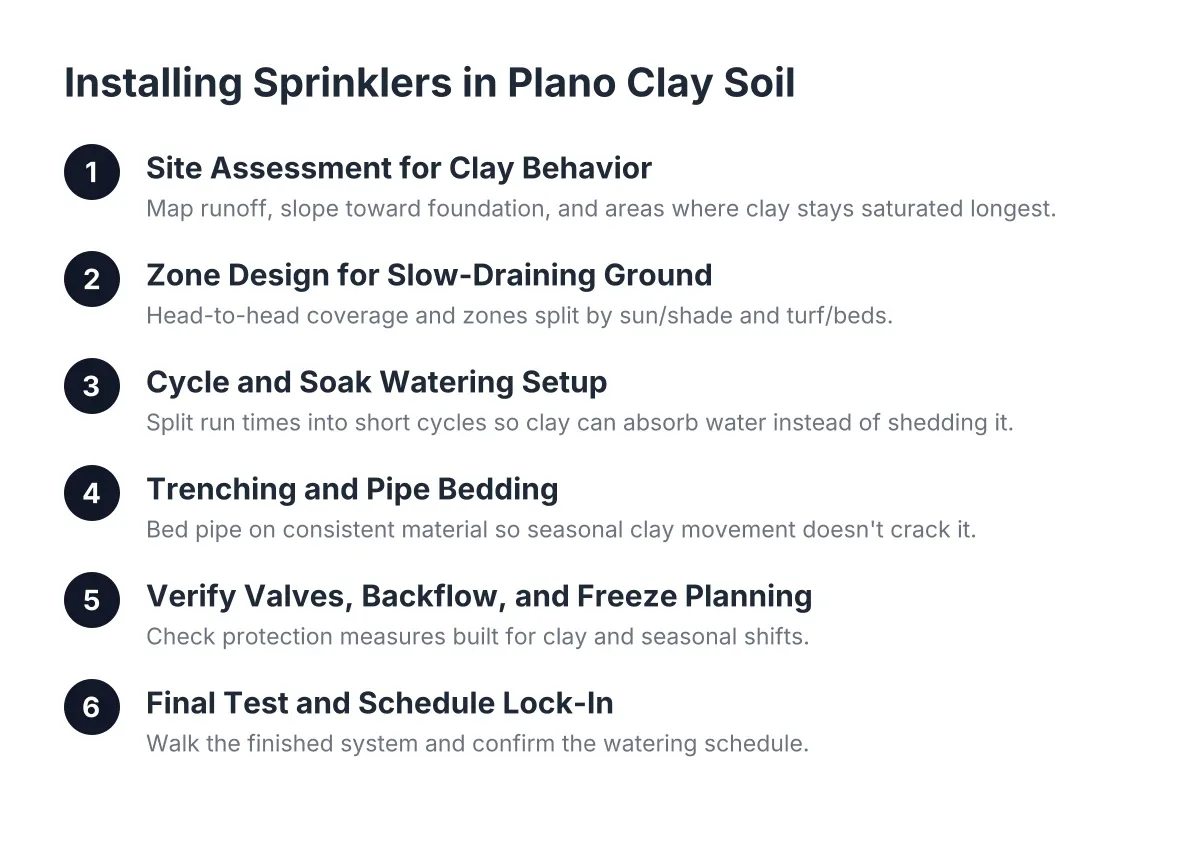
Labor is where North Texas gets expensive in ways national cost articles miss. Plano sits on heavy clay soil. Clay is hard to trench when dry, sticky when wet, and it shifts with the seasons. Trenching through baked August clay takes longer than trenching through loam, and the crew's time is on your bill either way.
Clay also shapes the design itself. Lines need proper depth and bedding so seasonal soil movement does not crack them two summers from now. A contractor who installs here year-round builds that into the plan. One who does not will hand you a cheaper bid and a repair problem later.
Permits, backflow, and inspection
Plano requires a permit for new irrigation installation, and the backflow preventer must be tested after installation to protect the drinking water supply. The backflow device, the permit fee, and the test fee should all appear on your quote as their own line items. If they do not, ask where they are hiding. This is the most common place a low bid quietly becomes a normal-priced bid.
Understanding Hidden Fees in Sprinkler Installation
Hidden fees in sprinkler installation and their sources usually show up in five places: permits and backflow testing billed separately, trenching surcharges for hard soil or roots, landscape repair after trenching, the tie-in to your home's water supply, and controller or wiring upgrades treated as add-ons. None of these are scams on their own. They become a problem when they are left off the quote so the bid looks lower than it really is.
Watch for these specific items:
- Permit and inspection fees billed after the fact. Ask whether the city permit and backflow test are included in the written price or added later.
- Backflow preventer "upgrade" charges. Some bids include a bare-minimum device, then charge extra for the one that actually passes inspection and survives a North Texas freeze. Ask which model is specified and whether it is rated for freeze exposure or will be installed where it can be protected.
- Trenching surcharges. Dense clay, tree roots, and buried construction debris can trigger extra-labor charges. Ask if trenching is a fixed price or billed hourly with overage.
- Lawn and bed restoration. Trenching tears up turf. Find out whether the crew backfills, tamps, and reseats sod, or leaves the yard rough and calls that normal.
- Water line tie-in. Connecting the new system to your home's supply line sometimes needs a plumber or an upgraded connection point. Confirm who handles it and whether it is in the price.
- Wire and valve box count. A quote that is vague about the number of valves and boxes leaves room to bill "extras" mid-job.
- Controller location and power. If there is no outdoor outlet near the planned controller spot, running power can become a change order.
A useful habit: ask every bidder the same question. "What could make this price go up once you start digging?" An honest contractor has a ready answer with specifics. A vague answer is itself an answer.
How a Quote Should Break Down, Line by Line
A trustworthy sprinkler system installation cost estimate lists the design and zone count, materials by category, labor and trenching, the backflow preventer and its test, the permit, and cleanup. If your quote is a single number on one line, you cannot compare it to anything, and you cannot hold anyone to it.
Here is the structure a complete written bid should follow:
- System design: number of zones, head counts by type (rotor, spray, drip), and a simple map of coverage.
- Materials: pipe type and size, valve brand and count, controller model, and the backflow device.
- Labor: trenching, assembly, wiring, and the final walkthrough with adjustment of every head.
- Compliance: permit fee and backflow test, each as its own line.
- Restoration: backfill, tamping, and sod or bed repair.
- Exclusions: anything the contractor will not cover, stated in writing.
Pay attention to the walkthrough item. Good coverage design follows a head-to-head principle, meaning each sprinkler's spray reaches the neighboring head so the lawn gets even water with no dry stripes. The crew should also set every head at the right height, flush with the mower's cutting path, so your mower does not shear heads off the first weekend. Wrong-facing nozzles and mower-damaged heads are two of the most common problems techs find later, and both trace back to a rushed install day.
Why Installation Cost in Plano Differs From National Averages
Plano installation costs run differently from national figures because of three local realities: clay soil that slows trenching and demands deeper, better-bedded lines; hard freezes that require freeze-resistant backflow placement and proper winterization design; and city permit, inspection, and watering-restriction rules that shape zone design. National cost calculators ignore all three.
You will find plenty of search results for sprinkler system installation cost in Houston or San Antonio, and plenty of national calculators promising an instant estimate. Treat those as loose reference points only. Houston sits on different soil with a different freeze profile. A calculator does not know your yard has a 30-year-old live oak with roots across the main trench path.
The freeze factor deserves its own mention. North Texas gets hard freeze events that crack backflow preventers and valves that were installed with no thought for winter. A contractor who works here plans the backflow location and drainage so the system can be shut down before the first freeze without drama. That design choice costs little during installation and saves a repair bill later. Ask any bidder how their design handles a February freeze; the quality of the answer tells you a lot.
Watering restrictions matter too. Plano limits which days and hours you can run irrigation, so a well-designed system needs a controller that handles restricted schedules easily, plus zones sized to finish within the allowed windows. A cheap controller that fights you every time the schedule changes is a hidden cost you pay in frustration for years.
A Realistic Example of How Bids Diverge
Suppose a Plano homeowner with a 9,000 square foot lot gets three bids for the same yard. Bid one is the lowest and shows one number with no breakdown. Bid two is mid-range: six zones, named head and valve brands, a basic clock controller, permit and backflow test included. Additionally, bid three is the highest: eight zones including a drip zone for the foundation beds, a smart controller, freeze-conscious backflow placement, and full restoration spelled out.
In that scenario, the low bid probably excludes the permit, the backflow test, and restoration, and likely uses fewer zones with stretched head spacing. The homeowner would pay the gap anyway, either as change orders during the job or as repair calls afterward. The middle and high bids are the real comparison, and the difference between them is mostly the smart controller, the extra zones, and the drip line. Those are choices the homeowner can weigh on purpose instead of discovering by surprise.
This is also where a professional's judgment earns its fee. If your lot has drainage problems, odd pressure readings, or an older supply line, a site visit matters more than any article. A contractor may recommend pairing the project with French drain installation in a soggy corner, or flag that your water pressure will not support the zone count a calculator suggested. No written guide can substitute for someone standing in your yard with a pressure gauge.
What the System Costs You After Installation Day
Ongoing costs after a sprinkler installation fall into three categories: water, seasonal service, and occasional repairs. The water piece is the one most homeowners underestimate, and it is where a well-built system separates itself from a cheap one within the first year.
Nationwide, landscape irrigation accounts for close to one-third of all residential water use, totaling nearly 9 billion gallons per day, according to the U.S. Environmental Protection Agency (EPA WaterSense). Your system is a large share of your water bill from day one. The same agency reports that a household with an automatic irrigation system that is not properly maintained can waste up to 25,000 gallons of water a year. If you have ever opened a water bill that doubled with no explanation, a stuck valve or an unnoticed leak in the irrigation system is a prime suspect.
Plan for two service touchpoints a year. In spring, a startup visit checks the backflow, confirms every zone fires, straightens nozzles that drifted over winter, and sets the watering schedule to match Plano's restrictions. Before the first freeze, a shutdown visit protects the backflow and valves from freeze damage. These visits are modest, predictable costs that prevent the expensive surprises: a cracked backflow in February, or a valve stuck open and running water all night in July.
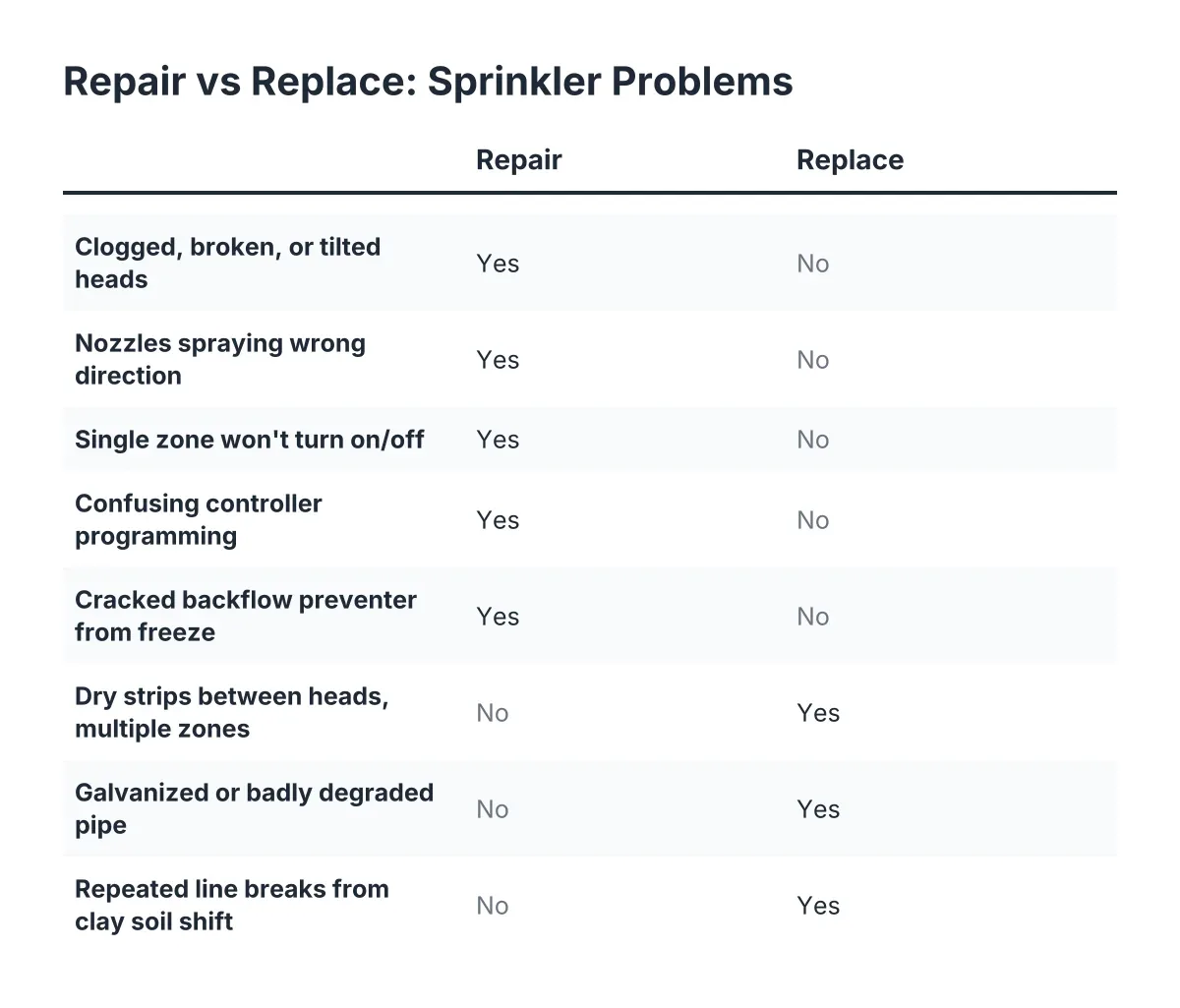
Budget mentally for small repairs too. Sprinkler head replacement after a mower strike, a sprinkler head adjustment when coverage drifts, or an eventual sprinkler valve replacement are normal over a system's life. Debris and small rocks working into risers and nozzles is a recurring fact of irrigation life, especially in a new install where the soil is still settling. None of this means the installation failed; it means the system is a machine that lives outside in Texas weather.
Questions to Ask Before You Sign
Before you commit to any sprinkler system installation, put these questions to the contractor in writing and keep the answers with the contract:
- How many zones, and why that number for my water pressure and lot?
- Which backflow preventer model, and how is it protected from freezing?
- Are the Plano permit and backflow test included in this price?
- Is trenching a fixed cost, or can clay, roots, or debris add charges?
- What restoration do you perform on turf and beds after trenching?
- What controller is included, and does it handle Plano's watering schedule restrictions?
- Will every head be set flush to mowing height and adjusted for head-to-head coverage before you leave?
- What exactly would trigger a change order on this job?
A contractor with nothing to hide answers these quickly. The answers also turn a one-number mystery quote into a real sprinkler system installation cost comparison you can make with confidence.
The Bottom Line
The honest total for a new irrigation system is the bid price plus the permit, the backflow test, restoration, and any trenching surprises your soil throws at the crew. Get all of those in writing before work starts, and the number on the contract will match the number you actually pay. Favor the bid that explains itself over the bid that is merely lowest. In Plano's clay soil and freeze-and-scorch climate, the system built right the first time is the one that keeps your lawn green and your water bill boring, which is exactly how a water bill should be.
If you need sprinkler system installation, North Dallas Sprinkler Repair can help.
Prefer to talk it through? Call (469) 639-1022 — a quick call is usually the fastest way to get a straight answer for your situation.