Sprinkler System Installation Terms Explained: A Plain-English Glossary
If you are getting quotes for a new irrigation system in Plano and the paperwork reads like a foreign language, this sprinkler system installation glossary is for you. It explains the terms contractors use in plain English, so you can read a quote line by line, ask better questions, and spot a thin bid before you sign anything. Each entry starts with a one-sentence definition you can use on its own, then tells you why the term matters to your yard and your wallet.
- Zone: one section of your yard watered at a time
- Sprinkler Head: the part that actually sprays water
- Spray Head vs. Rotor: short fixed spray or slow rotating stream
- Valve: the switch that turns each zone on and off
- Valve Box: the green lid hiding your valves
- Controller (Timer): the brain that runs the watering schedule
- Backflow Preventer: keeps sprinkler water out of your drinking water
- Mainline and Lateral Lines: the pipes that carry the water
- Trenching: digging the paths where pipes go
- Head-to-Head Coverage: spray patterns that overlap on purpose
- Hydrozoning: grouping plants by how thirsty they are
- Drip Irrigation: slow watering right at the roots
- Rain and Freeze Sensor: shuts the system off when nature says so
- Static Water Pressure: the pressure test done before design
- Irrigation Permit and Inspection: the paperwork step most cities require
- Winterization: protecting the system before a freeze
- As-Built Drawing: the map of where everything got buried
Equipment: The Parts You Are Paying For in a Sprinkler System Installation Glossary
Most line items on an installation quote are hardware. Knowing what each part does helps you compare bids on more than price alone.
Zone
A zone is one section of your irrigation system that waters on its own, controlled by its own valve. Your yard gets split into zones because most homes do not have enough water pressure to run every sprinkler head at once. More zones usually mean more valves, more pipe, and a higher cost, but also better control. If one quote shows six zones and another shows nine for the same yard, ask each contractor to explain the difference before assuming the cheaper one wins.
Sprinkler Head
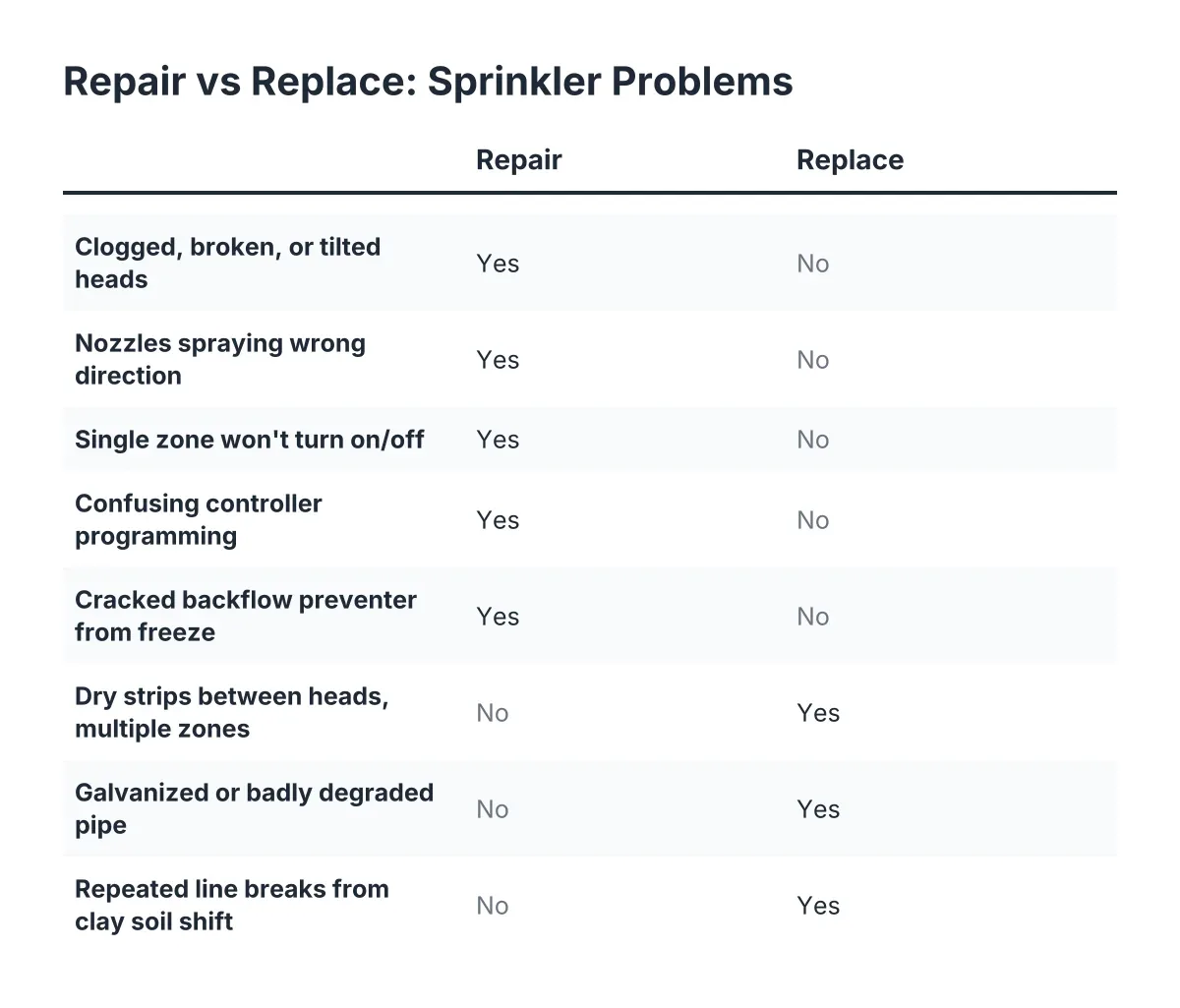
A sprinkler head is the above-ground part of the system that sprays water onto your lawn or beds. Heads pop up when a zone runs and drop back down when it stops, which keeps them out of the mower's path. Heads are also the part most likely to need attention later, which is why sprinkler head replacement and sprinkler head adjustment are common repair calls. The count and type of heads on your quote drive a big share of the material cost.
Spray Head vs. Rotor
A spray head is a fixed sprinkler that mists a short, set pattern, while a rotor is a head that slowly rotates a stream of water across a larger area. Sprays suit small or narrow spaces like side yards. Rotors cover wide open lawns with fewer heads. A good design never mixes the two on the same zone, because they put out water at different rates and the lawn ends up striped with wet and dry spots.
Valve
A valve is the electrically controlled switch that opens and closes the water for one zone. When the controller signals a valve, that zone runs. Valves wear out over time, and North Texas freeze events are hard on them, which is why sprinkler valve replacement is one of the most common irrigation repair jobs. Ask your installer where the valves will sit so you can find them later.
Valve Box
A valve box is the buried plastic box, usually with a green lid, that protects your valves and keeps them reachable. Without boxes, a future valve repair means digging blind through your lawn. If a quote does not mention valve boxes, ask. In Plano's heavy clay soil, boxes also make it easier to check for slow leaks that the soil would otherwise hide.
Controller (Timer)
A controller is the box, usually mounted in the garage, that tells each zone when to run and for how long. This is where your watering schedule lives, which matters in Plano because local watering restrictions limit which days and times you can run the system. Newer controllers can adjust run times based on weather. Make sure whoever installs yours shows you how to change the schedule and how to turn off a sprinkler system completely when you need to.
Backflow Preventer
A backflow preventer is a safety device that stops sprinkler water from flowing backward into your home's drinking water. It is required equipment, not an upgrade, so it should appear on every legitimate installation quote. Backflow preventers sit near the water source and are one of the first parts damaged in a hard freeze. If a bid skips this device, walk away.
Rain and Freeze Sensor
A rain and freeze sensor is a small device that pauses your system when it is raining or when temperatures drop near freezing. It saves water, protects your lawn from overwatering, and keeps your sprinklers from icing the sidewalk during a cold snap. Many North Texas cities expect new systems to include one, so check that it appears on your quote.
The Installation Process: Terms in a Sprinkler System Installation Glossary
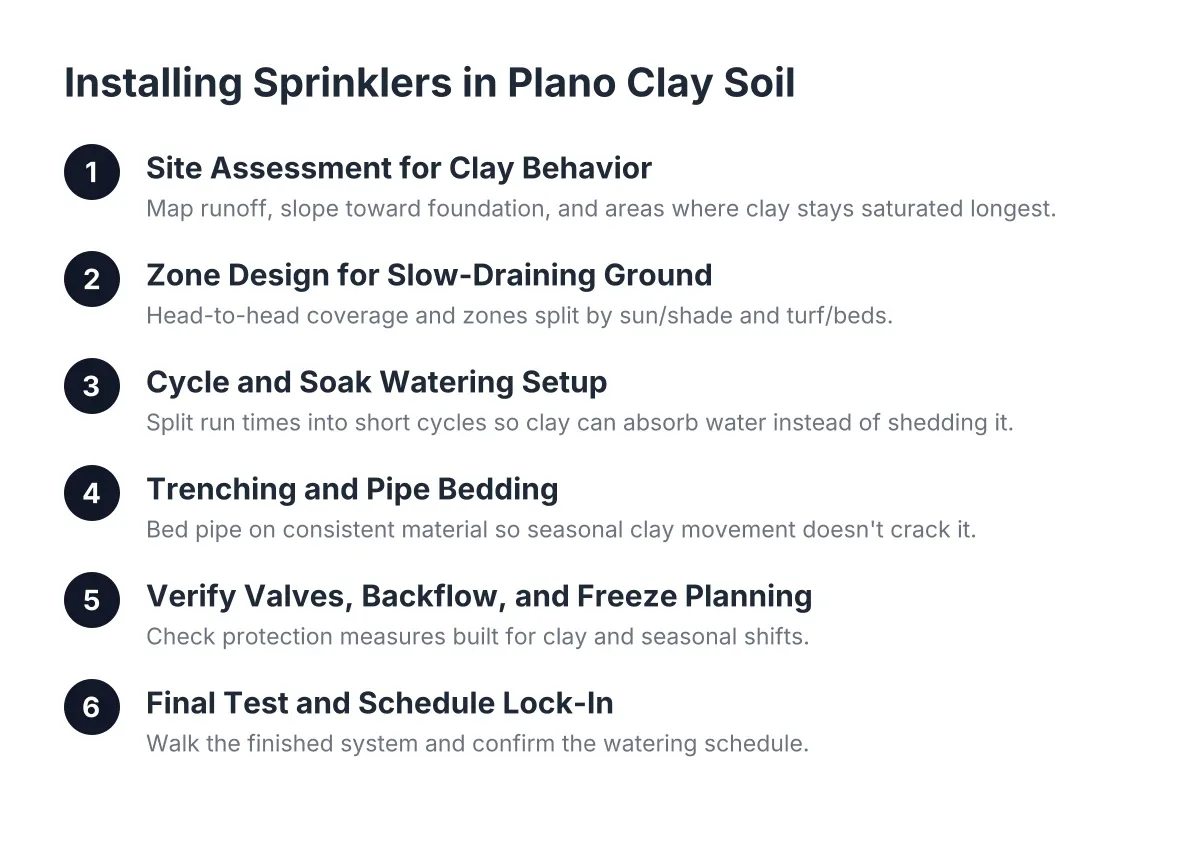
The steps below cover how water gets from your meter to your grass. A clear glossary of sprinkler system installation terms should make the process itself readable, not just the parts list. For the full sequence from design to final walkthrough, see the step-by-step installation process explained.
Mainline and Lateral Lines
The mainline is the pipe that carries water under constant pressure from your water source to the valves, and lateral lines are the pipes that run from each valve out to the sprinkler heads. The mainline holds pressure all the time, so a mainline leak wastes water around the clock. Laterals only hold pressure when their zone runs. Pipe depth and material matter here, especially in clay soil that shifts with the seasons.
Trenching
Trenching is the digging that creates paths for pipe, wire, and valves across your yard. It is the most disruptive part of any sprinkler system installation, and in North Texas it is harder than it looks because dense clay fights the equipment. Expect visible lines in the lawn for a few weeks after the job; grass fills back in. How a contractor handles trenching in clay says a lot about their local experience, and this guide to installing in North Texas clay soil explains what to watch for.
Head-to-Head Coverage
Head-to-head coverage means each sprinkler head sprays far enough to reach the next head, so the patterns overlap on purpose. That overlap is not waste; it is how designers avoid dry rings and brown patches, because the edge of a spray pattern delivers less water than the middle. If a lawn gets dry spots in the first summer, poor coverage is a common cause. Ask your installer to confirm the design uses head-to-head spacing.
Hydrozoning
Hydrozoning means grouping plants with similar water needs onto the same zone. Lawn grass, shrub beds, and shaded areas all drink at different rates, so watering them on one zone overwaters some and starves others. Good hydrozoning is a sign of a thoughtful design, not an upsell. It also helps you stay inside Plano's watering restriction windows without sacrificing plant health.
Drip Irrigation
Drip irrigation is a low-flow method that delivers water slowly at the base of plants through small tubing instead of spraying it through the air. It suits flower beds, foundation plantings, and trees, and it loses far less water to evaporation during long, hot North Texas summers. Many new installations pair spray or rotor zones for turf with drip zones for beds. If your quote includes drip, that usually means the design covers more than just the lawn.
Static Water Pressure
Static water pressure is the pressure in your water line when nothing is running, measured before the system is designed. This number decides how many heads can run per zone, which drives the zone count and the total cost. A contractor who tests your pressure before quoting is designing for your house, not from a template. A contractor who skips it is guessing.
Paperwork, Cost, and Care
Irrigation Permit and Inspection
An irrigation permit is the city's approval to install a sprinkler system, and the inspection is the follow-up check that the work meets code. Requirements vary by city, so check your local rules, but a professional installer handles this step as part of the job. A quote that never mentions permits is a yellow flag. The permit process mainly protects you, since the backflow preventer and wiring get checked by someone other than the installer.
Winterization
Winterization means preparing your irrigation system for freezing weather, usually by shutting off the water, insulating the backflow preventer, and draining exposed parts. North Texas does not need the full pipe blowouts common up north, but our freeze events still crack backflow preventers and valves every winter. Ask your installer what winter care your specific system needs. A few minutes of prevention beats a sprinkler valve replacement in February.
As-Built Drawing
An as-built drawing is a map showing where the pipes, wires, valves, and heads actually ended up after installation. It differs from the sales sketch because real yards force changes mid-dig. This map saves money on every future repair, because the tech can find a buried valve instead of billing time to hunt for it. Ask for one before you make the final payment, and keep it with your house records.
Using These Terms
With this sprinkler system installation glossary in hand, you can read a quote line by line and know what each item does, why it is there, and what questions to ask if it is missing. You do not need to become an irrigation tech; you just need enough vocabulary to tell a careful bid from a rushed one. If you want to see how these terms stack up into real cost factors, this guide to installation cost factors in North Texas walks through them one by one.
If you need sprinkler system installation, North Dallas Sprinkler Repair can help.
Prefer to talk it through? Call (469) 639-1022 — a quick call is usually the fastest way to get a straight answer for your situation.