Sprinkler System Installation Cost Factors in North Texas: A Step-by-Step Guide
If you are pricing sprinkler system installation services in Plano or the nearby North Dallas communities, you have probably noticed something frustrating: nobody will give you a straight number. That is partly honest. Lot size, soil, water pressure, and city rules all move the price. But you can still get a clear picture of what drives the cost before anyone sets foot on your lawn.
This guide walks you through the process step by step. Each step shows you what a good contractor should cover, which choices raise or lower the price, and where it pays to spend more. By the end, you will know how to read a quote and spot a thin one.
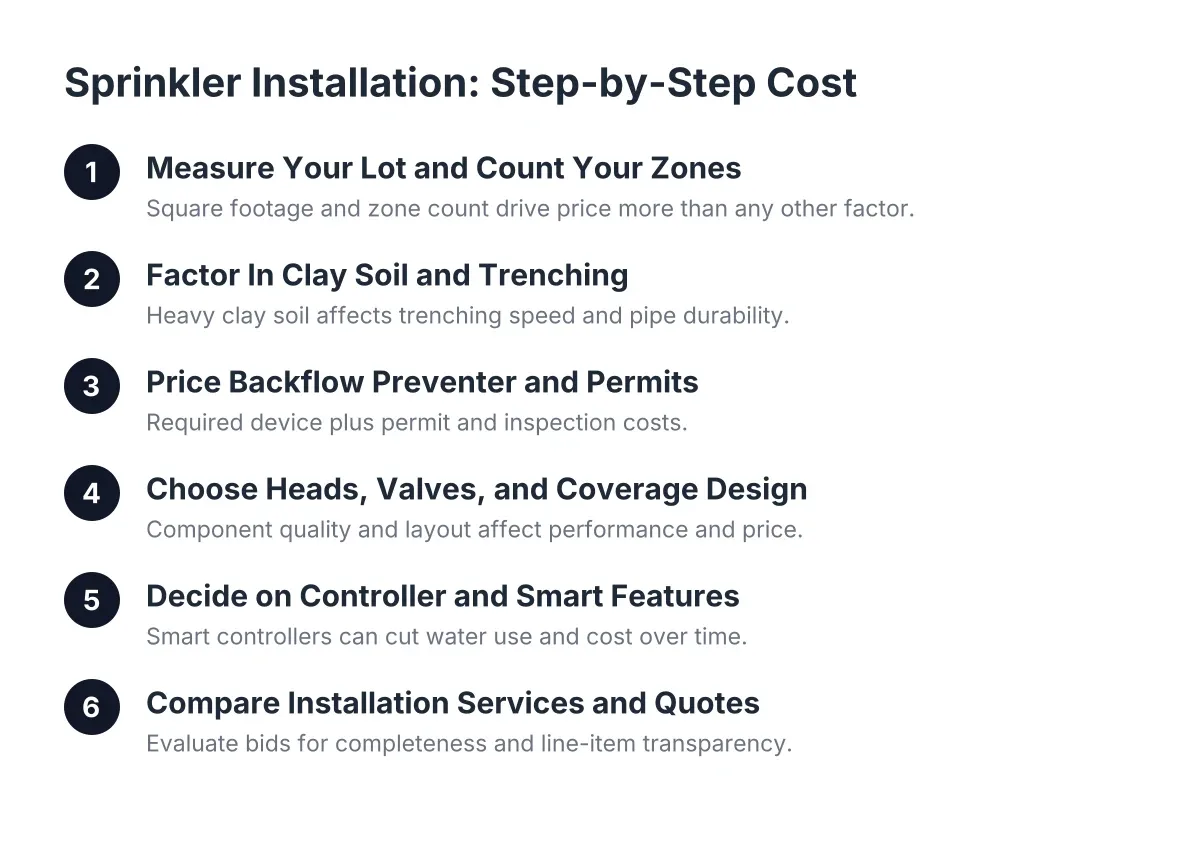
Step 1: Measure Your Lot and Count Your Zones
Start with your lot, because square footage and zone count drive the price more than any other factor. A zone is a group of sprinkler heads that run together on one valve. Most Plano lots of a quarter acre or more need somewhere between six and twelve zones, depending on layout and water pressure.
Here is why zones matter so much. Each zone needs its own valve, its own wiring run back to the controller, and its own trenched pipe. Suppose a homeowner in west Plano has a quarter-acre lot with front turf, back turf, two side strips, and flower beds along the fence. That layout might need eight zones; a similar lot with simpler landscaping might need six. The difference shows up in the quote.
Other lot factors that move the price:
- Obstacles. Mature trees, existing patios, and driveways force boring under hardscape instead of open trenching, which adds labor.
- Slope. Sloped yards need check valves in low heads to stop water from draining out after each cycle.
- Mixed planting. Beds that need drip lines instead of spray heads add a different zone type, and drip zones take more parts and setup time.
Walk your yard with a tape measure or pull your lot dimensions from your survey. When you call for quotes, you will be able to describe the job accurately, and you will notice when an estimate skips half your yard.
Step 2: Factor In North Texas Clay Soil and Trenching Conditions
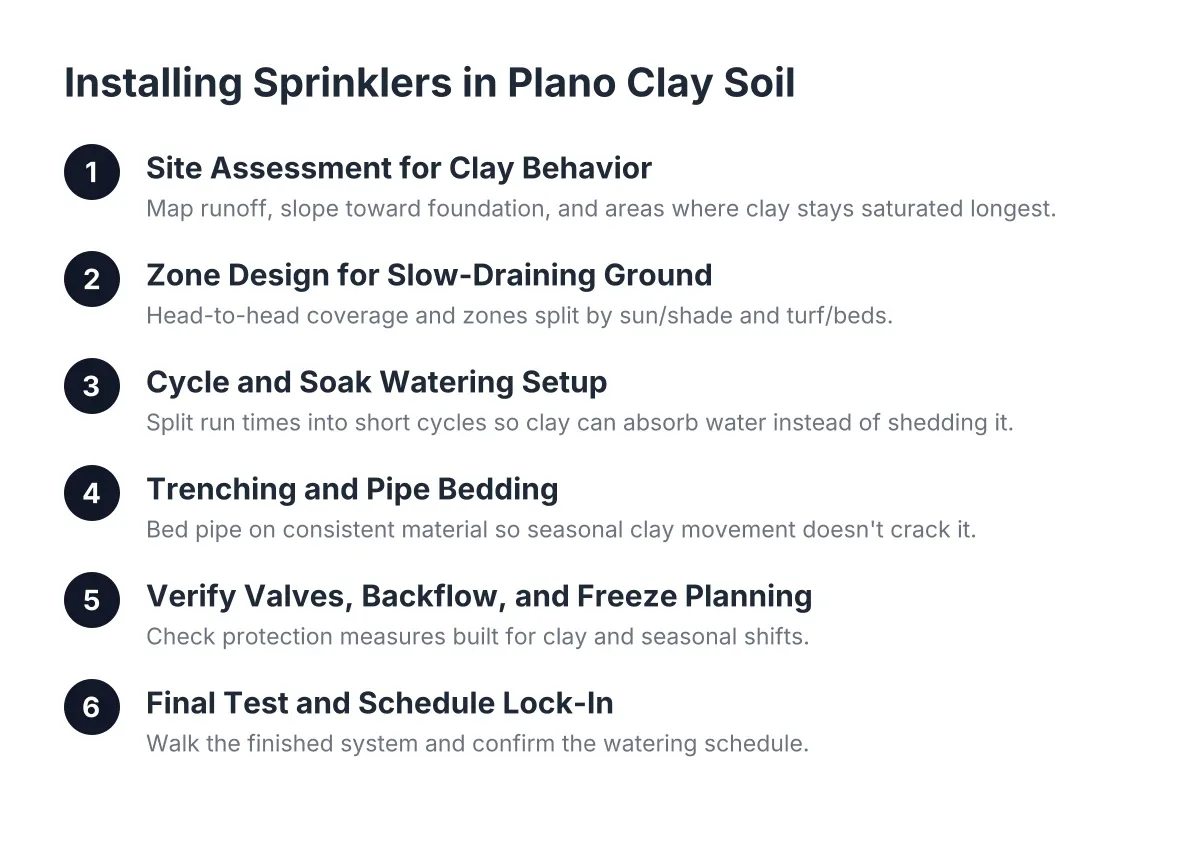
Plano sits on heavy clay soil, and that changes installation in two ways. First, trenching through dry, compacted clay is slow work, especially in late summer when the ground is hard. Second, clay shifts as it swells and shrinks through the year, and that movement can crack rigid pipe joints over time.
A contractor who works these soils regularly plans for both. Expect flexible swing joints at each head so soil movement does not snap the connection. Expect pipe buried deep enough to ride out seasonal shifting. These details cost a little more up front and save you lawn sprinkler repair calls later.
Timing matters here too. Trenching in spring, when the clay holds some moisture, goes faster than trenching in August. If you are a pre-season planner, getting an installation quoted in late winter or early spring often means easier digging and a system ready before the first hot stretch.
Step 3: Price the Backflow Preventer and Permit Requirements
A backflow preventer is required on every irrigation system because it stops sprinkler water from flowing backward into your drinking water. It is not optional, and it is one line item where quality matters. North Texas freeze events damage backflow preventers and valves more than any other component, so insulation and placement are worth discussing before you sign.
In addition, Texas requires irrigation work to be done by a licensed irrigator, and cities in the Plano area typically require a permit and an inspection for new installations. Ask every bidder these three questions:
- Who pulls the permit, you or me, and is the fee included in the quote?
- Is the backflow test after installation included?
- How is the backflow preventer protected from freeze damage?
A fair quote lists the permit, the backflow device, and the test as visible line items. If a bid is noticeably cheaper than the others and does not mention a permit, that gap is usually where the savings came from. This is also the clearest case for hiring professional sprinkler system installation instead of going full DIY; the backflow and permit work needs a licensed professional, no matter how handy you are.
Step 4: Choose Your Heads, Valves, and Coverage Design
Component choices are the next big cost lever. Rotor heads cover large turf areas, spray heads handle smaller strips and beds, and drip lines serve planting beds with slow, targeted watering. A rotor head, according to Hunter Industries, is built from a buried body, a rising stem, a moving turret, and the nozzle that sprays the water. Good installers bury rotors to the top of the case so mowers pass clean over them.
Coverage design matters more than brand names. Proper layouts follow head-to-head spacing, meaning each head's spray reaches the neighboring head. That overlap is what gives you even coverage instead of brown stripes. Fewer heads spaced too far apart lowers the bid and shows up as dead patches by July.
Valve quality is worth asking about too. Valves are buried, they cycle thousands of times, and a sprinkler valve replacement later costs real money in labor. Mid-grade or better valves from a major manufacturer are a reasonable ask on any new sprinkler system installation, and the price difference across a whole system is modest.
Step 5: Decide on the Controller and Smart Features
The controller is where a small upgrade can pay for itself. Replacing a basic clock-based controller with a WaterSense labeled smart controller can cut an average home's irrigation water use by up to 30 percent, saving up to 15,000 gallons a year, according to the U.S. Environmental Protection Agency (EPA WaterSense).
That matters doubly in Plano, where watering restriction schedules limit which days you can run the system. A smart controller adjusts run times to weather and makes it easier to stay inside your allowed watering schedule without babysitting the box. Rain and freeze sensors are often required by local rules on new systems anyway, so confirm they are in the quote.
For scale, landscape irrigation accounts for nearly one-third of all residential water use nationwide, close to 9 billion gallons per day, according to the U.S. Environmental Protection Agency (EPA WaterSense). A system set up well from day one puts you on the right side of that number.
Step 6: Compare Sprinkler System Installation Services and Quotes
Now put your bids side by side. Searching for sprinkler system installation companies near me will surface plenty of names; your job is to compare what each quote actually includes. Most residential installations in the Plano area take one to three days of on-site work once the permit is in hand, though lot size and hardscape boring can stretch that.
Check each quote for:
- Zone count, head count, and head types, listed specifically
- Backflow preventer model, permit, and inspection or test
- Controller model, plus rain and freeze sensors
- Trench depth, swing joints at heads, and lawn restoration after trenching
- A written walkthrough at the end, with the controller programmed to a legal watering schedule
However, do not pick on price alone. A low bid with vague line items often means fewer heads, thinner coverage, or a skipped permit. One honest trade-off: a well-built system still costs more up front than most homeowners expect, and the payback comes over years in lower water bills and fewer irrigation repair visits, not in month one.
Step 7: Plan the First-Year Startup and Freeze Protection
Your system is only as good as its first year of care. If you are the type who plans spring startup and winter shutdown ahead of the first freeze warning, build that into the deal. Ask the installer what the first fall shutdown involves and whether they offer a spring tune up, because a new system still needs its backflow protected before North Texas freeze events.
The payoff for staying on top of it is measurable. An automatic irrigation system that is not properly maintained can waste up to 25,000 gallons of water a year, while a well-managed system can cut irrigation water use by about 15 percent, according to the U.S. Environmental Protection Agency (EPA WaterSense). Small habits, like checking for heads knocked out of alignment after mowing, keep a new system performing like new. Misaimed nozzles are among the most common startup-season findings, and they are usually a quick fix.
Get a Clear Answer Before You Dig
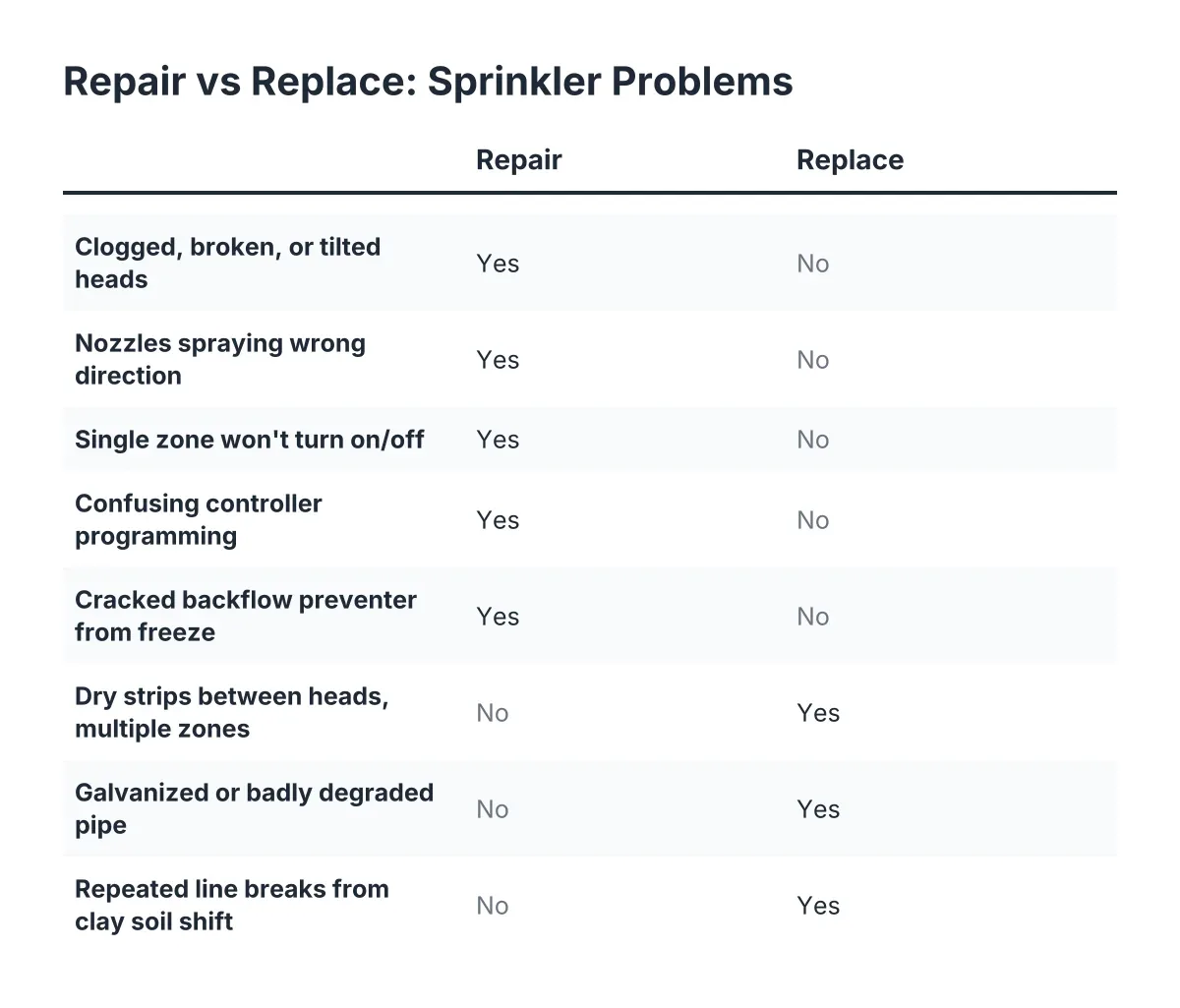
A new irrigation system is a once-in-a-couple-of-decades purchase for most Plano homeowners, and the cost comes down to knowable factors: lot size and zones, clay-soil trenching, the backflow and permit, component quality, and the controller. Work through the steps above and you can compare sprinkler system installation services on substance instead of guessing at a lump-sum number.
If you are weighing a new system, or trying to decide whether your aging builder-installed system is worth another round of repairs, North Dallas Sprinkler Repair can walk your yard, explain what a new installation would involve for your specific lot, and give you a straight estimate. Reach out to schedule a visit before the busy season fills the calendar.
If you need sprinkler system installation, North Dallas Sprinkler Repair can help.
Prefer to talk it through? Call (469) 639-1022 — a quick call is usually the fastest way to get a straight answer for your situation.