Sprinkler Repair Terms Explained: A Plain-English Glossary
If you are reading repair quotes or searching for why your lawn stays dry in spots, the jargon piles up fast. This sprinkler repair glossary breaks down the terms Plano homeowners run into most, in plain English. Use it to understand what a quote actually covers, ask sharper questions, and spot problems before they get expensive. Every entry is short enough to read in under thirty seconds.
- Zone: one group of sprinklers that runs together
- Sprinkler Head: the part that pops up and sprays
- Sprinkler Head Adjustment: aiming and tuning the spray
- Sprinkler Head Replacement: swapping a broken head for a new one
- Valve: the switch that opens water to a zone
- Sprinkler Valve Replacement: installing a new valve when one fails
- Controller (Timer): the box that tells zones when to run
- Backflow Preventer: keeps sprinkler water out of your drinking water
- Rain Sensor: shuts the system off when it rains
- Mainline vs. Lateral Line: the pipes before and after the valves
- Solenoid: the small electric part that opens a valve
- Leak Detection: finding where water escapes underground
- Winterization: protecting the system from freeze damage
- System Audit (Tune-Up): a full zone-by-zone checkup
- Watering Schedule: when and how long each zone runs
- French Drain: a buried drain that moves standing water away
- Shut-Off Valve: how to turn the whole system off
Equipment Terms: Sprinkler Repair Glossary for System Parts
These are the physical pieces a sprinkler system contractor will name when explaining what broke. Knowing them turns a confusing quote into a parts list you can actually follow.
Zone
A zone is one group of sprinkler heads controlled by a single valve, so they all turn on and off together. Most Plano yards have several zones, each covering a section like the front lawn, the backyard, or flower beds. When a tech says "zone 3 is not working," they mean one valve and its heads, not your whole system. Repairs priced per zone are usually smaller jobs than full-system work.
Sprinkler Head
A sprinkler head is the visible part of the system that pops up out of the ground and sprays water. Heads come in two main styles: spray heads that mist a fixed area, and rotor heads that sweep a stream back and forth. Heads take the most abuse from mowers, foot traffic, and North Texas clay soil that shifts as it dries and swells. A broken head is one of the most common lawn sprinkler repair calls, and usually one of the simplest fixes.
Sprinkler Head Adjustment
A sprinkler head adjustment means changing where a head sprays, how far, and in what arc. Heads drift out of alignment over time, which is why you see water hitting the sidewalk while a patch of grass goes brown. An adjustment costs less than a replacement because no parts are needed. If a quote lists adjustments, the tech is tuning what you have rather than swapping hardware.
Sprinkler Head Replacement
Sprinkler head replacement means removing a broken or worn-out head and installing a new one in its place. Cracked plastic, a head that will not pop up, or a geyser when the zone runs are all signs a head needs replacing, not adjusting. It is a routine job, but the count matters: replacing one head is quick, while replacing ten changes the scope. The number of heads is one of the biggest factors in what sprinkler repair costs.
Valve
A valve is the underground switch that opens and closes the water supply to one zone. Each zone has its own valve, usually grouped in a buried box with a green lid. When a zone will not turn on, or will not turn off, the valve is a prime suspect. Valves sit in the ground, so freeze events and shifting clay soil in North Texas are hard on them.
Backflow Preventer
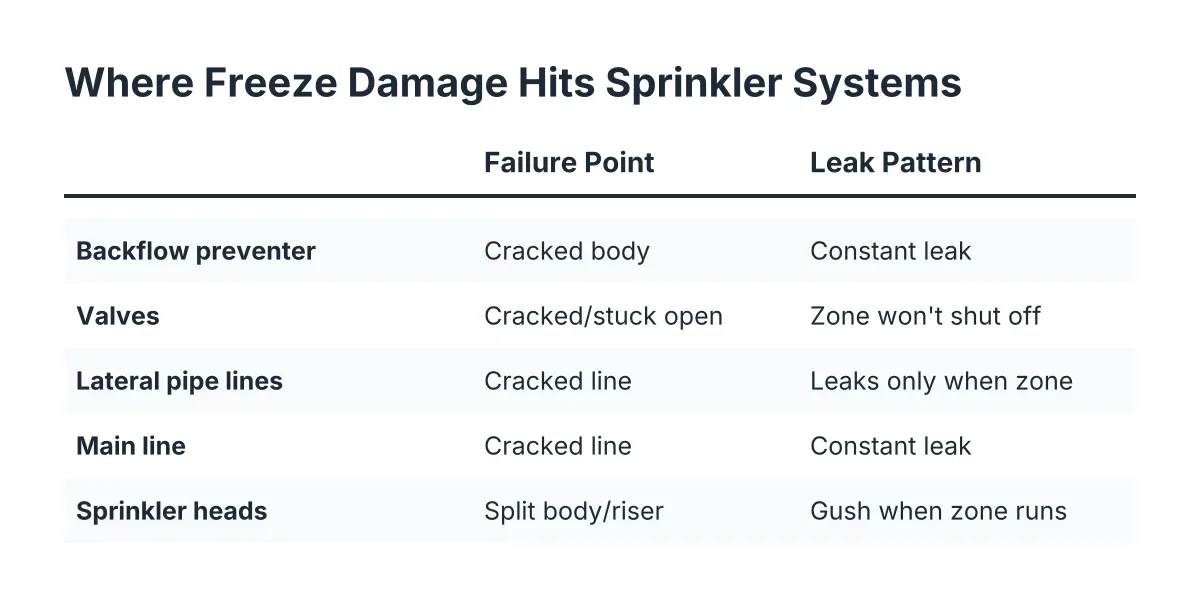
A backflow preventer is a safety device that stops sprinkler water from flowing backward into your home's drinking water. It usually sits above ground near where the system connects to your water supply, which makes it the part most likely to crack in a hard freeze. If a tech mentions backflow damage after a cold snap, that is a real repair, not an upsell. Many cities require a working backflow preventer, so check your local rules.
Rain Sensor
A rain sensor is a small device that tells your controller to skip watering when it has rained. It saves water and keeps you from being the house running sprinklers in a storm. In Plano, where watering restrictions set when systems can run, a working sensor helps you stay compliant without thinking about it. Sensors are inexpensive compared to the water they save over a hot summer.
Mainline vs. Lateral Line
The mainline is the pipe that carries water under constant pressure from your water supply to the valves, while lateral lines carry water from each valve out to the heads. The difference matters because a mainline leak runs 24 hours a day, but a lateral leak only loses water when that zone runs. North Texas clay soil shifts and cracks both kinds over time. A mainline repair is usually more urgent and often more involved than a lateral fix.
Solenoid
A solenoid is the small electric part on top of a valve that opens it when the controller sends a signal. When a zone is dead but the valve itself is fine, a failed solenoid is often the cause. It is a small, swappable part, so a solenoid fix is one of the cheaper outcomes of a dead-zone diagnosis. If a tech says "bad solenoid," you can relax a little.
Repair and Service Terms: Sprinkler Repair Glossary for Common Procedures
This section covers the services and procedures you will see on quotes and invoices.
Sprinkler Valve Replacement
Sprinkler valve replacement means digging up a failed valve and installing a new one in its place. It is the fix when a valve body cracks, sticks open, or will not respond even with a new solenoid. Valve replacement takes more labor than a head swap because the valve sits underground and must be cut into the pipe. If several valves in one box have failed, ask whether replacing them together saves trips and digging.
Controller (Timer)
A controller, also called a timer or clock, is the box that tells each zone when to turn on and how long to run. It is usually mounted in the garage or on an outside wall. Blank screens, zones that run at odd hours, and schedules that will not save all point to the controller. Some sprinkler repair visits end at the controller without a shovel ever touching the ground, which is the cheapest kind of fix.
Leak Detection
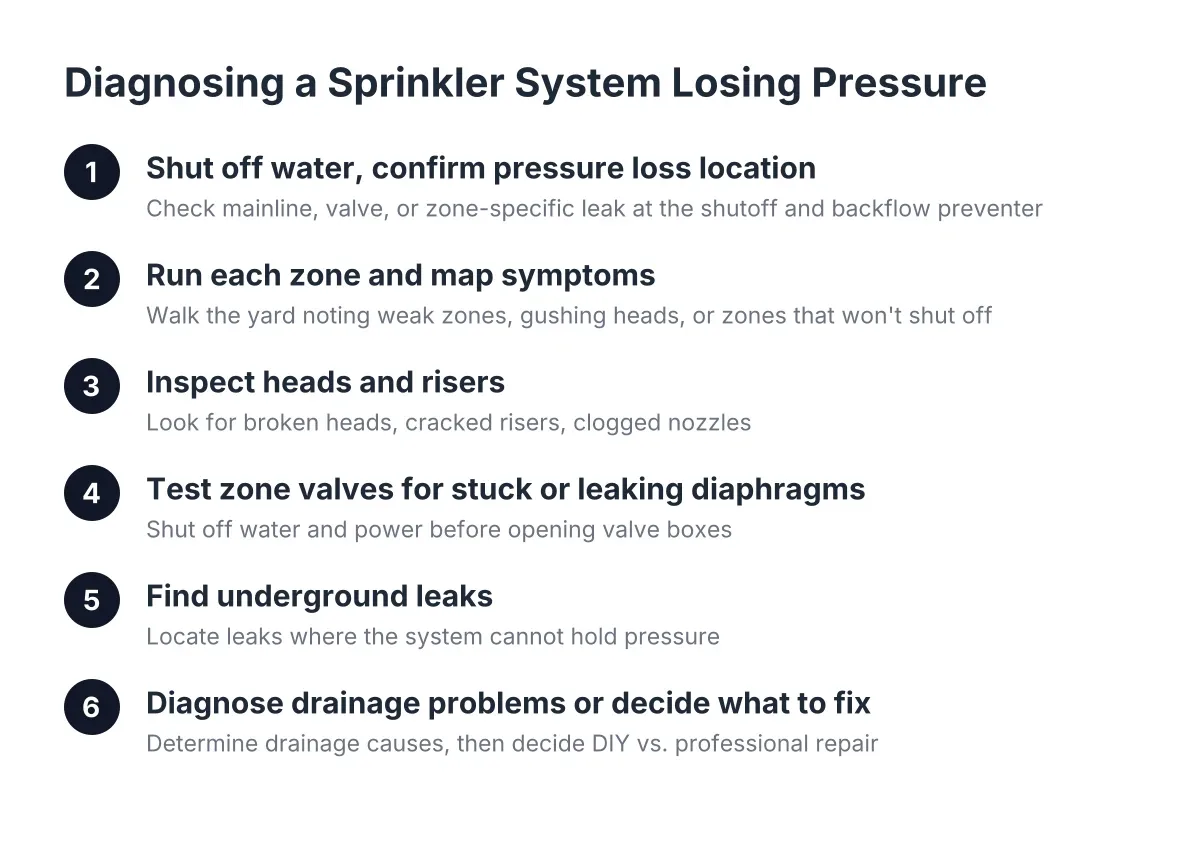
Leak detection is the process of finding where an irrigation system loses water underground. Soggy spots that never dry, a water bill that jumps, or low pressure in one zone are common clues. Techs isolate zones one at a time and watch pressure and flow to narrow down the spot. Finding the leak is separate work from fixing it, so expect a quote to list both.
Winterization
Winterization means preparing an irrigation system for freezing weather, mainly by protecting the backflow preventer and shutting off and draining exposed parts. North Texas does not freeze often, but when it does, unprotected systems crack. A burst backflow preventer or split pipe after a freeze is one of the most common winter repair calls in Plano. An hour of prevention before a cold front beats an emergency repair after it.
System Audit (Tune-Up)
A system audit is a zone-by-zone checkup where a tech runs every zone and inspects heads, valves, coverage, and the controller. Think of it as an annual physical for your irrigation system. Audits catch small problems, like a tilted head or a slow valve, before they turn into dead grass or a big leak. It is also the right starting point if you bought a home and have no idea what shape the system is in, whether you are in Plano or nearby in Richardson.
Watering Schedule
A watering schedule is the plan programmed into your controller that sets which days each zone runs and for how long. In Plano, local watering restrictions limit which days you can water, so your schedule needs to match the rules and the season. Long hot summers call for different run times than spring. A tech who adjusts your watering schedule during a repair visit is tuning the system to your yard, not padding the bill.
French Drain
A French drain is a buried, gravel-filled trench with a perforated pipe that collects standing water and carries it away from your yard or foundation. It solves a different problem than sprinklers: too much water instead of too little. In heavy clay soil that drains slowly, French drain installation is often the fix for a swampy corner of the lawn. It pairs with irrigation repair because both deal with where water goes on your property.
Shut-Off Valve
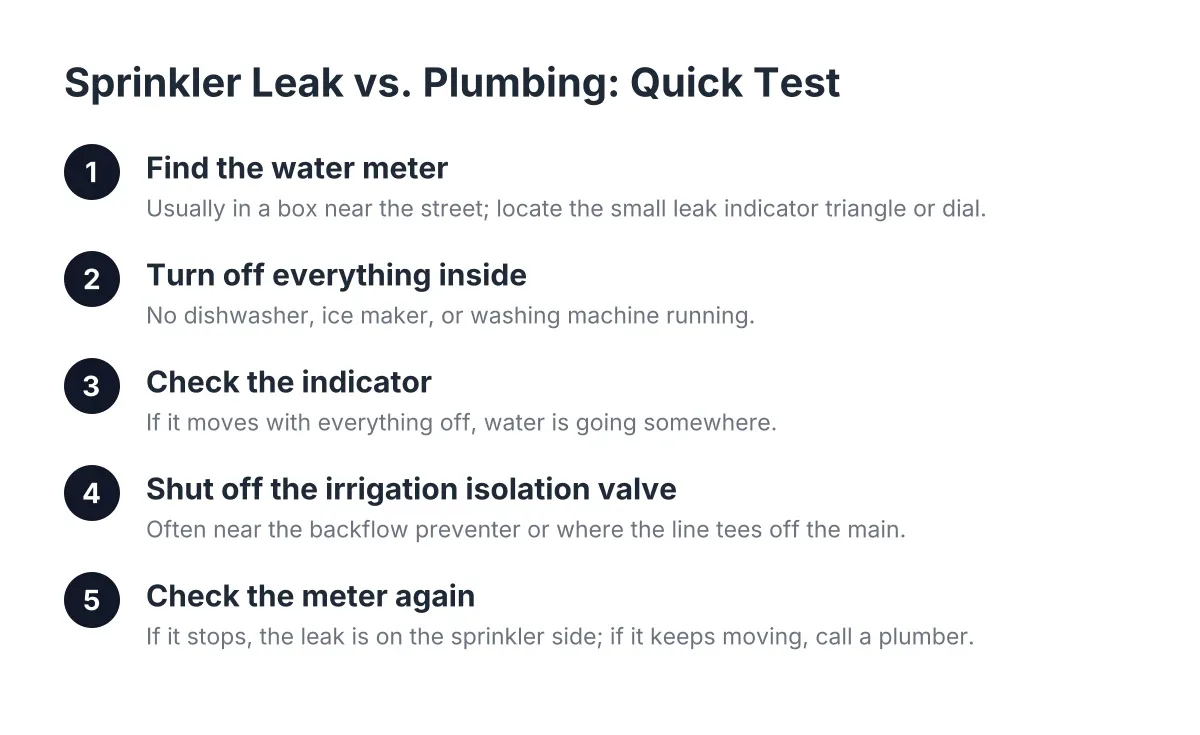
A shut-off valve is the master valve that cuts water to your entire sprinkler system without affecting the house. Knowing how to turn off a sprinkler system matters when a head is geysering or a pipe bursts, because every minute wastes water. The shut-off is usually in a buried box near your water meter or where the system ties into your supply line. Find yours on a calm day, not during an emergency.
Using These Terms
With this sprinkler repair glossary in hand, you can read a quote line by line and know what each item means, from a solenoid swap to a valve replacement. You can also describe your problem in the tech's own language, which gets you a faster, more accurate diagnosis. The jargon was the hard part; the fixes themselves are usually simpler than they sound.
If you need sprinkler repair, North Dallas Sprinkler Repair can help.
Prefer to talk it through? Call (469) 639-1022 — a quick call is usually the fastest way to get a straight answer for your situation.