How Freeze Events Damage French Drains in Plano: A Step-by-Step Guide
If water keeps pooling in the same spot after every sprinkler cycle or rain, your yard is trying to tell you something. Many Plano homeowners install a drainage system, feel the relief of a dry lawn, and then watch the problem creep back after a hard winter. The reason is easy to overlook: a hard freeze can damage a French drain that is holding water. This guide walks through freeze damage in French drains, what freezing weather does to a buried drain step by step, so you can check your own system, understand what repairs involve, and plan an installation that holds up when the next cold snap hits.
Here is the frustrating part. A French drain is supposed to be the fix for standing water, not a new source of worry. However, a drain that freezes while holding water can crack pipe, heave gravel, and shift grade. Then the pooling comes back, usually in the exact spot you paid to fix. The good news is that most of this damage is preventable, and the warning signs are easy to spot if you know where to look.
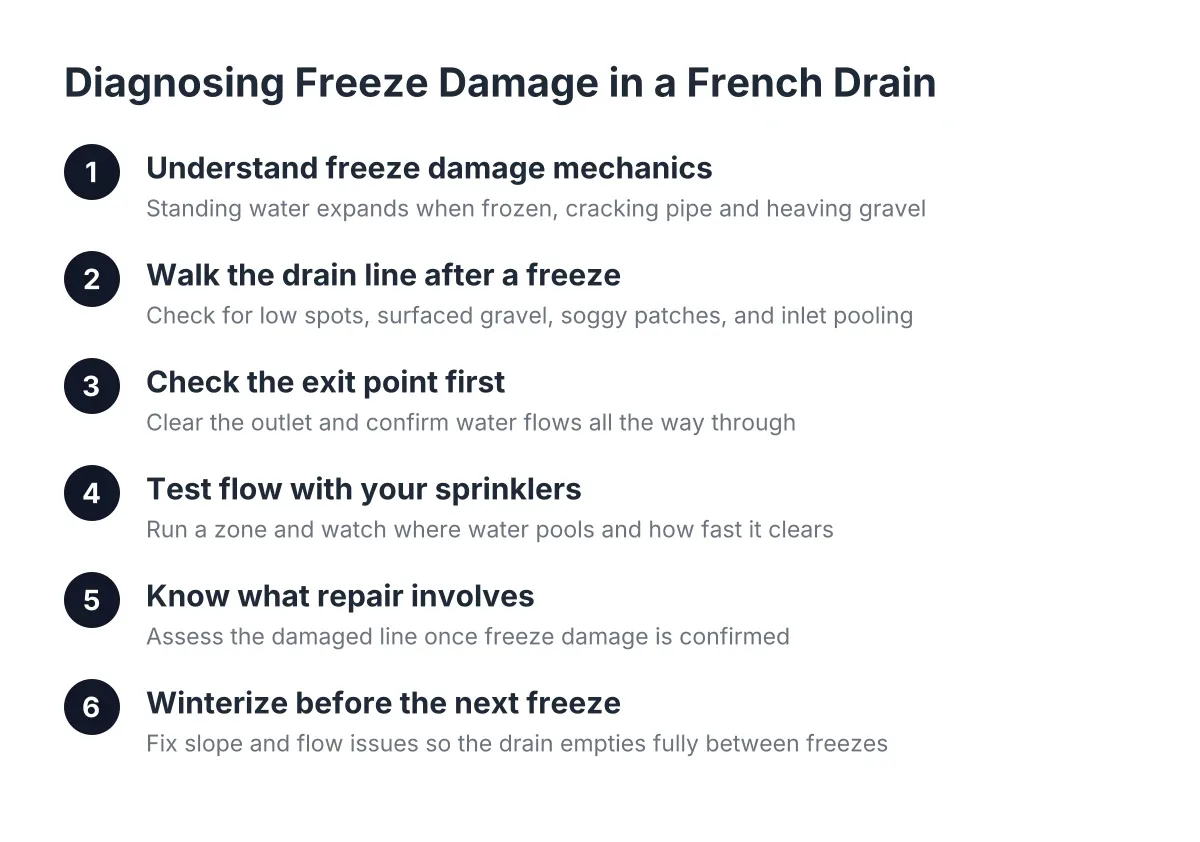
Step 1: Understand How Freeze Events Damage a French Drain
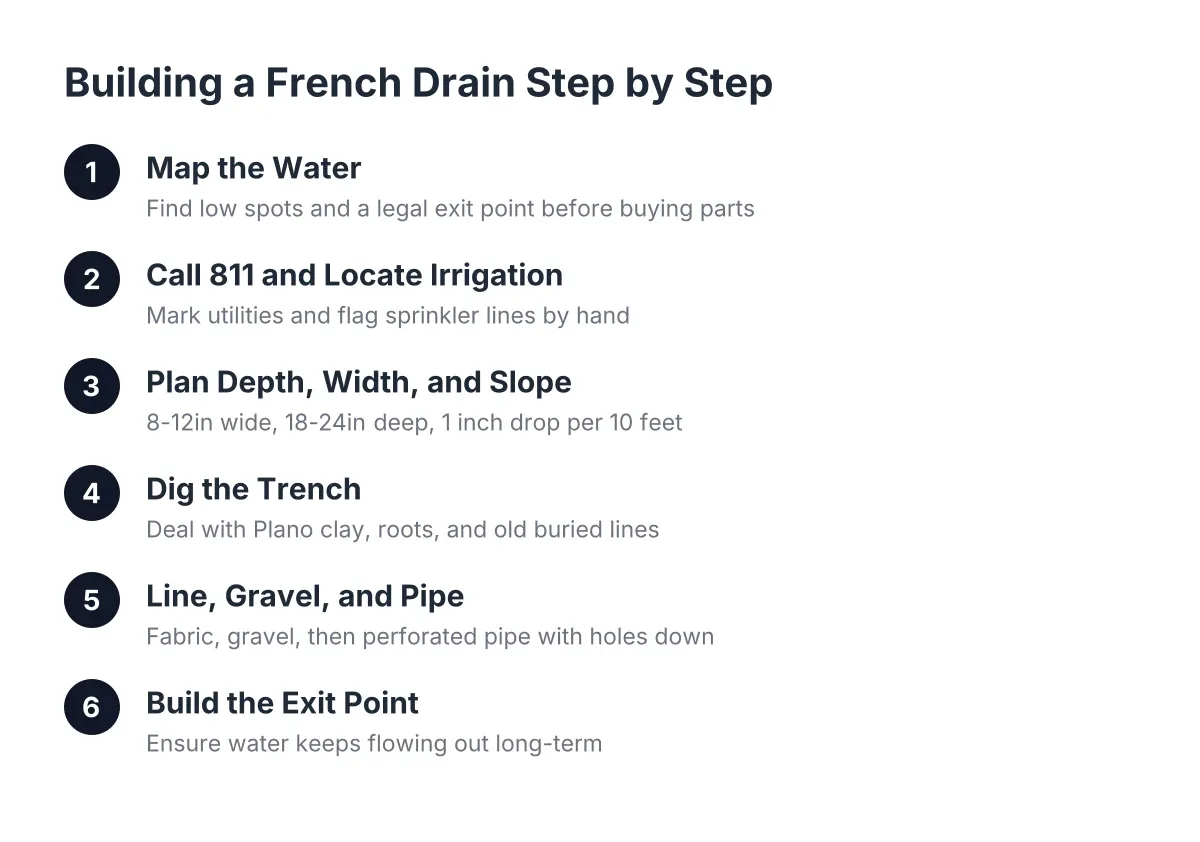
A French drain is a gravel-filled trench with a perforated pipe at the bottom. It works by giving water a path of least resistance away from your foundation or soggy lawn. When that pipe holds standing water during a hard freeze, the water expands as it turns to ice. Expanding ice can crack the pipe, split fittings, and push gravel out of position.
Two things make Plano drains more vulnerable than most homeowners expect:
- Heavy clay soil. Plano's clay holds water against the pipe instead of letting it drain through. Wet clay freezes hard and expands, squeezing and shifting the pipe from the outside.
- Clogged or flat exit points. If the drain's exit point is blocked by leaves, soil, or sod, water sits in the pipe instead of flowing out. Standing water is what freezes. A drain that empties fully between rains rarely has a freeze problem.
Notice the pattern. Freeze damage in French drains typically occurs in systems that were already struggling. The freeze is the final blow, not the only cause. That matters because it tells you where to look first.
Step 2: Walk the Drain Line After Every Hard Freeze
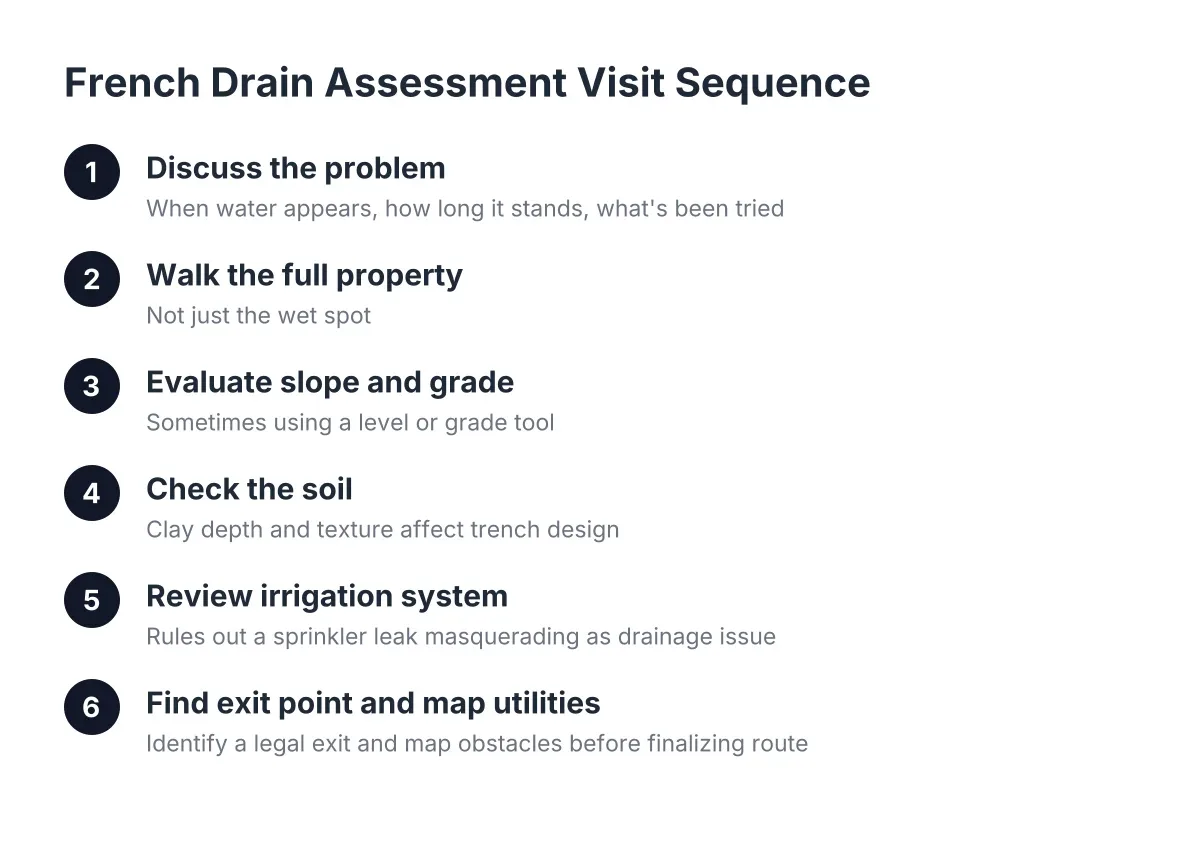
After any freeze that lasts more than a night, walk the path of your drain. You do not need tools for this first pass, just your eyes and ten minutes.
Look for these signs along the trench line:
- New low spots or humps. Frost heave in clay soil can lift or drop sections of the trench. Water will pool in the new low spots.
- Gravel pushed to the surface. Ice expansion can shove drain rock upward through thin sod.
- Soggy ground in a new place. A cracked pipe leaks water into the surrounding soil instead of carrying it away. The wet spot often shows up downstream of the actual break.
- Water sitting at the inlet. If a surface grate or catch basin holds water hours after rain or a sprinkler run, the line below it may be crushed or blocked.
For example, suppose a homeowner near Legacy and Coit notices that the flower bed drain handled every storm for two years, then started backing up the spring after a week-long February freeze. In that scenario, the likely culprit is a split in the pipe or a heaved section that changed the slope. The freeze happened months before the symptom appeared, which is why so many people never connect the two.
Step 3: Check the Exit Point Before Anything Else
The exit point is where your drain releases water, usually at the curb, a lower spot in the yard, or a pop-up emitter in the lawn. It is the single most important spot to inspect, because a blocked outlet means the whole pipe holds water going into the next freeze.
Clear away leaves, grass clippings, and soil from the opening. If you have a pop-up emitter, lift the cap and make sure the spring and lid move freely. Then run your sprinkler system or a garden hose into the drain inlet and confirm water actually comes out the other end. If water goes in but never comes out, the line is holding water somewhere, and that stored water is what freezes and splits pipe.
Why Frozen Standing Water Does the Most Damage
Water expands about nine percent when it freezes, and buried pipe has nowhere to give. A pipe that drains dry between rains survives winter after winter. A pipe holding even a few inches of trapped water can crack at a joint during one hard night. This is why drain installers in North Texas obsess over slope and outlet condition more than pipe brand or gravel type. Flow is the freeze protection.
Step 4: Test Flow With Your Sprinkler System
Your irrigation system is a built-in test rig for your drainage. Run the zone closest to the drain for a full cycle and watch two things: where the water goes, and how fast it clears.
If water pools near the drain inlet during the cycle but clears within an hour after, your drain is working. If the pool lingers into the next day, the line is restricted. In addition, watch for water surfacing along the trench line itself during the sprinkler run; that points to a crack letting water escape mid-route.
One caution here. Pooling after sprinkler use is not always a drainage problem. A leaking sprinkler valve, a broken head, or a cracked lateral line can dump far more water into one spot than the drain was sized to handle. According to the U.S. Environmental Protection Agency (EPA WaterSense), a household with an automatic landscape irrigation system that is not properly maintained can waste up to 25,000 gallons of water annually. A fair share of that waste ends up as mystery puddles that get blamed on drainage. If the wet spot appears only when a specific zone runs, have the irrigation side checked before digging up the drain.
Step 5: Know What Freeze Damage Repair Involves
If your inspection points to a damaged line, here is what a repair typically looks like, so there is no guesswork about what a crew will do in your yard.
- Locate the break. A technician traces the line, often running water through it and watching where it surfaces or stops. Signs of past ground disturbance, like utility trenching or cable burial, get a close look, since that work can crimp or crush pipe without a visible break.
- Open the trench at the damaged section. A targeted repair opens a few feet of trench, not the whole run. Sod gets cut and set aside so it can go back in place.
- Replace the cracked pipe and check slope. The crew replaces the split section and verifies the pipe still falls toward the exit point. Frost heave often shifts grade, so this check matters even when the pipe itself looks fine.
- Flush before closing. Soil and gravel work into an open pipe during any repair. Flushing the line before backfilling keeps that debris from washing downstream and clogging the drain exit point later.
- Restore gravel, fabric, and sod. Good backfill keeps clay fines out of the gravel so the drain keeps flowing for years.
Cost depends on how long the damaged section is, how deep the line sits, what surfaces sit above it, and whether the exit point needs rework. A short pipe splice in open lawn sits at the low end. Re-sloping a long run that heaved, or rebuilding a buried outlet, costs more. Any quote should spell out which of those you are dealing with.
Step 6: Winterize the Drain So the Next Freeze Passes Through
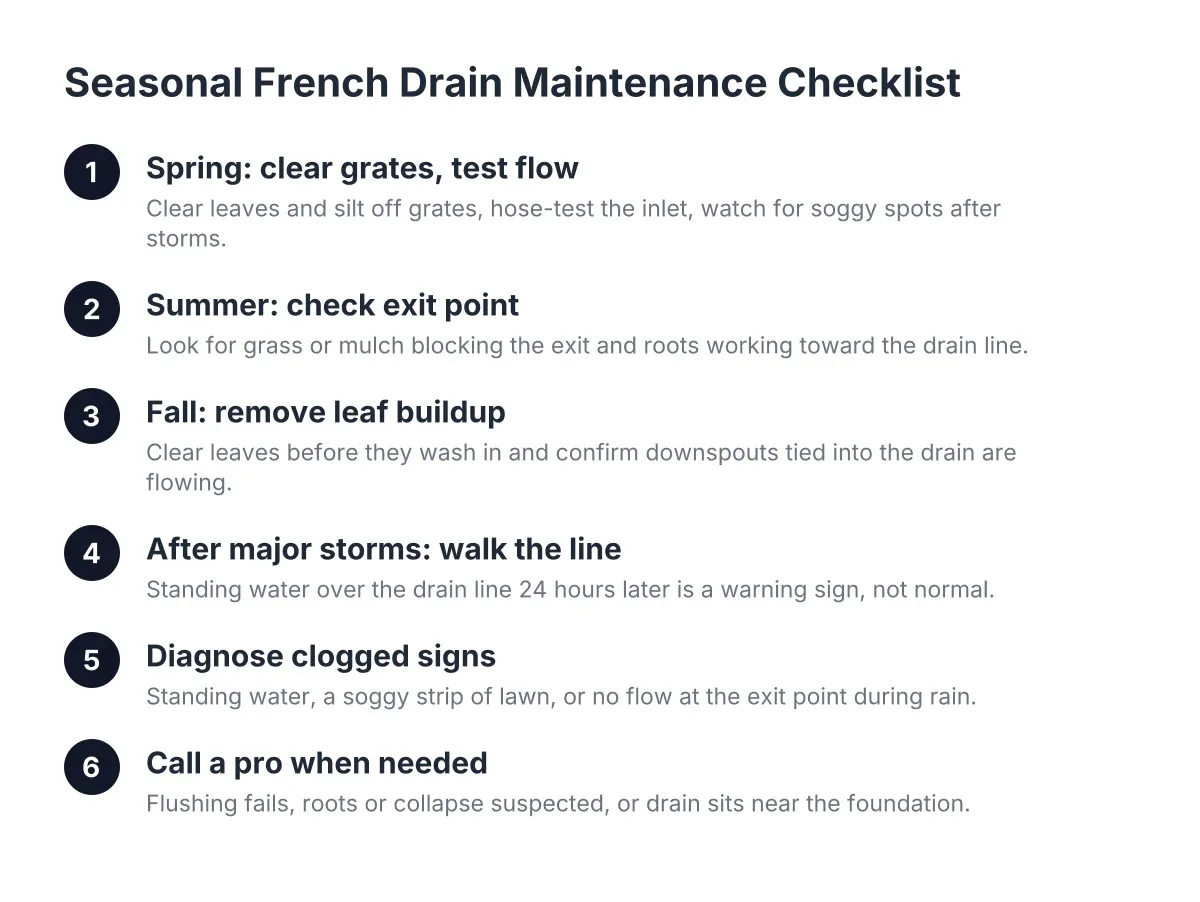
Once your drain flows freely, protecting it through winter takes little effort. Before the first hard freeze each year, usually by late November in Plano, run through this short list:
- Clear the exit point of leaves and soil.
- Flush the line with a hose and confirm full flow out the end.
- Fix any sprinkler leaks feeding extra water into the drain area, since saturated clay freezes harder and heaves more.
- Check your watering schedule against the forecast; skip irrigation cycles ahead of a freeze so the drain is not holding fresh runoff when temperatures drop.
Freeze damage in French drains occurs in lines that go into winter wet and blocked. A dry, free-flowing drain shrugs off the same cold snap.
When to Bring in a Professional
Surface checks and outlet cleaning are well within reach for most homeowners. However, diagnosing a buried break, correcting slope, or deciding whether the real problem is drainage, grading, or a leaking irrigation line takes experience and the right approach. If you have cleared the exit point and the drain still backs up, or if water is pooling near your foundation, it is worth having experienced french drain installers evaluate the line before the damage compounds. The same visit can confirm whether an existing french drain installation can be repaired or whether a section needs rebuilding with better slope and depth. Catching freeze damage in spring is a modest repair. Ignoring it through another summer of sprinkler cycles, and another winter, usually is not.
If you need french drain installation, North Dallas Sprinkler Repair can help.
Prefer to talk it through? Call (469) 639-1022 — a quick call is usually the fastest way to get a straight answer for your situation.