French Drain Maintenance: Keeping Your System Working in North Texas
A French drain only works when water can move through it. In North Texas, clay soil, heavy spring storms, and long dry summers all push against that. This FAQ covers french drain maintenance, keeping the gravel, pipe, and exit point clear so the system keeps pulling water away from your yard and foundation. Understanding the french drain clogged signs helps you catch problems early. If you are weighing a new drain against a kit, or wondering whether the one already in your yard needs attention before spring, these are the questions worth answering first.
Do French drains actually need maintenance?
Yes, French drains need periodic maintenance, usually a seasonal check rather than constant work. Sediment, roots, and lawn debris slowly clog the gravel and pipe. A drain that gets a quick inspection in spring and fall tends to run for years; one that never gets looked at often fails quietly until the yard floods again.
Plano's clay soil makes this worse than it would be in sandy ground. Fine clay particles wash into the gravel bed over time and reduce how fast water can enter the pipe. The drain does not stop working all at once. It slows down season by season, which is why homeowners often blame the rain instead of the drain.
What does french drain maintenance keeping involve each season?
Seasonal French drain maintenance means keeping the inlet grates clear, flushing the pipe with water, checking the exit point, and watching how fast standing water disappears after rain. Most homeowners can handle the visual checks in twenty minutes. The flushing and any digging are where a contractor earns the call.
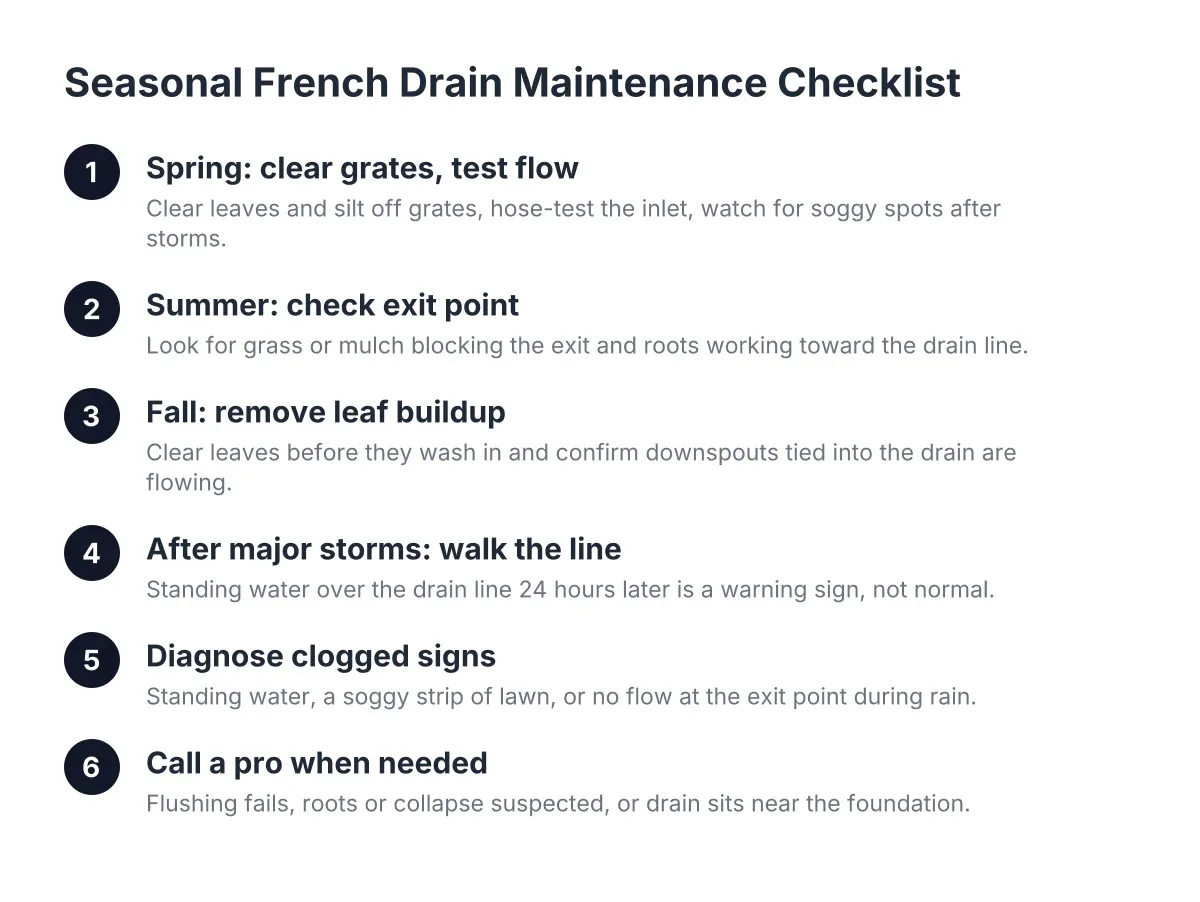
Here is a practical seasonal checklist for a Plano yard:
- Spring: Clear leaves and silt off any surface grates. Run a hose into the inlet and confirm water flows out the exit point. Watch for soggy spots after the first big storm.
- Summer: Check the exit point for grass or mulch blocking it. Look for roots from nearby trees and shrubs working toward the drain line.
- Fall: Remove leaf buildup before it washes into the system. Confirm downspouts tied into the drain are flowing.
- After any major storm: Walk the drain path. Water standing over the drain line 24 hours later is a warning sign, not normal.
How do I know if my French drain is clogged?
A clogged French drain shows up as standing water over or near the drain line, a soggy strip of lawn that used to stay dry, or no flow at the exit point during rain. The signs of a clogged French drain also include water pooling in areas that previously drained quickly. You can also test it directly: run a garden hose into the inlet for several minutes and see whether water comes out the other end.
For example, suppose a homeowner in Plano had a drain installed three years ago along the side yard. This spring, the same spot that used to dry out in a day stays wet for three. In that scenario, the likely culprits are silt packed into the gravel, roots inside the pipe, or a buried exit point. Each has a different fix, which is why a diagnosis beats guessing.
Why do French drains clog faster in North Texas clay soil?
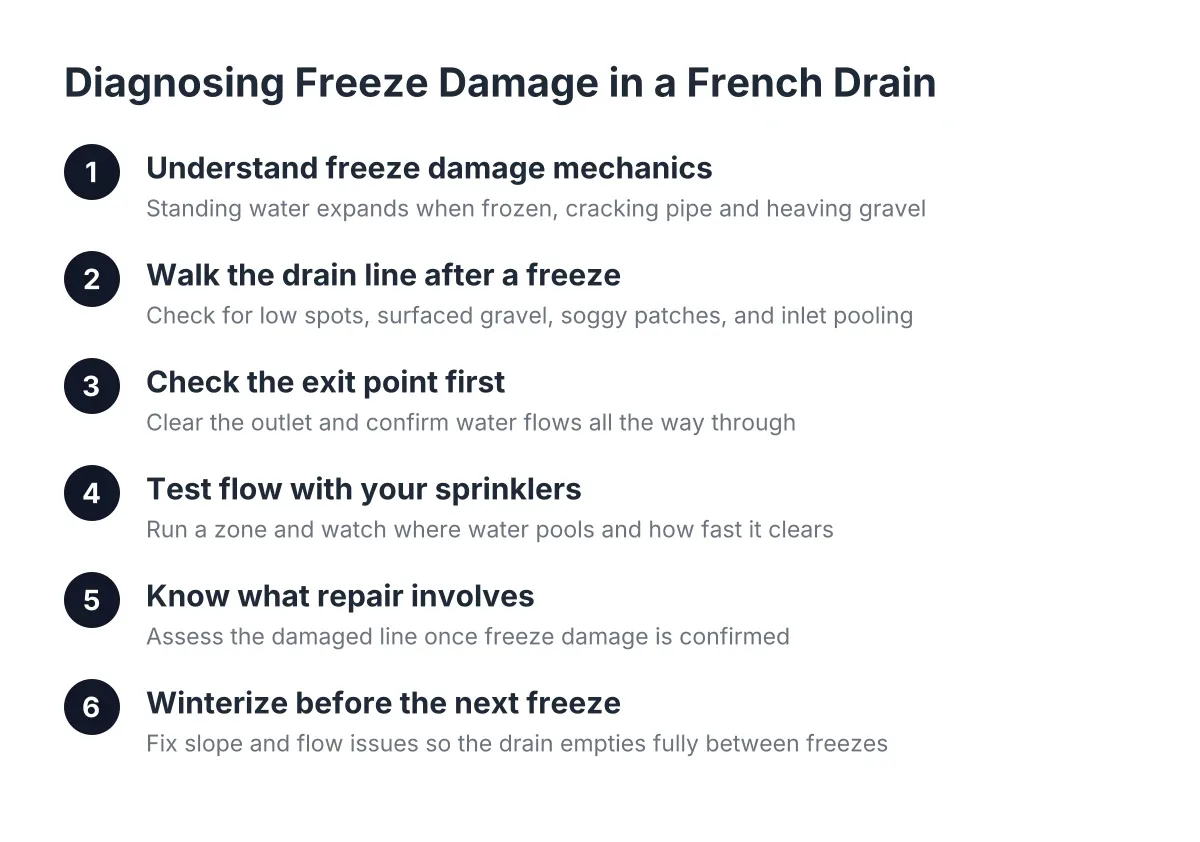
French drains in North Texas clog faster because clay soil sheds fine sediment that washes into the gravel and filter fabric with every storm. Clay also shifts as it swells in wet months and shrinks in dry ones. That movement can separate pipe joints, change the slope, or create low spots where water sits instead of flowing. Recognizing the early signs when your French drain is clogged—like areas where water lingers longer than before—helps you catch problems before major damage occurs.
Soil movement is the hidden problem. A drain installed with the right slope can lose it after two or three hard summers of clay shrinkage. When that happens, no amount of cleaning restores flow; the pipe itself needs correcting. This is also where French drain installation quality matters most. A drain built with proper fabric, washed gravel, and a stable trench base resists clay intrusion far longer than a shallow kit-style trench.
Can I maintain a French drain myself, or do I need a pro?
You can handle the basics yourself: clearing grates, flushing with a hose, and keeping the exit point open. A contractor makes sense when flushing does not restore flow, when you suspect roots or a collapsed section, or when the drain sits near your foundation where a wrong move costs real money.
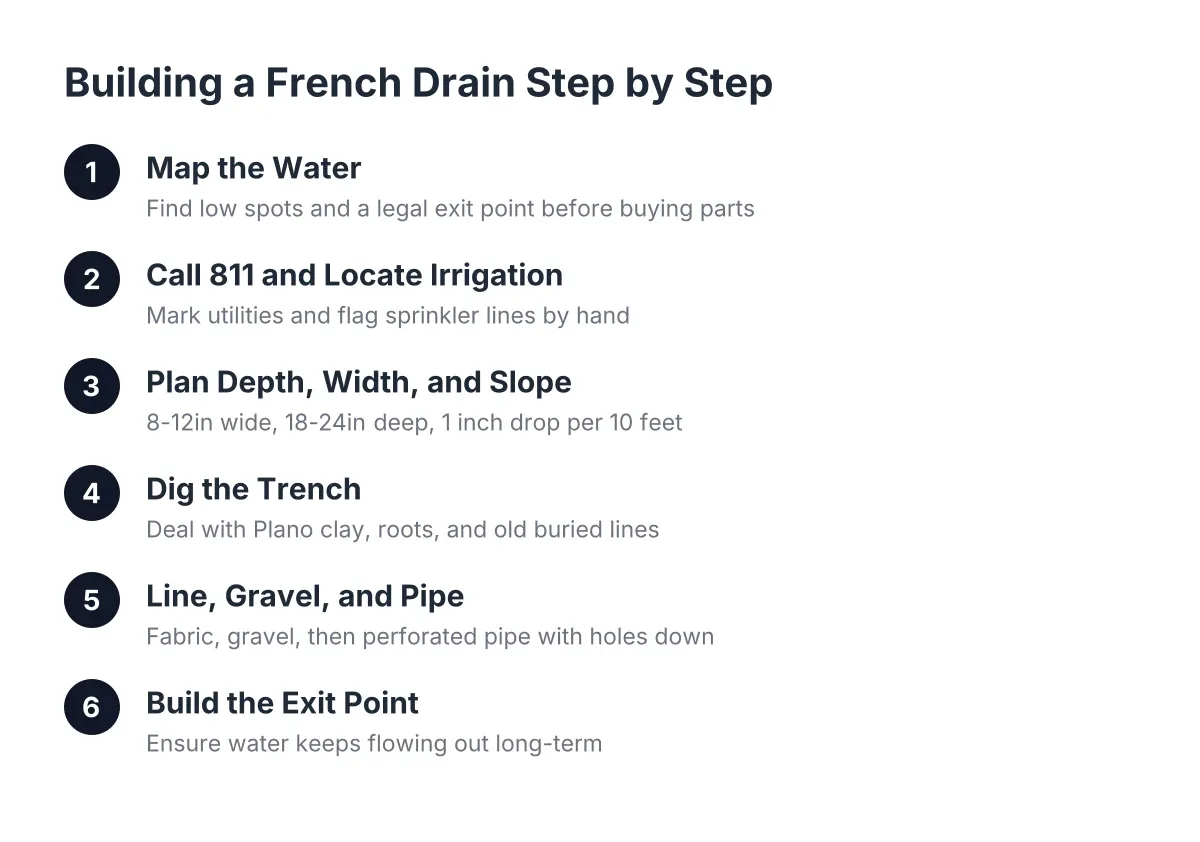
The same logic applies to installation. A french drain kit from the home store can work for a short run in an easy yard. However, kits assume soft, stable soil and a simple slope. Plano clay is neither soft to dig nor stable once opened, and getting the slope wrong by an inch over twenty feet can leave water sitting in the pipe. If you have watched a french drain installation video and the digging looked easy, that footage was probably not shot in North Texas clay.
What should I check at the french drain exit point?
Check that the french drain exit point is open, visible, and lower than the rest of the pipe run. The exit is where most drains fail first. Grass grows over it, mulch buries it, or a critter guard fills with debris. A blocked exit backs water up through the whole system, and the drain looks clogged even when the pipe is clean.
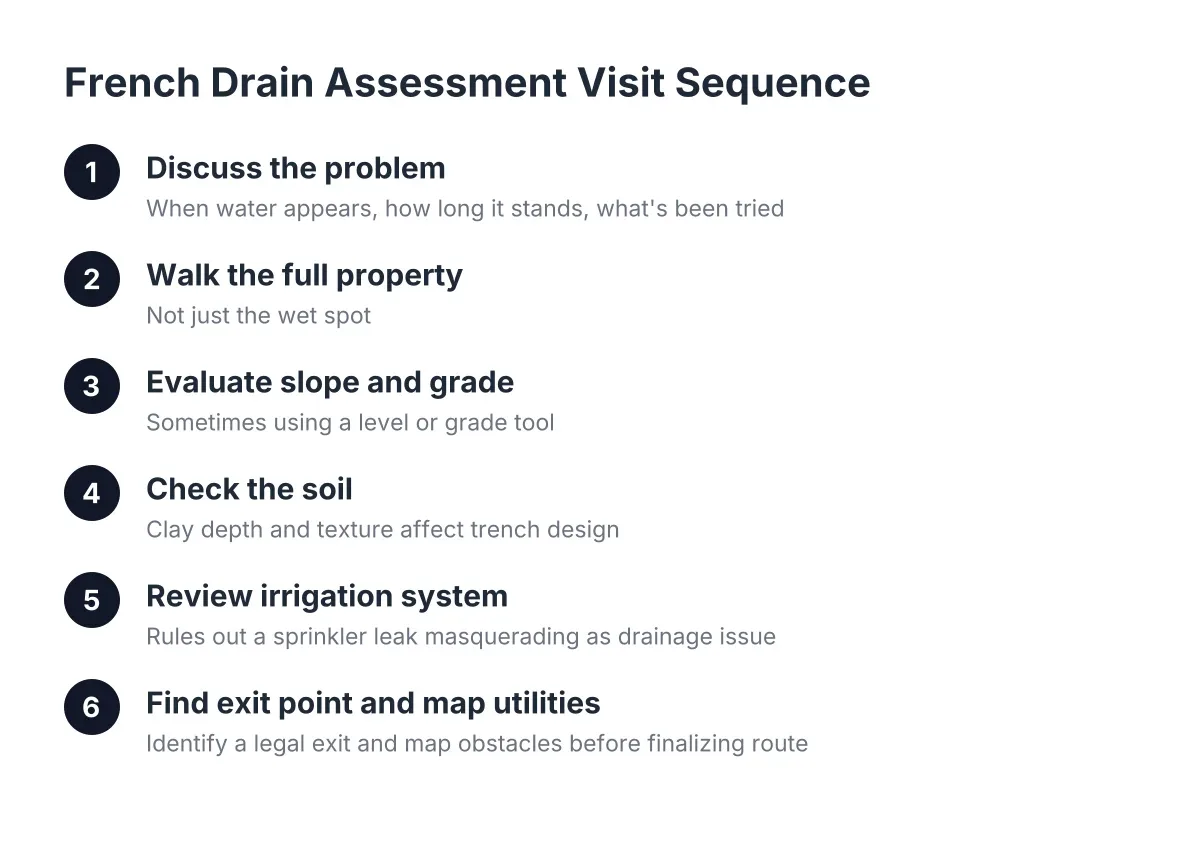
In addition, confirm the exit discharges somewhere legal and sensible. Water should not dump onto a neighbor's lot or against a fence line where it pools. If your exit point sits lower than the surrounding grade and holds water, that is a design problem worth a professional look, not a maintenance task.
Is my sprinkler system making my drainage problem worse?
A leaking irrigation system can absolutely create or worsen the wet spots a French drain is fighting. A cracked lateral line, a stuck sprinkler valve, or a buried drip line tapped into a zone can saturate soil for weeks before anyone notices. The drain then works overtime moving water your own system is adding.
This matters for maintenance planning. According to the U.S. Environmental Protection Agency (EPA WaterSense), a household with an automatic landscape irrigation system that is not properly maintained can waste up to 25,000 gallons of water annually. Some of that water ends up in your soil. Before blaming the drain, it is worth having a sprinkler repair tech check for leaks, misdirected heads, and a watering schedule that overshoots what clay soil can absorb.
How does french drain maintenance keeping fit into spring startup?
Folding drain checks into your spring sprinkler startup is the easiest way to make french drain maintenance a habit you keep. You are already walking the yard, running zones, and looking for leaks. Adding the drain takes ten extra minutes: clear the grates, flush the inlet, and confirm the exit flows.
The pairing works because the two systems share the same failure season. The first warm week in spring is when you restart irrigation, and the spring storm season is when the drain gets its hardest test. Checking both at once catches a leaking zone before it saturates the soil and a slow drain before the May downpours arrive. For 2026, aim to do both before your first scheduled watering day under Plano's restrictions.
When does a French drain need repair or replacement instead of cleaning?
A French drain needs repair rather than cleaning when flushing does not restore flow, when the pipe has lost slope from soil movement, or when roots have crushed or filled a section. Cleaning fixes surface and sediment problems. It cannot fix a pipe that no longer runs downhill or a fabric wrap that clay has fully sealed.
Rough guideposts for the decision:
- Clean it if grates are blocked, the exit is buried, or a hose flush pushes silt out and restores flow.
- Repair a section if one spot stays wet while the rest drains, which often points to a crushed or separated pipe segment.
- Replace or rebuild if the drain is shallow, built without fabric, or has failed repeatedly; rebuilding costs depend on trench length, depth, access, and where the water has to go.
One honest trade-off: maintenance extends a well-built drain for many years, but it cannot rescue a drain that was installed too shallow or without filter fabric. If yours fails every season despite upkeep, the money is better spent on a proper rebuild than on repeated cleanings. A contractor who handles both drainage and irrigation can also tell you whether a sprinkler leak, a grading issue, or the drain itself is the real source of the water.
If you need french drain installation, North Dallas Sprinkler Repair can help.
Prefer to talk it through? Call (469) 639-1022 — a quick call is usually the fastest way to get a straight answer for your situation.