French Drain Installation Terms Explained: A Plain-English Glossary
If you are getting quotes for drainage work in Plano and the terms sound like another language, this french drain installation glossary is for you. It explains the words contractors use so you can read a quote line by line, ask better questions, and spot a thin proposal before you sign. Every entry starts with a plain definition you can understand in seconds. No sales talk, just what each term means and why it matters for your yard.
- French Drain: a gravel trench with a pipe that moves water
- Perforated Pipe: pipe with holes that lets water in
- Catch Basin: a box that collects surface water
- Drainage Gravel: clean rock that lets water pass through
- Filter Fabric: cloth that keeps dirt out of the gravel
- Trenching: digging the channel for the drain
- Slope (Fall): the downhill tilt that makes water move
- Discharge Point: where the collected water exits
- Daylighting: ending the pipe at open ground
- Pop-Up Emitter: a lid that opens to release water
- Sump Pump: a pump for water that cannot drain by gravity
- Expansive Clay Soil: North Texas soil that swells and shrinks
- Standing Water: puddles that stay after rain
- Grading: shaping the yard so water runs away from the house
- Surface Drain: a drain for water on top of the ground
- Utility Locates (811): marking buried lines before digging
- Linear Foot Pricing: cost figured by trench length
- Scope of Work: the written list of what the job includes
French Drain Installation Glossary: Key Terms Explained
These are the pieces you will see named on a quote, and the terms this french drain installation glossary covers first because they show up everywhere.
French Drain Components
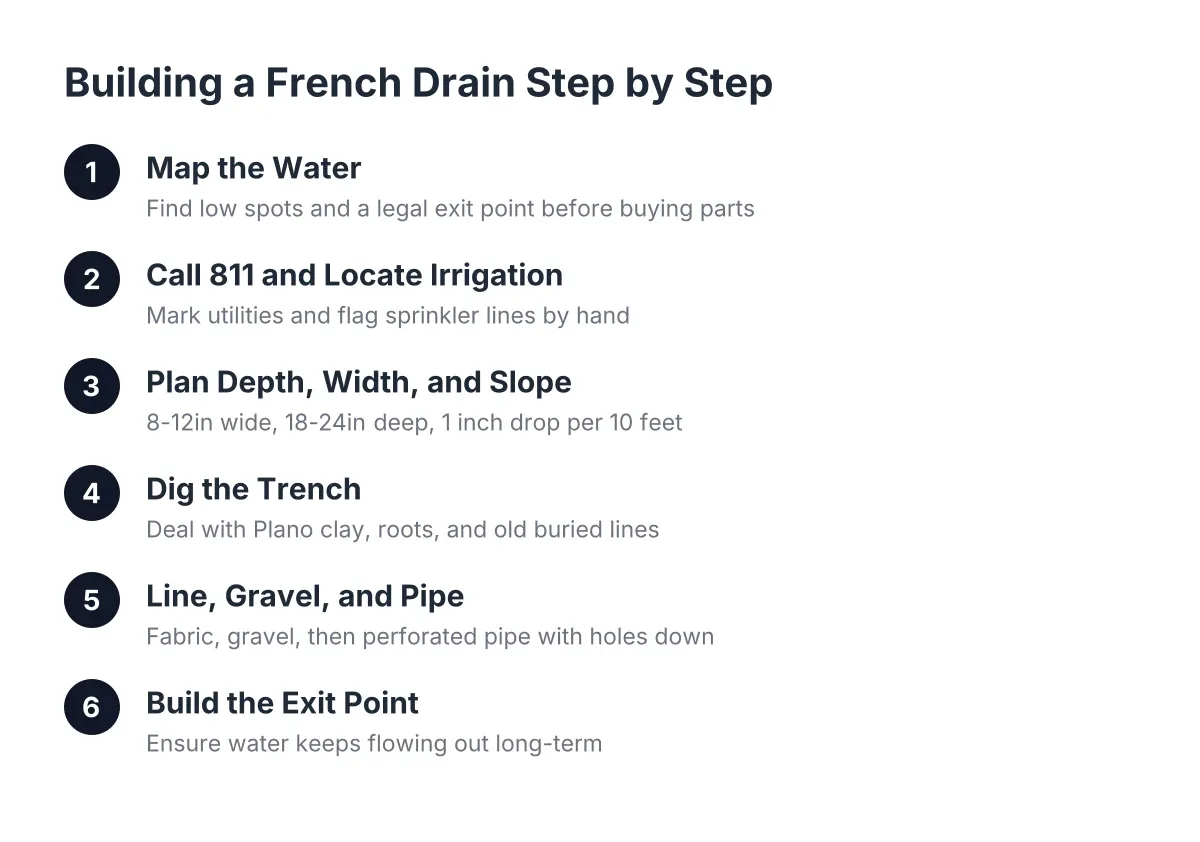
A French drain is a gravel-filled trench with a perforated pipe at the bottom that collects underground water and carries it away from a problem area. Water seeps through the gravel, enters the pipe through small holes, and flows downhill to an exit point. It handles water in the soil, not just water on the surface, which is why it works where regrading alone does not. In Plano's clay soil, water sits instead of soaking in, so a French drain is often the fix for standing water that never seems to dry.
Perforated Pipe
A perforated pipe is a drainage pipe with rows of small holes or slots that let groundwater enter along its whole length. It sits at the bottom of the trench, usually with the holes facing down so water rises into it. If a quote mentions solid pipe instead, that section is only carrying water, not collecting it, which is normal near the exit. Ask which sections are perforated and which are solid so you know where the drain actually works.
Catch Basin
A catch basin is a box set into the ground with a grate on top that collects surface water and feeds it into a buried pipe. You will see them in low spots, next to patios, or at the bottom of downspouts. A quote that pairs catch basins with a French drain is addressing both surface puddles and soggy soil, which is a broader scope than pipe alone. More basins mean more digging and more parts, so expect that to show up in the price.
Drainage Gravel
Drainage gravel is clean, washed rock placed around the pipe so water can flow through it freely. Clean means no sand or fine dust, because fines clog the spaces between stones. The gravel does two jobs: it filters water on the way to the pipe and it creates open space for water to move. If a bid skimps on gravel depth, the drain will carry less water and clog sooner.
Filter Fabric
Filter fabric is a permeable cloth wrapped around the gravel or pipe that lets water through but blocks soil. Without it, Plano's fine clay particles wash into the gravel and slowly choke the drain. It is a cheap material that makes an expensive difference in how long the system lasts. Ask any bidder whether fabric is included; its absence is a shortcut you will pay for later.
Pop-Up Emitter
A pop-up emitter is a small lid at the end of a drain pipe that stays closed until water pressure pushes it open to release the flow. It sits flush with the lawn, so you can mow over it, and it keeps animals and debris out of the pipe. Contractors use emitters when the pipe cannot end at open ground. If your yard is flat, which is common in Plano, expect to see one on the quote.
Sump Pump
A sump pump is an electric pump that lifts collected water up and out when gravity cannot carry it away on its own. French drains normally work by slope alone, so a pump only appears when the yard has no downhill path to an exit. A pump adds equipment, electrical work, and future maintenance to the job. If a bidder proposes one, ask why gravity drainage will not work on your lot.
How the Installation Process Works
These terms describe the installation process itself, from the first dig to the last shovel of backfill.
Trenching
Trenching means digging the long, narrow channel that holds the pipe and gravel. Depth and width depend on how much water the drain must handle and what is in the way, like roots or buried lines. Trenching is usually the biggest labor item on a French drain job, so trench length drives cost more than any other factor. Hand digging costs more than machine digging but protects tight spaces and existing landscaping.
Slope (Fall)
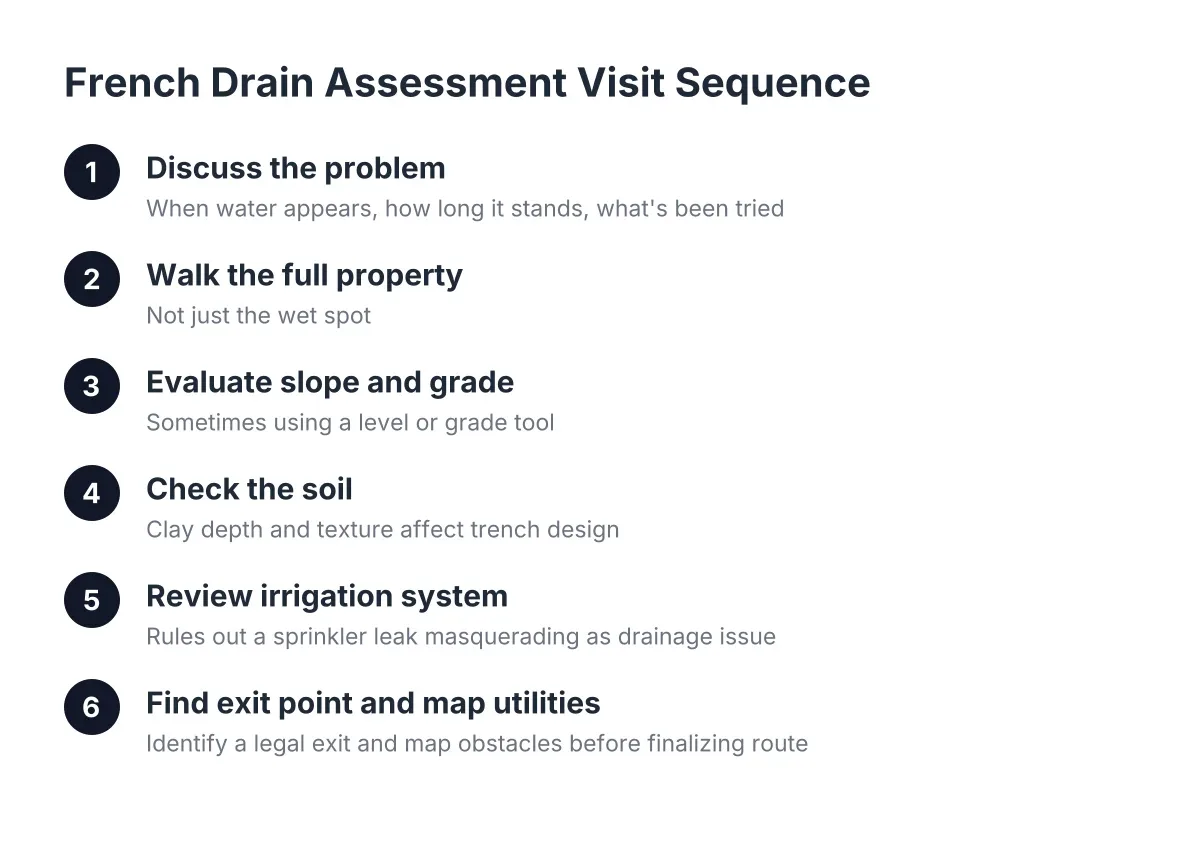
Slope, also called fall, is the downhill tilt of the pipe that keeps water moving toward the exit. Even a gentle, steady slope is enough; what kills a drain is a flat or backward section where water sits. A careful installer checks slope with a level or laser, not by eye. If a contractor talks about fall on your walkthrough, that is a good sign they plan to build it right.
Discharge Point
A discharge point is the spot where all the collected water leaves the drain system. It might be the street, an alley, a swale, or a lower corner of the yard. Water has to go somewhere legal and sensible; sending it onto a neighbor's lot creates a new problem and a dispute. Ask every bidder to show you the exact discharge point before you compare prices.
Daylighting
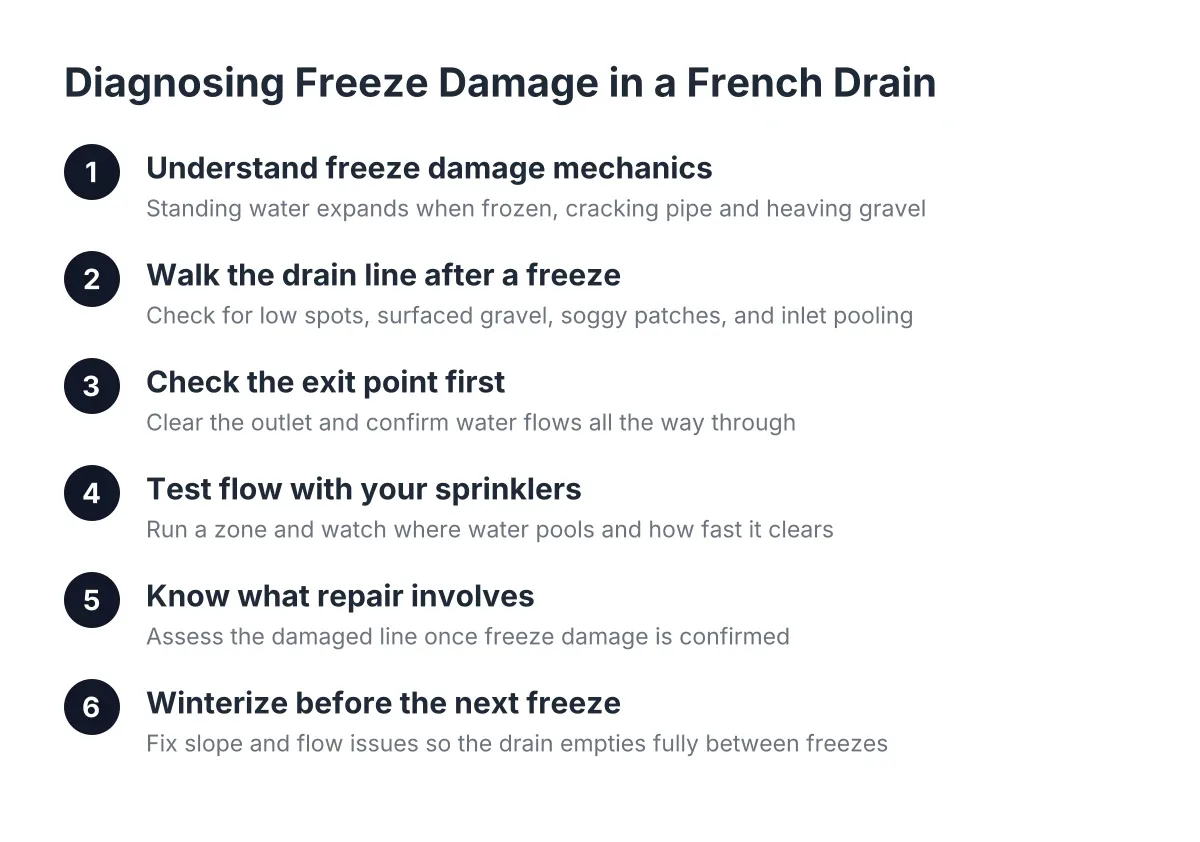
Daylighting means ending the drain pipe at open ground, where the water simply flows out onto a slope or into a drainage channel. It is the simplest and most reliable exit because there are no moving parts. A yard with natural fall to the street can often daylight; a flat yard usually needs a pop-up emitter instead. The exit method tells you a lot about how your installer read your lot.
Grading
Grading is shaping the soil surface so water runs away from your foundation instead of toward it. Sometimes grading alone fixes a drainage problem, and sometimes it works alongside a drain. An honest contractor will tell you which one your yard needs rather than defaulting to the bigger job. Our comparison of drainage options for Plano yards walks through when each approach makes sense.
Surface Drain
A surface drain is a grate-topped drain that captures water running across the top of the ground, like rain pouring off a patio. It solves a different problem than a French drain, which collects water inside the soil. Many Plano yards need both, since heavy storms create surface runoff while clay holds water underground. If a quote lists both types, the contractor is treating the two problems separately, which is the right instinct.
Utility Locates (811)
Utility locates means calling 811 before digging so crews mark buried gas, electric, water, and communication lines with paint or flags. It is a free call and a standard step before any trenching work. A contractor who skips locates is gambling with your utilities and your safety. Confirm locates are on the schedule before the first shovel hits dirt.
Soil, Symptoms, and the Quote
These terms cover why Plano yards flood and how proposals get priced.
Expansive Clay Soil
Expansive clay soil is soil that swells when wet and shrinks when dry, which is the dominant soil type across North Texas. It drains slowly, so rain pools on top instead of soaking in, and its movement cracks foundations and irrigation lines over time. This is the main reason french drain installation is so common in Plano compared to areas with sandy soil. Knowing your soil type helps you understand why a contractor recommends a deeper trench or more gravel.
Standing Water
Standing water means puddles or soggy patches that remain in your yard long after the rain stops. It is the most common symptom that sends homeowners looking for drainage help. Standing water kills grass, breeds mosquitoes, and can push moisture toward your foundation. If your yard stays wet for a day or more after a storm, review the signs your Plano home needs a French drain before you call anyone.
Linear Foot Pricing
Linear foot pricing means the contractor figures the cost by the length of trench and pipe, then adds parts like basins and emitters. It is the standard way drainage work gets priced, because digging is the main cost. Depth, soil hardness, obstacles, and access all push the per-foot number up or down. Our guide to what drives French drain cost breaks down each factor so you can compare bids fairly.
Scope of Work
A scope of work is the written list of everything the job includes: trench length and depth, pipe type, gravel, fabric, basins, the discharge point, and cleanup. It is the single most important page in any quote because it makes bids comparable. Two prices that look far apart often describe different jobs. Read the scope line by line, and ask about anything missing, especially filter fabric, utility locates, and sod repair.
Using These Terms
With this french drain installation glossary in hand, you can read a drainage quote the way a contractor does: trench length, parts list, exit point, and what is left out. Ask each bidder to point out the discharge point, confirm the fabric and gravel, and put the full scope in writing. The right questions cost nothing and save you from paying twice for the same wet yard.
If you need french drain installation, North Dallas Sprinkler Repair can help.
Prefer to talk it through? Call (469) 639-1022 — a quick call is usually the fastest way to get a straight answer for your situation.